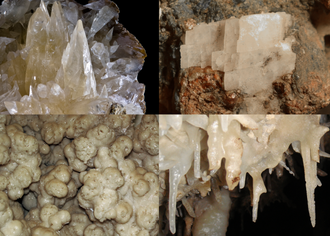
Hydroxide Minerals · uncommon
Brucite
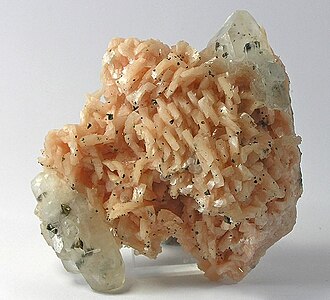
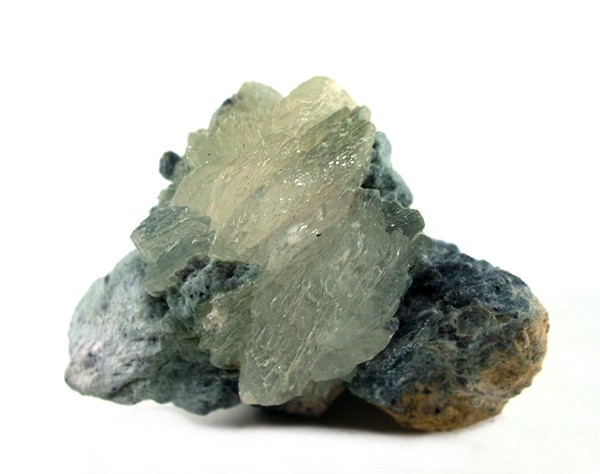
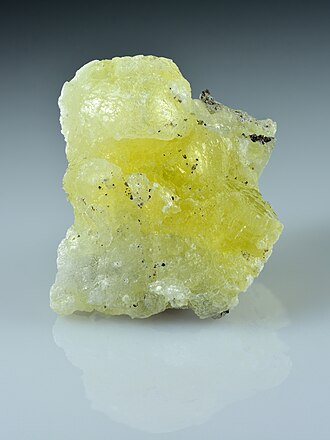
Brucite is a soft magnesium hydroxide mineral that forms platy, foliated, or fibrous masses with a pearly to vitreous luster. It is usually white but can be pale green, blue, or yellow, and is a notable ore of magnesium.
Also known as: Nemalite.
Brucite properties at a glance
| Type | Hydroxide Minerals |
|---|---|
| Chemical formula | Mg(OH)2 |
| Mohs hardness | 2.5 |
| Crystal system | trigonal |
| Luster | vitreous |
| Streak | White |
| Cleavage | Perfect basal |
| Fracture | Uneven |
| Specific gravity | 2.4 |
| Transparency | translucent |
| Common colors | White, Pale green, Pale blue, Yellow, Gray |
| Rarity | uncommon |
Geology & background
Brucite forms by alteration of magnesium-rich rocks, occurring in serpentinites, metamorphosed dolomitic limestones, and low-temperature hydrothermal veins.
Brucite has long been studied as a model layered hydroxide and remains valued as a refractory raw material and a source of magnesium for industry.
How to identify Brucite
- Look for a soft, light-colored mineral with perfect basal cleavage that yields flexible but inelastic sheets.
- Brucite has a pearly luster on cleavage faces and a noticeably low density for its size.
- Distinguish it from mica by its inelastic sheets and from gypsum by its association with serpentine and dolomite.
Full Brucite identification guide: checklist, home tests and look-alikes →
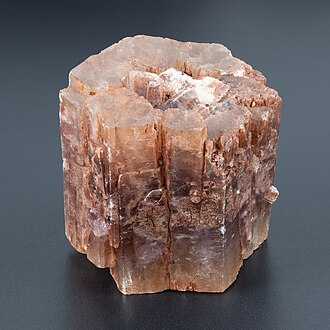
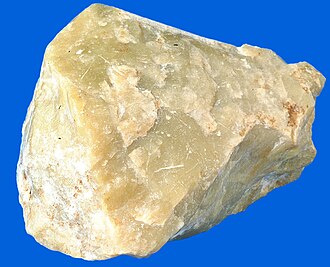
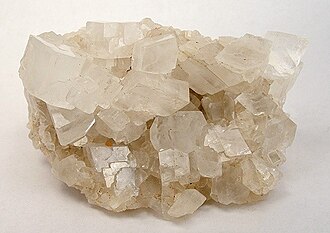
Brucite photos
Brucite vs similar stones
Not sure it isn't something else? Side-by-side comparisons with the stones most often confused with Brucite.
Where Brucite is found
Brucite occurs in serpentinites and metamorphosed dolomitic rocks worldwide, with notable specimen localities in Pakistan, the United States, Russia, Italy, and Canada.
How much is Brucite worth?
| Entry-level specimen | $5 |
|---|---|
| Typical collector specimen | $40 |
| Premium specimen | $250+ |
Value depends on crystal form, color, size, locality, aesthetics, damage, and provenance.
Common uses
- Magnesium ore
- Refractory materials
- Flame retardant filler
- Source of magnesia
- Collector specimens
Interesting facts
- Brucite was named in 1824 after the American mineralogist Archibald Bruce.
- A fibrous variety once called nemalite was used historically as a substitute for asbestos.
- Brucite is an important industrial source of magnesium and magnesium compounds.
- Its perfect basal cleavage lets thin sheets be peeled away much like mica.
Care & safety
Brucite is soft and easily scratched, and its cleavage sheets can be bent or damaged with rough handling.
Avoid inhaling dust. Do not cut, grind, or polish unknown specimens without eye protection and a proper respirator, and treat fibrous material with extra care.
Brucite FAQ
What is Brucite?
Brucite is a soft magnesium hydroxide mineral that forms platy, foliated, or fibrous masses with a pearly to vitreous luster. It is usually white but can be pale green, blue, or yellow, and is a notable ore of magnesium.
How much is Brucite worth?
Entry-level Brucite specimens sell for around $5, a typical collector specimen for about $40, and premium pieces for $250 or more. Value depends on crystal form, color, size, locality, aesthetics, damage, and provenance.
How hard is Brucite?
Brucite has a Mohs hardness of 2.5. A copper coin (Mohs 3.5) scratches it, but a fingernail does not.
Where is Brucite found?
Notable sources of Brucite include Pakistan, United States, Russia, Italy, and Canada. Brucite forms by alteration of magnesium-rich rocks, occurring in serpentinites, metamorphosed dolomitic limestones, and low-temperature hydrothermal veins..
What is Brucite used for?
Brucite is used for magnesium ore, refractory materials, flame retardant filler, source of magnesia, and collector specimens.