
Comparison · Hydroxide Minerals vs Minerals
Brucite vs Gibbsite
Brucite and Gibbsite are easy to confuse. Both sit near Mohs 2.5, so a scratch test alone will not separate them. Lean on luster, streak and heft instead. Below is a side-by-side comparison of their properties and the quick tests that separate them.
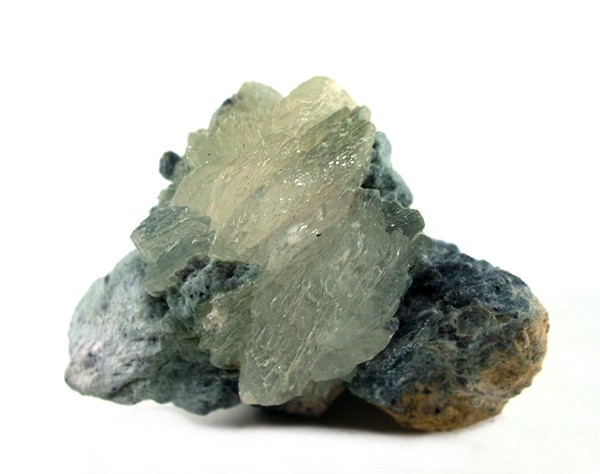
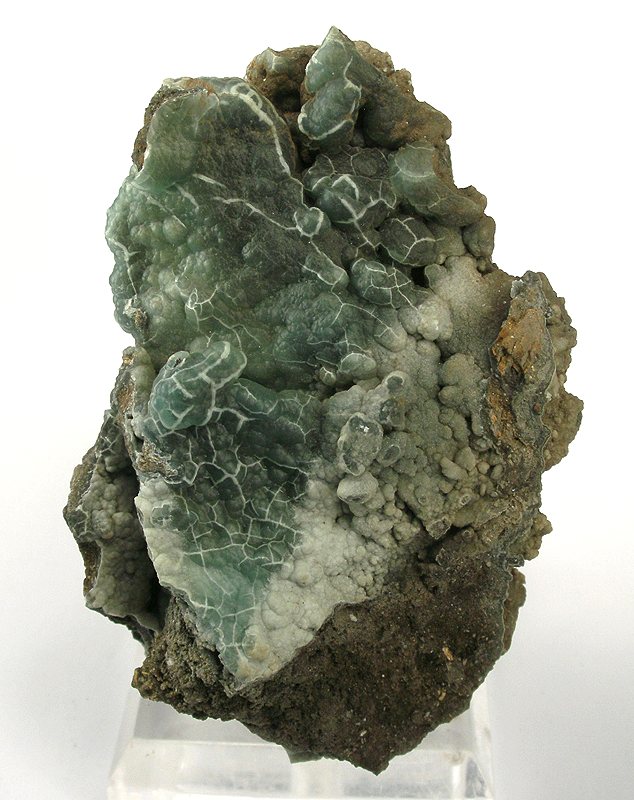
Key differences between Brucite and Gibbsite
- Both sit near Mohs 2.5, so a scratch test alone will not separate them. Lean on luster, streak and heft instead.
- Hold a thin edge to the light: Brucite is translucent, Gibbsite is Transparent to translucent.
- They overlap in white, green, and gray, but Brucite also comes in blue and yellow and Gibbsite also comes in red.
- Well-formed crystals give it away: Brucite is trigonal, Gibbsite is Monoclinic.
Brucite vs Gibbsite properties
| Property | Brucite | Gibbsite |
|---|---|---|
| Type | Hydroxide Minerals | Minerals |
| Mohs hardness | 2.5 | 2.5–3.5 |
| Luster | vitreous | Vitreous, pearly on cleavage, dull when earthy |
| Streak | White | White |
| Transparency | translucent | Transparent to translucent |
| Specific gravity | 2.4 | 2.3–2.4 |
| Crystal system | trigonal | Monoclinic |
| Common colors | White, Pale green, Pale blue, Yellow, Gray | White, Gray, Greenish, Reddish |
| Rarity | uncommon | common |
| Typical specimen value | $5–$250+ | $2–$150+ |
Which is more valuable?
Brucite is usually the more valuable of the two: a typical collector specimen runs about $40 against $20 for Gibbsite, and premium Brucite can reach $250 or more.
About Brucite
Brucite is a soft magnesium hydroxide mineral that forms platy, foliated, or fibrous masses with a pearly to vitreous luster. It is usually white but can be pale green, blue, or yellow, and is a notable ore of magnesium.
About Gibbsite
Gibbsite is aluminum hydroxide, Al(OH)3, a soft, typically white to gray mineral that forms as a weathering product in tropical and subtropical soils and serves as the principal ore mineral of aluminum within bauxite deposits. It commonly occurs as fine-grained, earthy masses or crusts rather than well-formed crystals, though occasional tabular pseudohexagonal crystals do develop in cavities. It is named after American mineral collector George Gibbs, whose collection helped found early American mineralogy.
Brucite vs Gibbsite FAQ
Is Brucite the same as Gibbsite?
No. Brucite is a hydroxide mineral while Gibbsite is a mineral. Both sit near Mohs 2.5, so a scratch test alone will not separate them. Lean on luster, streak and heft instead.
How can you tell Brucite from Gibbsite?
Both sit near Mohs 2.5, so a scratch test alone will not separate them. Lean on luster, streak and heft instead. Hold a thin edge to the light: Brucite is translucent, Gibbsite is Transparent to translucent. They overlap in white, green, and gray, but Brucite also comes in blue and yellow and Gibbsite also comes in red.
Which is harder, Brucite or Gibbsite?
Gibbsite is harder: Mohs 2.5–3.5 against Mohs 2.5 for Brucite.
Which is more valuable, Brucite or Gibbsite?
Brucite is usually the more valuable of the two: a typical collector specimen runs about $40 against $20 for Gibbsite, and premium Brucite can reach $250 or more.

