
Identification guide · Minerals
How to Identify Covellite
Covellite is dark indigo-blue to nearly black, often overlaid with iridescent purple, gold, or bronze tarnish colors, and has a submetallic to metallic luster. Its streak is gray-black to lead-gray rather than white, a useful distinction from many similarly colored minerals. Hardness is low, around 1.5 to 2, easily marked even by a copper coin, and it shows perfect basal cleavage that produces thin, flexible flakes. It is often confused with bornite, but bornite's tarnish leans more purple-brown overall and its hardness is somewhat greater.
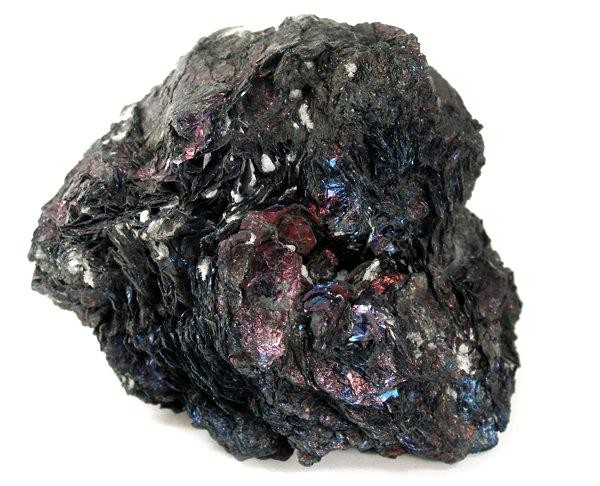
Covellite identification checklist
| Color | Indigo blue, Blue-black, Iridescent purple/red tarnish | Look at a clean, dry surface in daylight. Color zoning, banding or spots are as diagnostic as the hue. |
|---|---|---|
| Luster | Metallic to submetallic/resinous | Turn it under a lamp: a true metallic shine reflects like polished metal and stays opaque at thin edges. |
| Transparency | Opaque | Hold a thin edge up to a bright light and note whether light passes through. |
| Mohs hardness | 1.5–2 | A fingernail (Mohs 2.5) scratches it easily. |
| Streak | Lead-gray to black | Drag a corner across unglazed porcelain (the back of a bathroom tile) and check the powder color. |
| Cleavage | Perfect basal {0001} | |
| Fracture | Uneven; sectile, flexible flakes | |
| Specific gravity | 4.6–4.76 | Very heavy, metallic heft (specific gravity about 4.68). |
| Crystal system | Hexagonal |
Covellite look-alikes and how to tell them apart
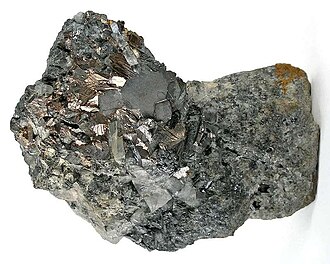
Both sit near Mohs 1.5–2, so a scratch test alone will not separate them. Lean on luster, streak and heft instead. Covellite vs Bismuth →
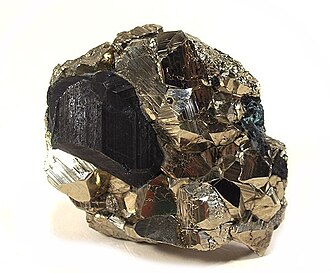
Bornite is harder (Mohs 3–3.25) than Covellite (Mohs 1.5–2), so Bornite will scratch Covellite and not the other way round. A fingernail (Mohs 2.5) scratches it easily. Covellite vs Bornite →
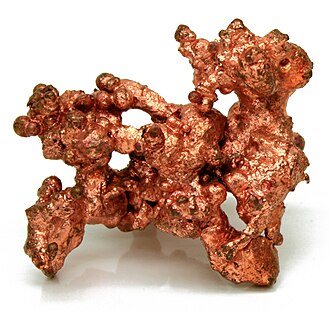
Copper is harder (Mohs 2.5–3) than Covellite (Mohs 1.5–2), so Copper will scratch Covellite and not the other way round. A fingernail (Mohs 2.5) scratches it easily. Covellite vs Copper →
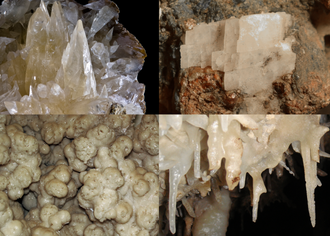
Calcite is harder (Mohs 3) than Covellite (Mohs 1.5–2), so Calcite will scratch Covellite and not the other way round. A fingernail (Mohs 2.5) scratches it easily.
Covellite identification FAQ
How can you tell if a rock is Covellite?
Check the color (indigo blue, blue-black, and iridescent purple/red tarnish), the metallic to submetallic/resinous luster, a Mohs hardness of 1.5–2 and a lead-gray to black streak. Photographing it with the StoneSnap app gives a match in seconds.
What is the hardness of Covellite?
Covellite has a Mohs hardness of 1.5–2. A fingernail (Mohs 2.5) scratches it easily.
What is the difference between Covellite and Bismuth?
Covellite (Mohs 1.5–2, metallic to submetallic/resinous luster) and Bismuth (Mohs 2–2.5, metallic luster) look alike, but hardness, streak and heft usually separate them. See the full Covellite vs Bismuth comparison for a side-by-side table.
Is Covellite worth anything?
Entry-level Covellite specimens sell for around $2, typical collector pieces about $20, and premium examples $150 or more depending on size, quality and locality.
What color is Covellite?
Covellite is most often indigo blue, blue-black, and iridescent purple/red tarnish. Color varies with impurities and locality, so confirm with hardness and luster rather than color alone.

