
Identification guide · Sedimentary Rocks
How to Identify Chert
Chert is typically dull to waxy in luster, dense and fine-grained enough that individual quartz crystals cannot be seen without magnification, and it always has a white to very pale streak reflecting its quartz composition. Its hardness of about 7 will scratch glass and steel, distinguishing it from softer look-alikes like limestone or chalcedony banding aside, and its characteristic conchoidal fracture produces smooth curved surfaces with sharp edges. Chert is frequently confused with flint, jasper, and chalcedony, all of which are essentially the same silica-based material distinguished mainly by color, banding, and traditional naming rather than true compositional differences.
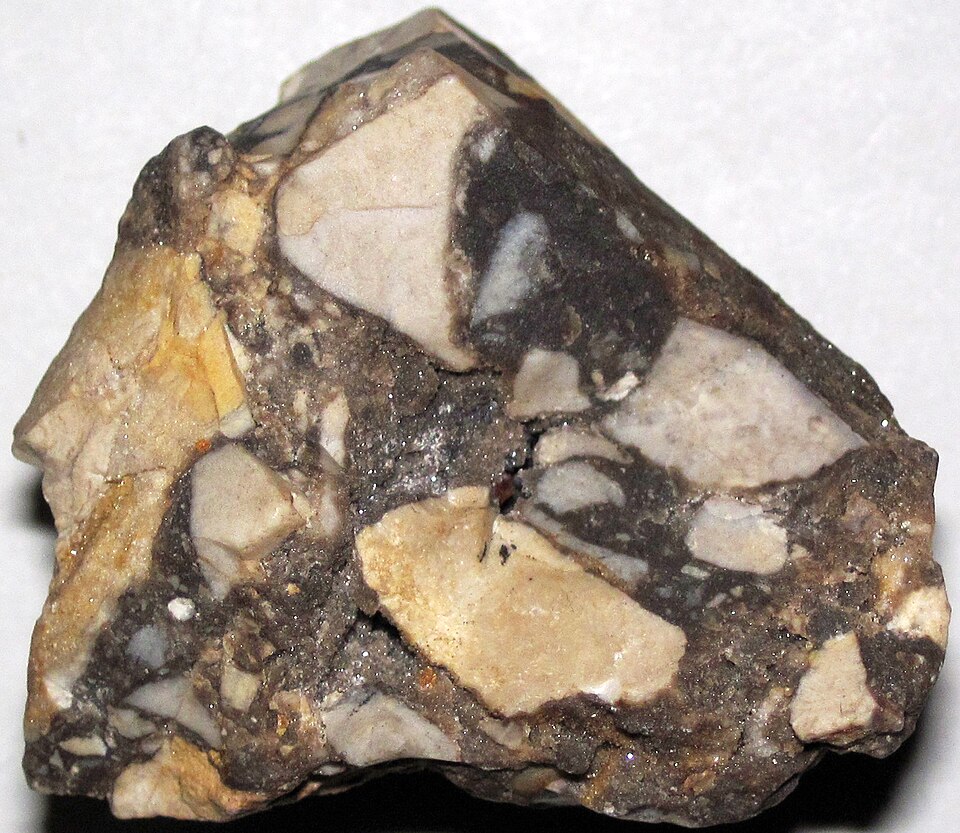
Chert identification checklist
| Color | Gray, White, Black, Brown, Red, Green | Look at a clean, dry surface in daylight. Color zoning, banding or spots are as diagnostic as the hue. |
|---|---|---|
| Luster | Waxy to dull | Compare a fresh surface with glass and metal; this luster is softer than either. |
| Transparency | Translucent to opaque | Hold a thin edge up to a bright light and note whether light passes through. |
| Mohs hardness | 6.5–7 | It scratches glass and a steel knife and cannot be scratched by a steel file. |
| Fracture | Conchoidal | Broken surfaces show smooth, curved, shell-like scoops. |
| Specific gravity | 2.6–2.65 | Ordinary rock-like heft (specific gravity about 2.625), similar to quartz. |
Chert look-alikes and how to tell them apart
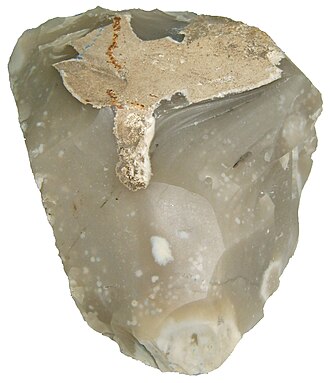
Both sit near Mohs 6.5–7, so a scratch test alone will not separate them. Lean on luster, streak and heft instead. Chert vs Flint →
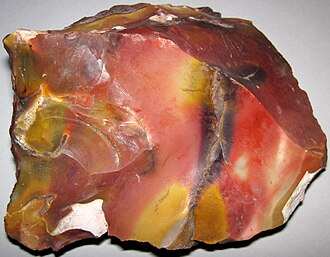
Both sit near Mohs 6.5–7, so a scratch test alone will not separate them. Lean on luster, streak and heft instead. Chert vs Mookaite →
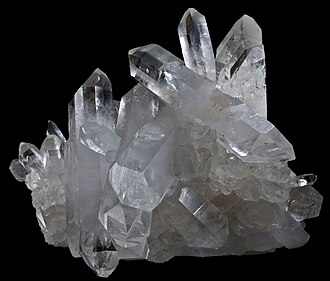
Both sit near Mohs 6.5–7, so a scratch test alone will not separate them. Lean on luster, streak and heft instead. Chert vs Quartz →
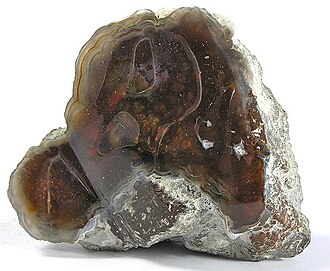
Both sit near Mohs 6.5–7, so a scratch test alone will not separate them. Lean on luster, streak and heft instead.
Chert identification FAQ
How can you tell if a rock is Chert?
Check the color (gray, white, black, and brown), the waxy to dull luster, a Mohs hardness of 6.5–7. Photographing it with the StoneSnap app gives a match in seconds.
What is the hardness of Chert?
Chert has a Mohs hardness of 6.5–7. It scratches glass and a steel knife and cannot be scratched by a steel file.
What is the difference between Chert and Flint?
Chert (Mohs 6.5–7, waxy to dull luster) and Flint (Mohs 6.5–7, waxy to dull, glassy on fresh fracture luster) look alike, but hardness, streak and heft usually separate them. See the full Chert vs Flint comparison for a side-by-side table.
Is Chert worth anything?
Entry-level Chert specimens sell for around $1, typical collector pieces about $10, and premium examples $75 or more depending on size, quality and locality.
What color is Chert?
Chert is most often gray, white, black, and brown. Color varies with impurities and locality, so confirm with hardness and luster rather than color alone.

