
Which Crystal Do I Need Right Now? · your result
Your crystal is Clear Quartz
For focus and clarity
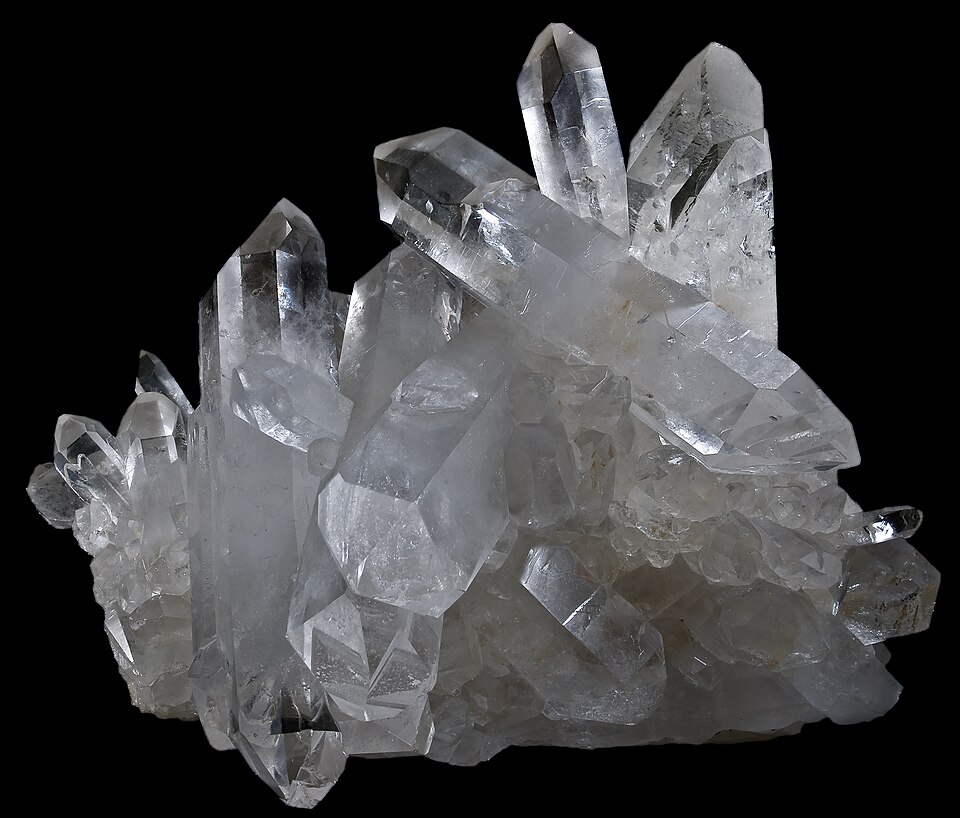
Your answers point to clear quartz, the master crystal in most traditions and the one recommended when you cannot think straight. It is traditionally used to amplify intention and cut through mental noise, and it is the default crystal for anyone who wants one stone that does a bit of everything.
Quartz is silicon dioxide, the most abundant mineral on the Earth's surface, and its piezoelectric properties genuinely do keep time in your watch and phone. Flawless crystals come from Arkansas, Brazil and the Alps; Herkimer, New York produces doubly terminated crystals collectors call Herkimer diamonds.
How people use Clear Quartz
- Keep a point on your desk, tip facing you, while you work.
- Hold a crystal and say the decision out loud; the ritual is the point.
- Wear a small point as a pendant on days packed with choices.
Is your Clear Quartz real?
- Natural quartz is cold, scratches glass and steel, and shows tiny inclusions or veils. Glass imitations have round bubbles, feel warm quickly and scratch easily.
About Quartz
Quartz is silicon dioxide, SiO2, one of the most abundant minerals in Earth's continental crust, crystallizing in the trigonal division of the hexagonal crystal system with a hardness of 7 that makes it a standard reference point on the Mohs scale. Its six-sided prismatic crystals, often terminated by pyramidal points, are among the most recognizable crystal shapes in mineralogy. Quartz occurs in nearly every rock type and geologic setting, from granite pegmatites to sedimentary sandstones to hydrothermal veins.
| Type | Quartz Family |
|---|---|
| Chemical formula | SiO2 |
| Mohs hardness | 7 |
| Crystal system | Trigonal |
| Luster | Vitreous, greasy on fracture surfaces |
| Streak | White |
| Cleavage | None (rare parting on rhombohedral planes) |
- Quartz crystals vibrate at a precise, stable frequency when an electric current passes through them, a property called piezoelectricity that powers most quartz wristwatches.
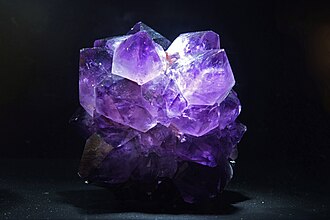
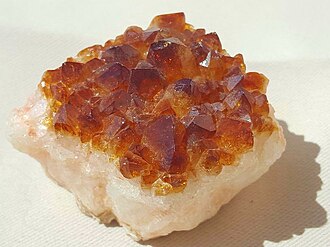
- Amethyst and citrine are chemically identical quartz, differing only in trace iron content and the type of natural or artificial irradiation each has experienced.
- Sand on most of the world's beaches is dominated by quartz grains because the mineral resists weathering far longer than nearly any other rock-forming mineral.
How to tell real Quartz at a glance
- Color: Colorless, White, Purple (amethyst), Yellow (citrine), Pink (rose), Brown/black (smoky). Look at a clean, dry surface in daylight. Color zoning, banding or spots are as diagnostic as the hue.
- Luster: Vitreous, greasy on fracture surfaces. Fresh surfaces shine like glass; a dull surface usually means weathering, so chip or wet a corner.
- Transparency: Transparent to translucent. Hold a thin edge up to a bright light and note whether light passes through.
- Mohs hardness: 7. It scratches glass and a steel knife and cannot be scratched by a steel file.
Rocks Clear Quartz gets along with
Frequently asked questions
What is Clear Quartz used for?
Clear Quartz is traditionally the crystal for focus and clarity. For decision fatigue, brain fog and too many options.
How do I know if my Clear Quartz is real?
Natural quartz is cold, scratches glass and steel, and shows tiny inclusions or veils. Glass imitations have round bubbles, feel warm quickly and scratch easily.
Which crystals go with Clear Quartz?
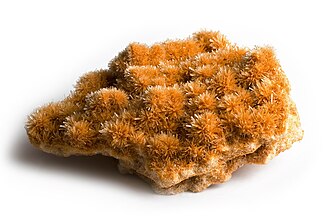
Clear Quartz is most often paired with Amethyst, Selenite, Citrine.

