
Identification guide · Minerals
How to Identify Magnetite
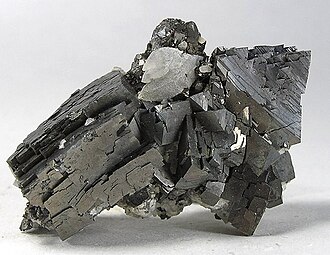
Magnetite is black to brownish-black, with a metallic to dull, sometimes submetallic luster, and a black streak that stays consistent even on tarnished specimens. Its hardness is about 5.5 to 6.5, it lacks distinct cleavage, breaking instead with a conchoidal to uneven fracture, and it commonly forms octahedral crystals or granular masses. The defining field test is magnetism: a small magnet or compass needle will visibly react to even modest-sized fragments. It is most often confused with black hematite varieties, which lack magnetism and instead give a reddish-brown streak.
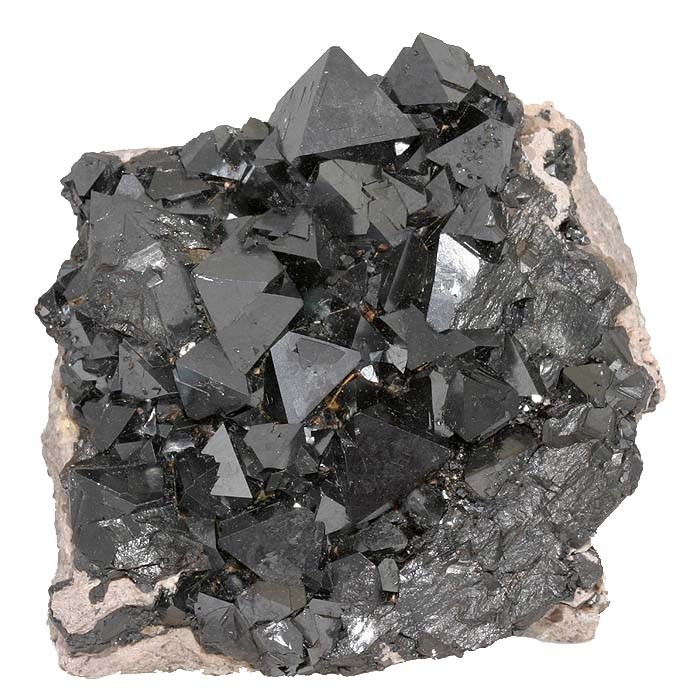
Magnetite identification checklist
| Color | Black, Iron-black, Gray-black | Look at a clean, dry surface in daylight. Color zoning, banding or spots are as diagnostic as the hue. |
|---|---|---|
| Luster | Metallic to submetallic/dull | Turn it under a lamp: a true metallic shine reflects like polished metal and stays opaque at thin edges. |
| Transparency | Opaque | Hold a thin edge up to a bright light and note whether light passes through. |
| Mohs hardness | 5.5–6.5 | It is about as hard as window glass: a knife barely marks it, while a steel file (Mohs 6.5) will. |
| Streak | Black | Drag a corner across unglazed porcelain (the back of a bathroom tile) and check the powder color. |
| Cleavage | None; octahedral parting common | |
| Fracture | Subconchoidal to uneven, brittle | Broken surfaces show smooth, curved, shell-like scoops. |
| Specific gravity | 5.17–5.2 | Very heavy, metallic heft (specific gravity about 5.1850000000000005). |
| Crystal system | Cubic |
Extra tests for Magnetite
Magnet test. Strongly magnetic: a small magnet sticks to it and it can deflect a compass needle.
Magnetite look-alikes and how to tell them apart
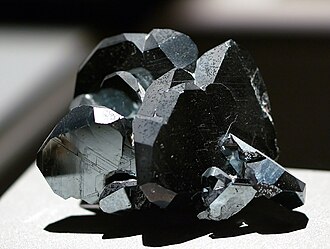
Both sit near Mohs 5.5–6.5, so a scratch test alone will not separate them. Lean on luster, streak and heft instead. Magnetite vs Hematite →
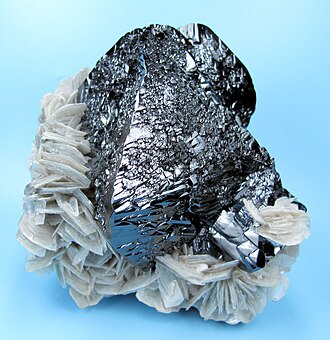
Both sit near Mohs 5.5–6.5, so a scratch test alone will not separate them. Lean on luster, streak and heft instead. Magnetite vs Cassiterite →
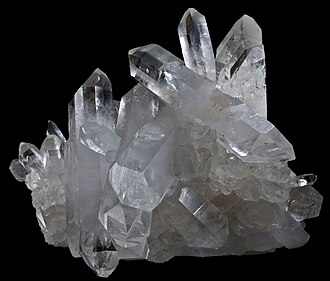
Quartz is harder (Mohs 7) than Magnetite (Mohs 5.5–6.5), so Quartz will scratch Magnetite and not the other way round. It is about as hard as window glass: a knife barely marks it, while a steel file (Mohs 6.5) will. Magnetite vs Quartz →
Both sit near Mohs 5.5–6.5, so a scratch test alone will not separate them. Lean on luster, streak and heft instead.
Magnetite identification FAQ
How can you tell if a rock is Magnetite?
Check the color (black, iron-black, and gray-black), the metallic to submetallic/dull luster, a Mohs hardness of 5.5–6.5 and a black streak. Photographing it with the StoneSnap app gives a match in seconds.
What is the hardness of Magnetite?
Magnetite has a Mohs hardness of 5.5–6.5. It is about as hard as window glass: a knife barely marks it, while a steel file (Mohs 6.5) will.
What is the difference between Magnetite and Hematite?
Magnetite (Mohs 5.5–6.5, metallic to submetallic/dull luster) and Hematite (Mohs 6, metallic luster) look alike, but hardness, streak and heft usually separate them. See the full Magnetite vs Hematite comparison for a side-by-side table.
Is Magnetite worth anything?
Entry-level Magnetite specimens sell for around $2, typical collector pieces about $20, and premium examples $150 or more depending on size, quality and locality.
What color is Magnetite?
Magnetite is most often black, iron-black, and gray-black. Color varies with impurities and locality, so confirm with hardness and luster rather than color alone.

