
Comparison · Minerals
Hematite vs Magnetite
Hematite and Magnetite are easy to confuse because both are minerals. Both sit near Mohs 6, so a scratch test alone will not separate them. Lean on luster, streak and heft instead. Below is a side-by-side comparison of their properties and the quick tests that separate them.
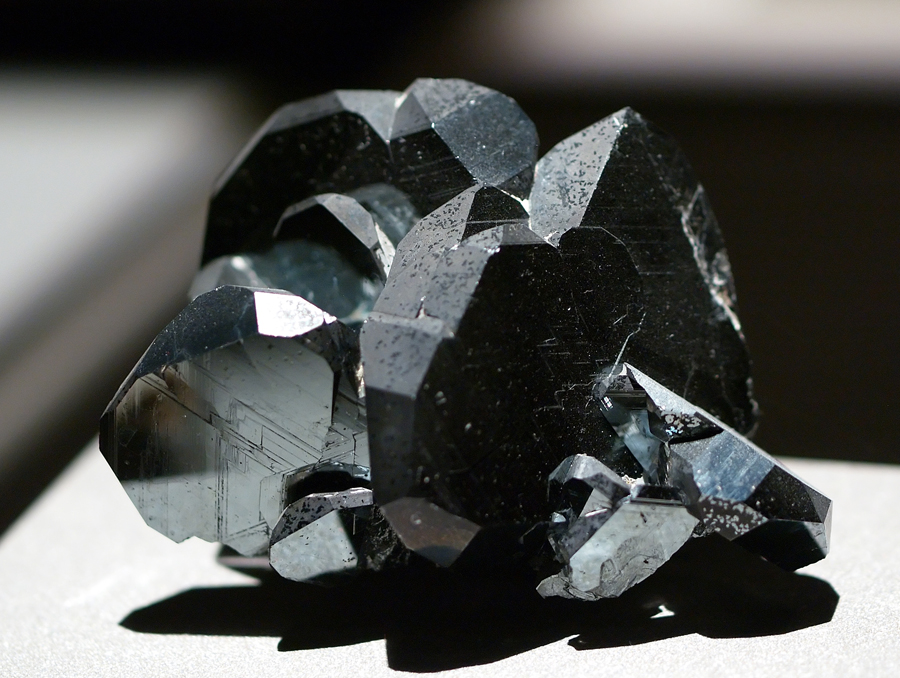
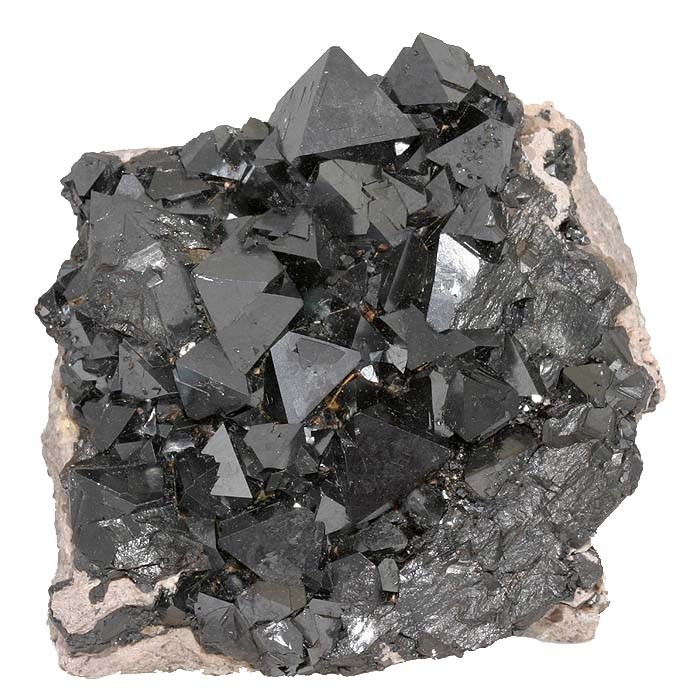
Key differences between Hematite and Magnetite
- Both sit near Mohs 6, so a scratch test alone will not separate them. Lean on luster, streak and heft instead.
- Streak color differs: Hematite leaves a red to reddish-brown streak on unglazed porcelain, Magnetite leaves black.
- Both look metallic, so compare color, tarnish and weight rather than shine.
- Hold a thin edge to the light: Hematite is opaque, Magnetite is Opaque.
- They overlap in gray and black, but Hematite also comes in red.
- Well-formed crystals give it away: Hematite is trigonal, Magnetite is Cubic.
Hematite vs Magnetite properties
| Property | Hematite | Magnetite |
|---|---|---|
| Type | Minerals | Minerals |
| Mohs hardness | 6 | 5.5–6.5 |
| Luster | metallic | Metallic to submetallic/dull |
| Streak | Red to reddish-brown | Black |
| Transparency | opaque | Opaque |
| Specific gravity | 5.3 | 5.17–5.2 |
| Crystal system | trigonal | Cubic |
| Common colors | Metallic Gray, Black, Red | Black, Iron-black, Gray-black |
| Rarity | common | common |
| Typical specimen value | $2–$50+ | $2–$150+ |
Which is more valuable?
Magnetite is usually the more valuable of the two: a typical collector specimen runs about $20 against $10 for Hematite, and premium Magnetite can reach $150 or more.
About Hematite
Hematite is the most important iron ore mineral. Its name comes from the Greek word for blood, referring to its red streak.
About Magnetite
Magnetite is an iron oxide mineral, Fe3O4, crystallizing in the cubic system and the most strongly magnetic naturally occurring mineral on Earth, capable of attracting steel objects and even acting as a natural compass in its lodestone form. It forms in a remarkably wide range of igneous, metamorphic, and sedimentary environments, making it one of the most common accessory minerals in rock-forming systems worldwide. Ancient sailors and travelers used naturally magnetized lodestone, a variety of magnetite, as the earliest known compasses.
Hematite vs Magnetite FAQ
Is Hematite the same as Magnetite?
No. Both are minerals, but they are distinct species with different hardness, streak or luster. Both sit near Mohs 6, so a scratch test alone will not separate them. Lean on luster, streak and heft instead.
How can you tell Hematite from Magnetite?
Both sit near Mohs 6, so a scratch test alone will not separate them. Lean on luster, streak and heft instead. Streak color differs: Hematite leaves a red to reddish-brown streak on unglazed porcelain, Magnetite leaves black. Both look metallic, so compare color, tarnish and weight rather than shine.
Which is harder, Hematite or Magnetite?
They are about equally hard, both near Mohs 6.
Which is more valuable, Hematite or Magnetite?
Magnetite is usually the more valuable of the two: a typical collector specimen runs about $20 against $10 for Hematite, and premium Magnetite can reach $150 or more.

