
Identification guide · Minerals
How to Identify Graphite
Graphite is black to dark gray with a distinctive metallic to dull luster and a black to gray streak that readily marks paper, a simple and reliable field test. It is extremely soft, around 1 to 2 on the Mohs scale, greasy to the touch, and has one perfect cleavage direction that produces thin, flexible flakes. It typically occurs as foliated, scaly, or earthy masses. Graphite is most often confused with molybdenite, though molybdenite carries a slightly bluish-gray streak and is denser.
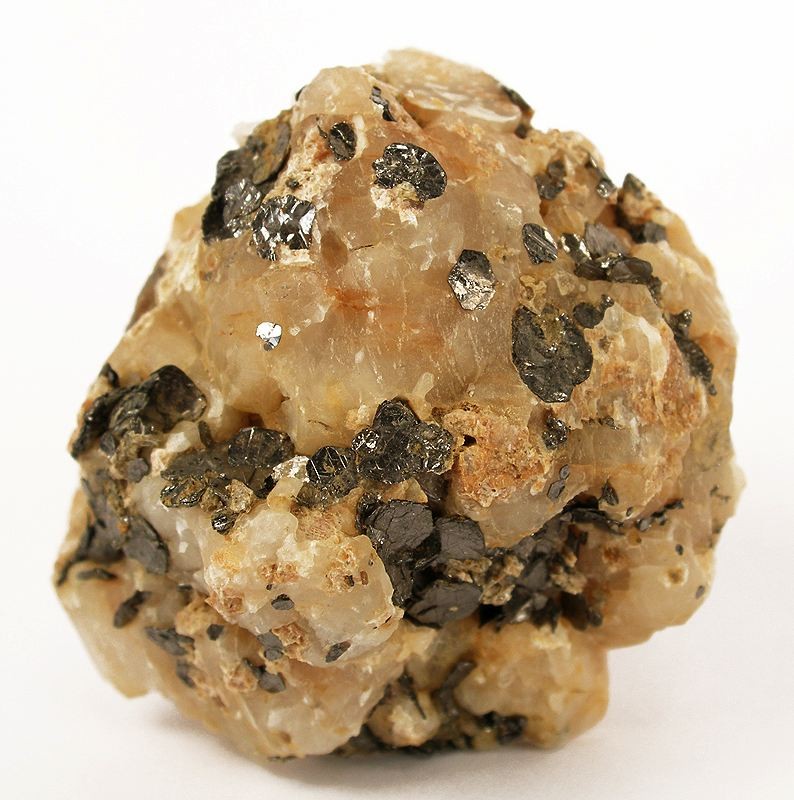
Graphite identification checklist
| Color | Black, Steel-gray | Look at a clean, dry surface in daylight. Color zoning, banding or spots are as diagnostic as the hue. |
|---|---|---|
| Luster | Metallic to dull/earthy | Turn it under a lamp: a true metallic shine reflects like polished metal and stays opaque at thin edges. |
| Transparency | Opaque | Hold a thin edge up to a bright light and note whether light passes through. |
| Mohs hardness | 1–2 | A fingernail (Mohs 2.5) scratches it easily. |
| Streak | Black, shiny gray-black | Drag a corner across unglazed porcelain (the back of a bathroom tile) and check the powder color. |
| Cleavage | Perfect basal {0001} | |
| Fracture | Uneven (rare; mostly cleaves), flexible flakes | |
| Specific gravity | 2.09–2.23 | Noticeably light in the hand for its size (specific gravity about 2.16). |
| Crystal system | Hexagonal |
Graphite look-alikes and how to tell them apart
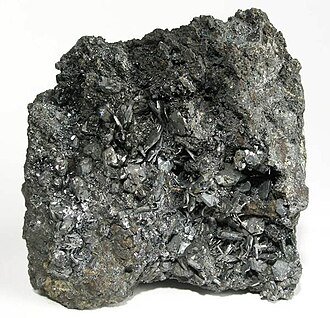
Chalcocite is harder (Mohs 2.5–3) than Graphite (Mohs 1–2), so Chalcocite will scratch Graphite and not the other way round. A fingernail (Mohs 2.5) scratches it easily. Graphite vs Chalcocite →
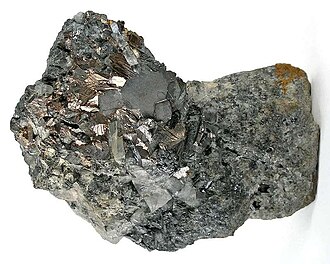
Both sit near Mohs 1–2, so a scratch test alone will not separate them. Lean on luster, streak and heft instead. Graphite vs Bismuth →
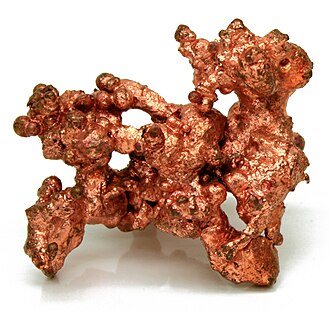
Copper is harder (Mohs 2.5–3) than Graphite (Mohs 1–2), so Copper will scratch Graphite and not the other way round. A fingernail (Mohs 2.5) scratches it easily. Graphite vs Copper →
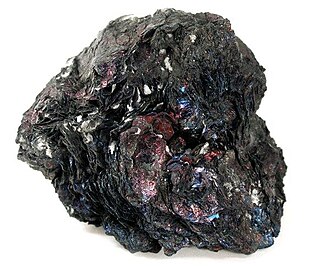
Both sit near Mohs 1–2, so a scratch test alone will not separate them. Lean on luster, streak and heft instead.
Graphite identification FAQ
How can you tell if a rock is Graphite?
Check the color (black and steel-gray), the metallic to dull/earthy luster, a Mohs hardness of 1–2 and a black, shiny gray-black streak. Photographing it with the StoneSnap app gives a match in seconds.
What is the hardness of Graphite?
Graphite has a Mohs hardness of 1–2. A fingernail (Mohs 2.5) scratches it easily.
What is the difference between Graphite and Chalcocite?
Graphite (Mohs 1–2, metallic to dull/earthy luster) and Chalcocite (Mohs 2.5–3, metallic luster) look alike, but hardness, streak and heft usually separate them. See the full Graphite vs Chalcocite comparison for a side-by-side table.
Is Graphite worth anything?
Entry-level Graphite specimens sell for around $2, typical collector pieces about $20, and premium examples $150 or more depending on size, quality and locality.
What color is Graphite?
Graphite is most often black and steel-gray. Color varies with impurities and locality, so confirm with hardness and luster rather than color alone.

