
Identification guide · Minerals
How to Identify Bauxite
Bauxite appears as a dull, earthy rock, usually reddish-brown, tan, or gray, often mottled and studded with small rounded pellets called pisoliths a few millimeters across. Luster ranges from dull to earthy, streak is typically pale yellow to reddish-brown from included iron oxide, and hardness is low and variable, generally 1 to 3, since it is a mixture rather than a single mineral. It lacks cleavage and breaks with an irregular, crumbly fracture. Bauxite is sometimes confused with laterite or iron-rich clay, but its characteristic pisolitic texture and aluminum-hydroxide composition set it apart.
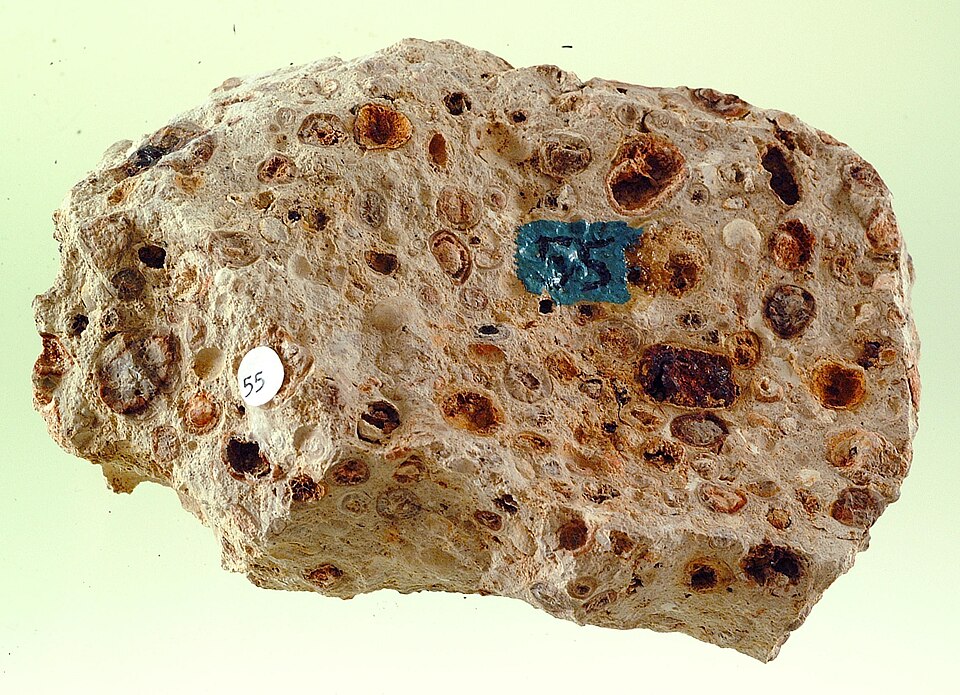
Bauxite identification checklist
| Color | Reddish brown, Tan, Gray, White, Yellow | Look at a clean, dry surface in daylight. Color zoning, banding or spots are as diagnostic as the hue. |
|---|---|---|
| Luster | Dull, earthy; slight luster on pisoliths | Compare a fresh surface with glass and metal; this luster is softer than either. |
| Transparency | Opaque | Hold a thin edge up to a bright light and note whether light passes through. |
| Mohs hardness | 1–3 | A fingernail (Mohs 2.5) scratches it easily. |
| Streak | White to yellowish | Drag a corner across unglazed porcelain (the back of a bathroom tile) and check the powder color. |
| Fracture | Earthy, conchoidal in pisoliths | Broken surfaces show smooth, curved, shell-like scoops. |
| Specific gravity | 2.0–2.55 | Noticeably light in the hand for its size (specific gravity about 2.275). |
Bauxite look-alikes and how to tell them apart
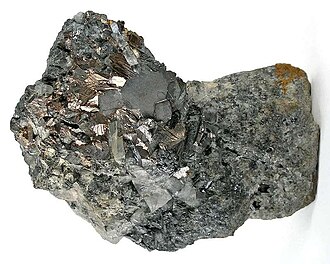
Both sit near Mohs 1–3, so a scratch test alone will not separate them. Lean on luster, streak and heft instead. Bauxite vs Bismuth →
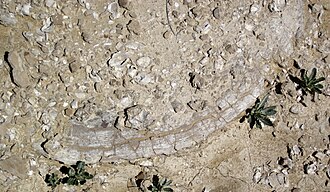
Both sit near Mohs 1–3, so a scratch test alone will not separate them. Lean on luster, streak and heft instead. Bauxite vs Chalk →
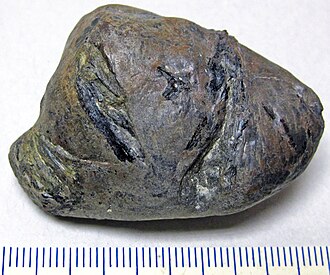
Both sit near Mohs 1–3, so a scratch test alone will not separate them. Lean on luster, streak and heft instead. Bauxite vs Claystone →
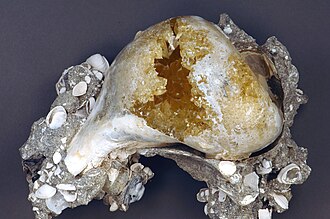
Coquina is harder (Mohs 3–4) than Bauxite (Mohs 1–3), so Coquina will scratch Bauxite and not the other way round. A fingernail (Mohs 2.5) scratches it easily.
Bauxite identification FAQ
How can you tell if a rock is Bauxite?
Check the color (reddish brown, tan, gray, and white), the dull, earthy; slight luster on pisoliths luster, a Mohs hardness of 1–3 and a white to yellowish streak. Photographing it with the StoneSnap app gives a match in seconds.
What is the hardness of Bauxite?
Bauxite has a Mohs hardness of 1–3. A fingernail (Mohs 2.5) scratches it easily.
What is the difference between Bauxite and Bismuth?
Bauxite (Mohs 1–3, dull, earthy; slight luster on pisoliths luster) and Bismuth (Mohs 2–2.5, metallic luster) look alike, but hardness, streak and heft usually separate them. See the full Bauxite vs Bismuth comparison for a side-by-side table.
Is Bauxite worth anything?
Entry-level Bauxite specimens sell for around $2, typical collector pieces about $20, and premium examples $150 or more depending on size, quality and locality.
What color is Bauxite?
Bauxite is most often reddish brown, tan, gray, and white. Color varies with impurities and locality, so confirm with hardness and luster rather than color alone.

