
Identification guide · Semi-Precious Stones
How to Identify Aquamarine
Aquamarine is usually light blue, blue-green, and greenish blue with a vitreous luster and is transparent. It has a Mohs hardness of 7.5. It scratches glass, steel and even quartz; only harder gems will mark it. Its streak is white. It is most often confused with Topaz, Beryl, and Tourmaline; the tests below separate them.
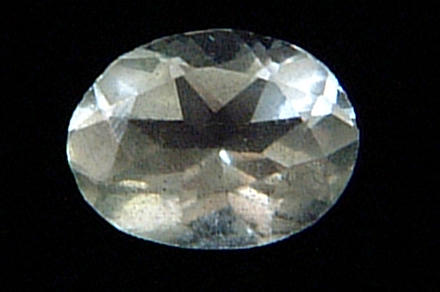
Aquamarine identification checklist
| Color | Light Blue, Blue-Green, Greenish Blue | Look at a clean, dry surface in daylight. Color zoning, banding or spots are as diagnostic as the hue. |
|---|---|---|
| Luster | Vitreous | Fresh surfaces shine like glass; a dull surface usually means weathering, so chip or wet a corner. |
| Transparency | Transparent | Hold a thin edge up to a bright light and note whether light passes through. |
| Mohs hardness | 7.5 | It scratches glass, steel and even quartz; only harder gems will mark it. |
| Streak | White | Drag a corner across unglazed porcelain (the back of a bathroom tile) and check the powder color. |
| Cleavage | Imperfect | |
| Fracture | Conchoidal | Broken surfaces show smooth, curved, shell-like scoops. |
| Specific gravity | 2.7 | Ordinary rock-like heft (specific gravity about 2.7), similar to quartz. |
| Crystal system | Hexagonal |
Extra tests for Aquamarine
Glass check. Aquamarine shares a glassy luster and conchoidal fracture with man-made glass. Glass sits near Mohs 5.5 and often contains round gas bubbles, so a hardness test and a hand lens separate them.
Aquamarine look-alikes and how to tell them apart
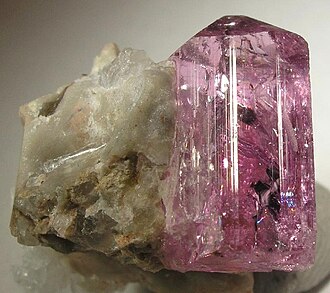
Both sit near Mohs 7.5, so a scratch test alone will not separate them. Lean on luster, streak and heft instead. Aquamarine vs Topaz →
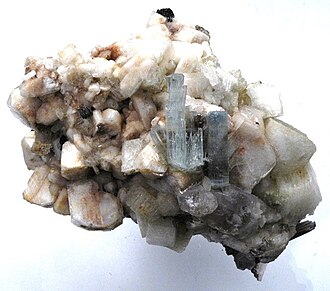
Both sit near Mohs 7.5, so a scratch test alone will not separate them. Lean on luster, streak and heft instead. Aquamarine vs Beryl →
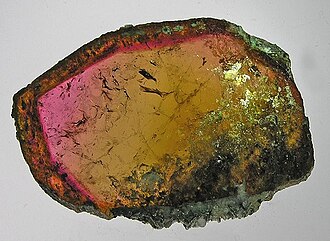
Both sit near Mohs 7.5, so a scratch test alone will not separate them. Lean on luster, streak and heft instead. Aquamarine vs Tourmaline →
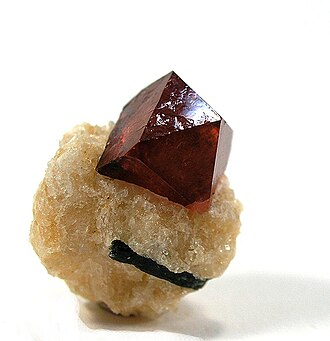
Both sit near Mohs 7.5, so a scratch test alone will not separate them. Lean on luster, streak and heft instead.
Is my Aquamarine real?
- Hardness: real Aquamarine sits at Mohs 7.5. Glass imitations are about 5.5, so genuine Aquamarine scratches glass while a glass fake cannot.
- Bubbles: round gas bubbles under a 10x loupe mean glass or resin, never a natural stone.
- Color: dyed material concentrates color in cracks and pores; look for pigment collecting at the edges of fractures.
- Temperature: natural crystals feel cool and take longer to warm in your hand than plastic or resin.
Field tips
- Check whether the specimen's color and texture match typical Aquamarine examples.
- Use hardness, streak, luster, grain size, and locality together; no single trait is enough for every specimen.
Aquamarine identification FAQ
How can you tell if a rock is Aquamarine?
Check the color (light blue, blue-green, and greenish blue), the vitreous luster, a Mohs hardness of 7.5 and a white streak. Photographing it with the StoneSnap app gives a match in seconds.
What is the hardness of Aquamarine?
Aquamarine has a Mohs hardness of 7.5. It scratches glass, steel and even quartz; only harder gems will mark it.
What is the difference between Aquamarine and Topaz?
Aquamarine (Mohs 7.5, vitreous luster) and Topaz (Mohs 8, vitreous luster) look alike, but hardness, streak and heft usually separate them. See the full Aquamarine vs Topaz comparison for a side-by-side table.
How do I know if my Aquamarine is real?
Real Aquamarine matches the hardness listed above, shows no round gas bubbles under magnification, and does not concentrate dye in cracks. Glass and resin fakes fail at least one of those checks.
Is Aquamarine worth anything?
Entry-level Aquamarine specimens sell for around $50, typical collector pieces about $300, and premium examples $5000 or more depending on size, quality and locality.
What color is Aquamarine?
Aquamarine is most often light blue, blue-green, and greenish blue. Color varies with impurities and locality, so confirm with hardness and luster rather than color alone.

