
Comparison · Feldspar Group vs Silicate Minerals
Feldspar vs Microcline
Feldspar and Microcline are easy to confuse. Both sit near Mohs 6–6.5, so a scratch test alone will not separate them. Lean on luster, streak and heft instead. Below is a side-by-side comparison of their properties and the quick tests that separate them.
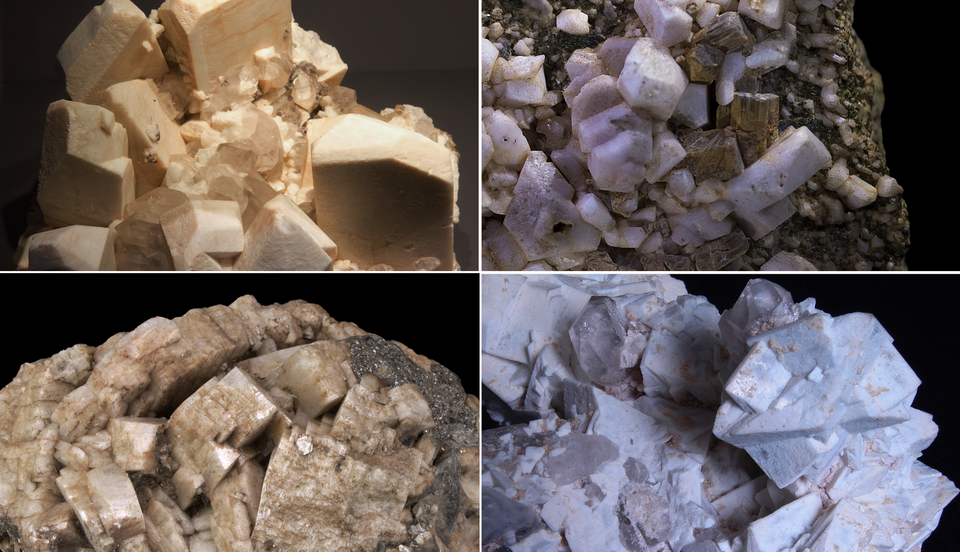
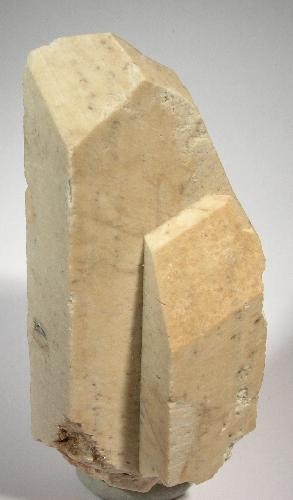
Key differences between Feldspar and Microcline
- Both sit near Mohs 6–6.5, so a scratch test alone will not separate them. Lean on luster, streak and heft instead.
- Hold a thin edge to the light: Feldspar is Transparent to translucent, Microcline is translucent.
- They overlap in pink, gray, and green, but Feldspar also comes in clear and Microcline also comes in white.
- Well-formed crystals give it away: Feldspar is Monoclinic to Triclinic (depending on species), Microcline is triclinic.
Feldspar vs Microcline properties
| Property | Feldspar | Microcline |
|---|---|---|
| Type | Feldspar Group | Silicate Minerals |
| Mohs hardness | 6–6.5 | 6 |
| Luster | Vitreous to pearly | vitreous |
| Streak | White | White |
| Transparency | Transparent to translucent | translucent |
| Specific gravity | 2.55–2.76 | 2.56 |
| Crystal system | Monoclinic to Triclinic (depending on species) | triclinic |
| Common colors | White, Pink, Gray, Green (amazonite), Colorless | White, Cream, Pink, Green, Gray |
| Rarity | common | common |
| Typical specimen value | $2–$150+ | $5–$300+ |
Which is more valuable?
Microcline is usually the more valuable of the two: a typical collector specimen runs about $40 against $20 for Feldspar, and premium Microcline can reach $300 or more.
About Feldspar
Feldspar is not a single mineral but a group of related aluminosilicate minerals, comprising the potassium feldspars, orthoclase, microcline, and sanidine, and the plagioclase series running from albite to anorthite, together making up roughly 60 percent of Earth's crust by volume. All share a similar framework silicate structure, two cleavage directions near 90 degrees, and moderate hardness, but differ in composition, color, and crystal system. As the most abundant mineral group on the planet, feldspar defines granite, basalt, gneiss, and countless other rock types.
About Microcline
Microcline is a potassium-rich feldspar and a rock-forming mineral in granites and pegmatites. Its blue-green gem variety, amazonite, is widely collected, while ordinary microcline appears as cream, pink, or gray crystals and masses.
Feldspar vs Microcline FAQ
Is Feldspar the same as Microcline?
No. Feldspar is a feldspar group while Microcline is a silicate mineral. Both sit near Mohs 6–6.5, so a scratch test alone will not separate them. Lean on luster, streak and heft instead.
How can you tell Feldspar from Microcline?
Both sit near Mohs 6–6.5, so a scratch test alone will not separate them. Lean on luster, streak and heft instead. Hold a thin edge to the light: Feldspar is Transparent to translucent, Microcline is translucent. They overlap in pink, gray, and green, but Feldspar also comes in clear and Microcline also comes in white.
Which is harder, Feldspar or Microcline?
They are about equally hard, both near Mohs 6–6.5.
Which is more valuable, Feldspar or Microcline?
Microcline is usually the more valuable of the two: a typical collector specimen runs about $40 against $20 for Feldspar, and premium Microcline can reach $300 or more.

