
Comparison · Minerals vs Feldspar Group
Datolite vs Feldspar
Datolite and Feldspar are easy to confuse. Feldspar is harder (Mohs 6–6.5) than Datolite (Mohs 5–5.5), so Feldspar will scratch Datolite and not the other way round. A steel knife blade (Mohs 5.5) scratches it; a copper coin does not. Below is a side-by-side comparison of their properties and the quick tests that separate them.
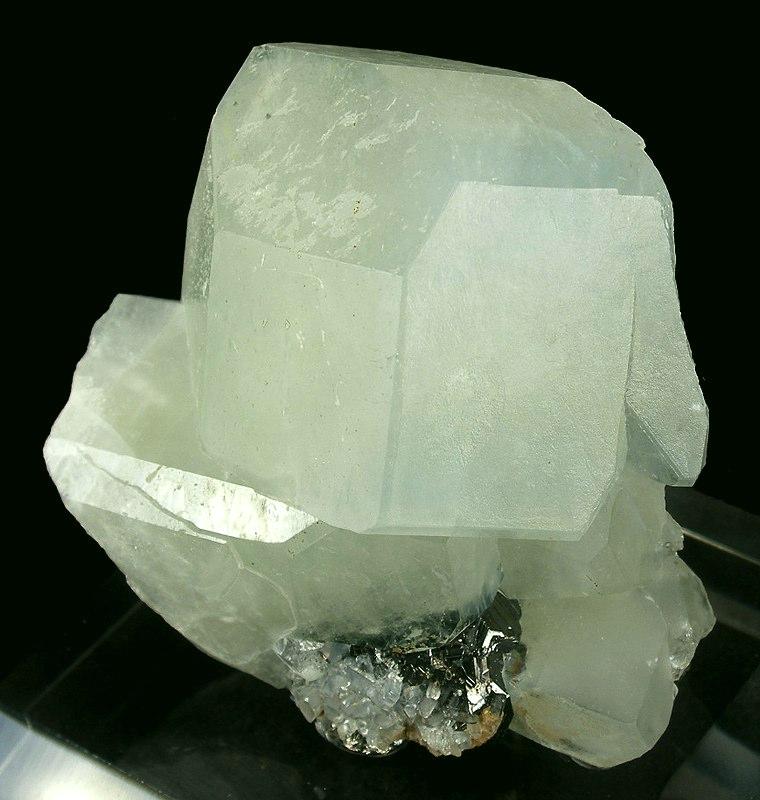
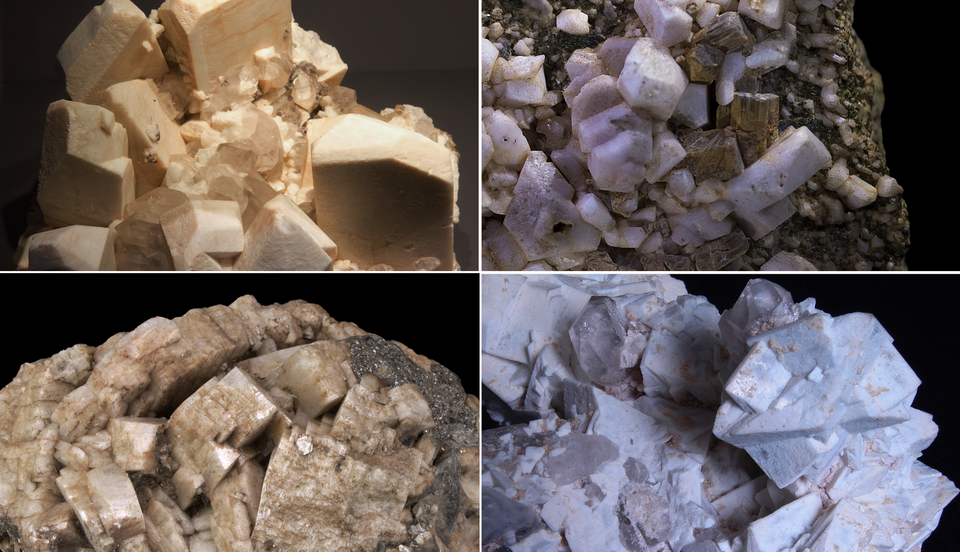
Key differences between Datolite and Feldspar
- Feldspar is harder (Mohs 6–6.5) than Datolite (Mohs 5–5.5), so Feldspar will scratch Datolite and not the other way round. A steel knife blade (Mohs 5.5) scratches it; a copper coin does not.
- They overlap in clear, green, and pink, but Datolite also comes in yellow and Feldspar also comes in gray.
- Well-formed crystals give it away: Datolite is Monoclinic, Feldspar is Monoclinic to Triclinic (depending on species).
Datolite vs Feldspar properties
| Property | Datolite | Feldspar |
|---|---|---|
| Type | Minerals | Feldspar Group |
| Mohs hardness | 5–5.5 | 6–6.5 |
| Luster | Vitreous, slightly greasy | Vitreous to pearly |
| Streak | White | White |
| Transparency | Transparent to translucent | Transparent to translucent |
| Specific gravity | 2.9–3.0 | 2.55–2.76 |
| Crystal system | Monoclinic | Monoclinic to Triclinic (depending on species) |
| Common colors | Colorless, White, Pale green, Yellow, Pink | White, Pink, Gray, Green (amazonite), Colorless |
| Rarity | common | common |
| Typical specimen value | $2–$150+ | $2–$150+ |
Which is more valuable?
Typical specimens of Datolite and Feldspar trade in a similar range, around $20.
About Datolite
Datolite is a calcium borosilicate mineral crystallizing in the monoclinic system, typically found as glassy, pale green to colorless crystals or as compact, porcelain-like nodules infilling cavities in basalt. It forms primarily through low-temperature hydrothermal activity following the cooling of basaltic lava flows. Its association with native copper deposits in Michigan's Keweenaw Peninsula has made it a favorite among mineral collectors in the region.
About Feldspar
Feldspar is not a single mineral but a group of related aluminosilicate minerals, comprising the potassium feldspars, orthoclase, microcline, and sanidine, and the plagioclase series running from albite to anorthite, together making up roughly 60 percent of Earth's crust by volume. All share a similar framework silicate structure, two cleavage directions near 90 degrees, and moderate hardness, but differ in composition, color, and crystal system. As the most abundant mineral group on the planet, feldspar defines granite, basalt, gneiss, and countless other rock types.
Datolite vs Feldspar FAQ
Is Datolite the same as Feldspar?
No. Datolite is a mineral while Feldspar is a feldspar group. Feldspar is harder (Mohs 6–6.5) than Datolite (Mohs 5–5.5), so Feldspar will scratch Datolite and not the other way round. A steel knife blade (Mohs 5.5) scratches it; a copper coin does not.
How can you tell Datolite from Feldspar?
Feldspar is harder (Mohs 6–6.5) than Datolite (Mohs 5–5.5), so Feldspar will scratch Datolite and not the other way round. A steel knife blade (Mohs 5.5) scratches it; a copper coin does not. They overlap in clear, green, and pink, but Datolite also comes in yellow and Feldspar also comes in gray. Well-formed crystals give it away: Datolite is Monoclinic, Feldspar is Monoclinic to Triclinic (depending on species).
Which is harder, Datolite or Feldspar?
Feldspar is harder: Mohs 6–6.5 against Mohs 5–5.5 for Datolite.
Which is more valuable, Datolite or Feldspar?
Typical specimens of Datolite and Feldspar trade in a similar range, around $20.

