
Comparison · Minerals vs Feldspar Group
Chrysoprase vs Feldspar
Chrysoprase and Feldspar are easy to confuse. Both sit near Mohs 6.5–7, so a scratch test alone will not separate them. Lean on luster, streak and heft instead. Below is a side-by-side comparison of their properties and the quick tests that separate them.
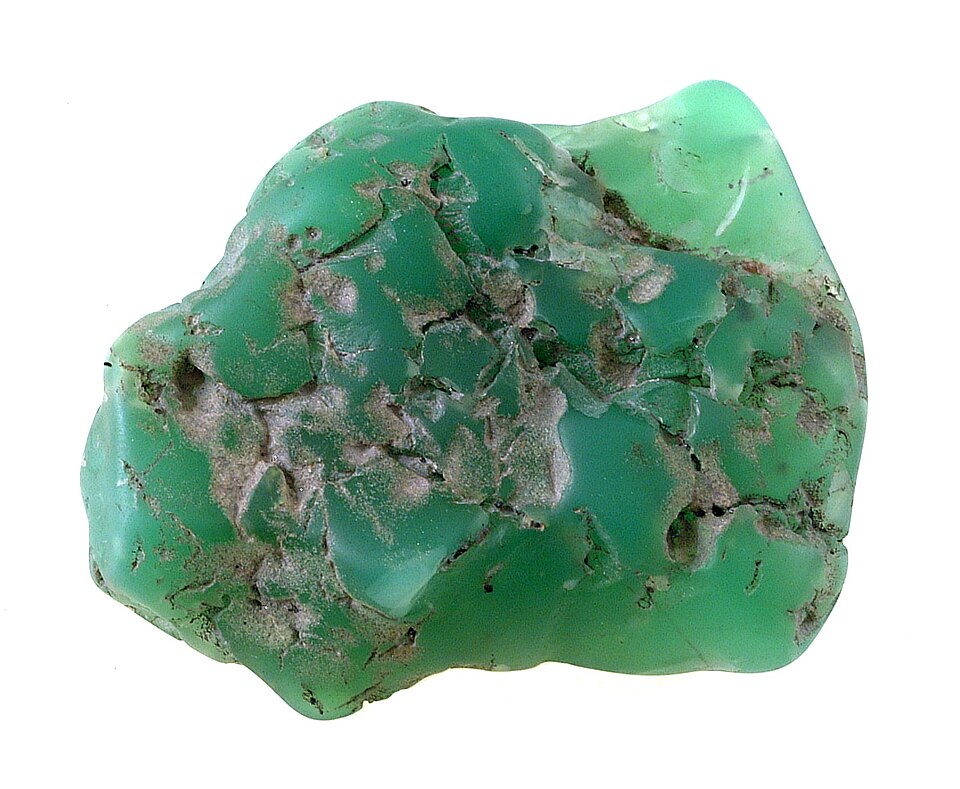
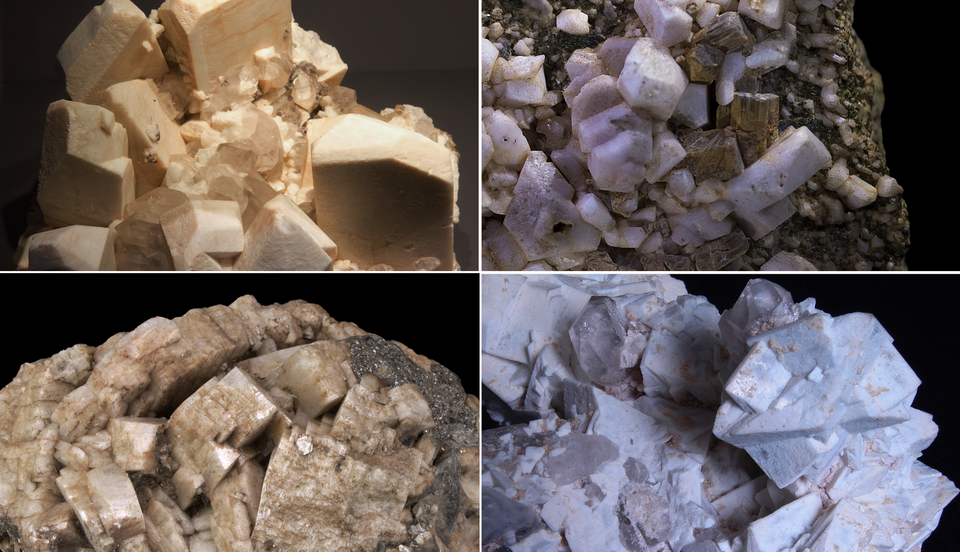
Key differences between Chrysoprase and Feldspar
- Both sit near Mohs 6.5–7, so a scratch test alone will not separate them. Lean on luster, streak and heft instead.
- Hold a thin edge to the light: Chrysoprase is Translucent, Feldspar is Transparent to translucent.
- They overlap in green, but Feldspar also comes in pink, gray, and clear.
- Well-formed crystals give it away: Chrysoprase is Trigonal (cryptocrystalline), Feldspar is Monoclinic to Triclinic (depending on species).
Chrysoprase vs Feldspar properties
| Property | Chrysoprase | Feldspar |
|---|---|---|
| Type | Minerals | Feldspar Group |
| Mohs hardness | 6.5–7 | 6–6.5 |
| Luster | Waxy to vitreous | Vitreous to pearly |
| Streak | White | White |
| Transparency | Translucent | Transparent to translucent |
| Specific gravity | 2.58–2.64 | 2.55–2.76 |
| Crystal system | Trigonal (cryptocrystalline) | Monoclinic to Triclinic (depending on species) |
| Common colors | Apple-green, Green (sometimes with darker spots) | White, Pink, Gray, Green (amazonite), Colorless |
| Rarity | common | common |
| Typical specimen value | $2–$150+ | $2–$150+ |
Which is more valuable?
Typical specimens of Chrysoprase and Feldspar trade in a similar range, around $20.
About Chrysoprase
Chrysoprase is an apple-green to yellowish-green variety of chalcedony, a cryptocrystalline form of quartz, colored by trace nickel locked into its silica structure. It forms in weathered nickel-rich ultramafic rocks, where silica-bearing groundwater deposits it in cavities and fractures. Fine material is prized in jewelry as one of the few naturally green gemstones that owes its hue to neither chromium nor copper.
About Feldspar
Feldspar is not a single mineral but a group of related aluminosilicate minerals, comprising the potassium feldspars, orthoclase, microcline, and sanidine, and the plagioclase series running from albite to anorthite, together making up roughly 60 percent of Earth's crust by volume. All share a similar framework silicate structure, two cleavage directions near 90 degrees, and moderate hardness, but differ in composition, color, and crystal system. As the most abundant mineral group on the planet, feldspar defines granite, basalt, gneiss, and countless other rock types.
Chrysoprase vs Feldspar FAQ
Is Chrysoprase the same as Feldspar?
No. Chrysoprase is a mineral while Feldspar is a feldspar group. Both sit near Mohs 6.5–7, so a scratch test alone will not separate them. Lean on luster, streak and heft instead.
How can you tell Chrysoprase from Feldspar?
Both sit near Mohs 6.5–7, so a scratch test alone will not separate them. Lean on luster, streak and heft instead. Hold a thin edge to the light: Chrysoprase is Translucent, Feldspar is Transparent to translucent. They overlap in green, but Feldspar also comes in pink, gray, and clear.
Which is harder, Chrysoprase or Feldspar?
Chrysoprase is harder: Mohs 6.5–7 against Mohs 6–6.5 for Feldspar.
Which is more valuable, Chrysoprase or Feldspar?
Typical specimens of Chrysoprase and Feldspar trade in a similar range, around $20.

