
Comparison · Minerals
Charoite vs Onyx
Charoite and Onyx are easy to confuse because both are minerals. Onyx is harder (Mohs 6.5–7) than Charoite (Mohs 5–6), so Onyx will scratch Charoite and not the other way round. It is about as hard as window glass: a knife barely marks it, while a steel file (Mohs 6.5) will. Below is a side-by-side comparison of their properties and the quick tests that separate them.
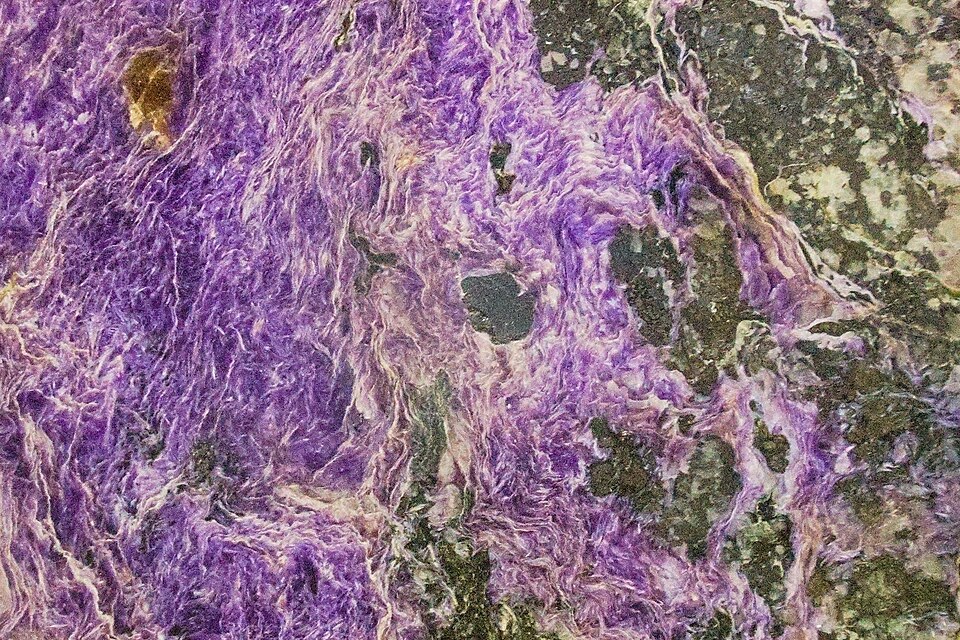
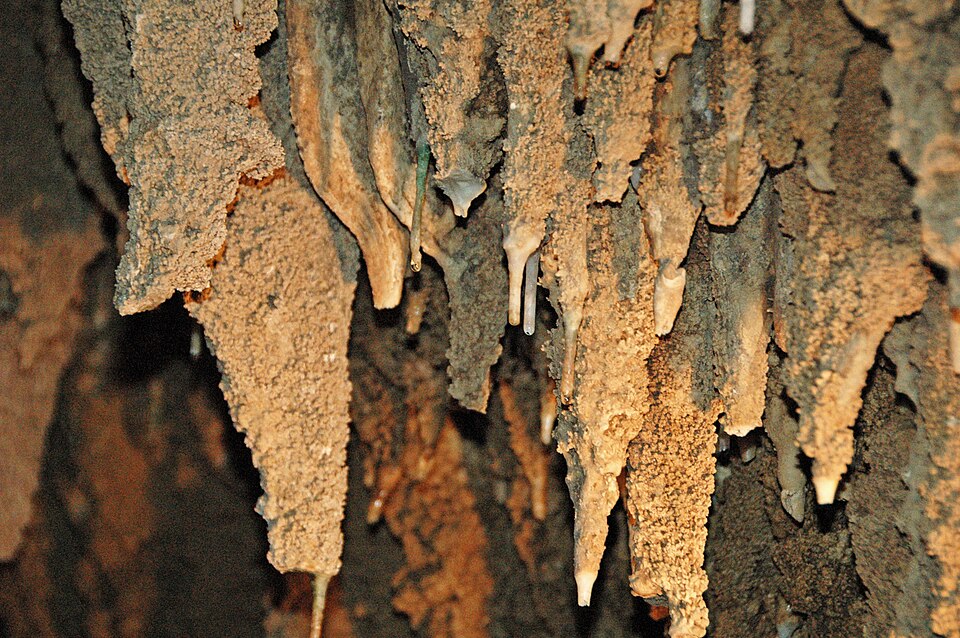
Key differences between Charoite and Onyx
- Onyx is harder (Mohs 6.5–7) than Charoite (Mohs 5–6), so Onyx will scratch Charoite and not the other way round. It is about as hard as window glass: a knife barely marks it, while a steel file (Mohs 6.5) will.
- They overlap in black and white, but Charoite also comes in purple and Onyx also comes in multicolored, brown, and red.
- Well-formed crystals give it away: Charoite is Monoclinic, Onyx is Trigonal (cryptocrystalline).
Charoite vs Onyx properties
| Property | Charoite | Onyx |
|---|---|---|
| Type | Minerals | Minerals |
| Mohs hardness | 5–6 | 6.5–7 |
| Luster | Vitreous to pearly/silky | Waxy to vitreous |
| Streak | White | White |
| Transparency | Translucent to opaque | Translucent to opaque |
| Specific gravity | 2.54–2.68 | 2.6–2.65 |
| Crystal system | Monoclinic | Trigonal (cryptocrystalline) |
| Common colors | Lilac, Purple, Violet with white/black veining | Black and white banded, Brown and white banded, Red and white banded |
| Rarity | common | common |
| Typical specimen value | $2–$150+ | $2–$150+ |
Which is more valuable?
Typical specimens of Charoite and Onyx trade in a similar range, around $20.
About Charoite
Charoite is a rare silicate mineral known for its swirling lavender to deep purple color and fibrous, interlocking crystal structure that produces a silky, almost pearly chatoyance. Its complex formula involves potassium, sodium, calcium, and silicon, and until recently it was found at only a single locality on Earth. The intricate mottled patterns of purple, white, and black seen in polished charoite come from intergrown veins of the mineral with aegirine and microcline.
About Onyx
Onyx is a banded variety of chalcedony, a cryptocrystalline form of quartz, distinguished from agate by its straight, parallel bands rather than agate's characteristically curved layers. Most commercial onyx sold in black and white banded slabs is actually dyed to enhance contrast, since naturally occurring true onyx with strong black-and-white banding is relatively uncommon. Chemically identical to other quartz varieties, onyx owes its distinctive look entirely to microscopic banding formed during slow silica deposition.
Charoite vs Onyx FAQ
Is Charoite the same as Onyx?
No. Both are minerals, but they are distinct species with different hardness, streak or luster. Onyx is harder (Mohs 6.5–7) than Charoite (Mohs 5–6), so Onyx will scratch Charoite and not the other way round. It is about as hard as window glass: a knife barely marks it, while a steel file (Mohs 6.5) will.
How can you tell Charoite from Onyx?
Onyx is harder (Mohs 6.5–7) than Charoite (Mohs 5–6), so Onyx will scratch Charoite and not the other way round. It is about as hard as window glass: a knife barely marks it, while a steel file (Mohs 6.5) will. They overlap in black and white, but Charoite also comes in purple and Onyx also comes in multicolored, brown, and red. Well-formed crystals give it away: Charoite is Monoclinic, Onyx is Trigonal (cryptocrystalline).
Which is harder, Charoite or Onyx?
Onyx is harder: Mohs 6.5–7 against Mohs 5–6 for Charoite.
Which is more valuable, Charoite or Onyx?
Typical specimens of Charoite and Onyx trade in a similar range, around $20.

