
Comparison · Minerals
Chalcedony vs Onyx
Chalcedony and Onyx are easy to confuse because both are minerals. Both sit near Mohs 6.5–7, so a scratch test alone will not separate them. Lean on luster, streak and heft instead. Below is a side-by-side comparison of their properties and the quick tests that separate them.
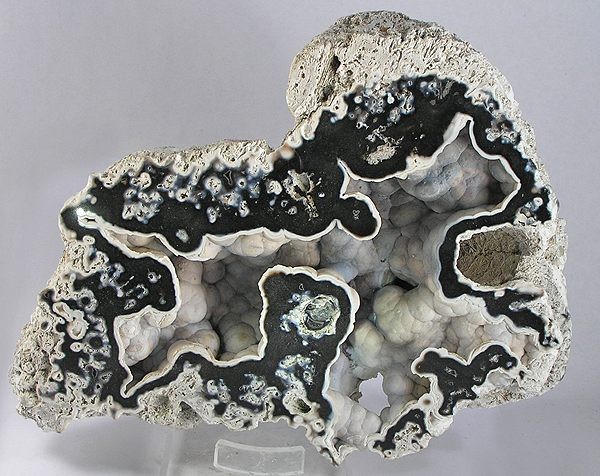
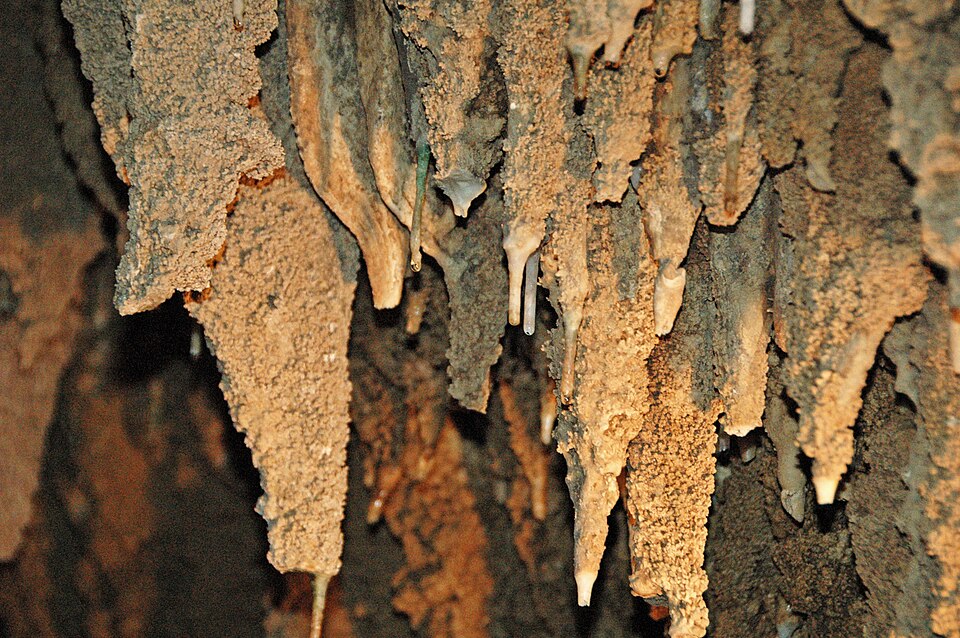
Key differences between Chalcedony and Onyx
- Both sit near Mohs 6.5–7, so a scratch test alone will not separate them. Lean on luster, streak and heft instead.
- Hold a thin edge to the light: Chalcedony is Translucent, Onyx is Translucent to opaque.
- They overlap in white, brown, and multicolored, but Chalcedony also comes in gray and blue and Onyx also comes in black and red.
Chalcedony vs Onyx properties
| Property | Chalcedony | Onyx |
|---|---|---|
| Type | Minerals | Minerals |
| Mohs hardness | 6.5–7 | 6.5–7 |
| Luster | Waxy to vitreous | Waxy to vitreous |
| Streak | White | White |
| Transparency | Translucent | Translucent to opaque |
| Specific gravity | 2.6–2.64 | 2.6–2.65 |
| Crystal system | Trigonal (cryptocrystalline) | Trigonal (cryptocrystalline) |
| Common colors | Blue-gray, White, Brown, Various (often dyed) | Black and white banded, Brown and white banded, Red and white banded |
| Rarity | common | common |
| Typical specimen value | $2–$150+ | $2–$150+ |
Which is more valuable?
Typical specimens of Chalcedony and Onyx trade in a similar range, around $20.
About Chalcedony
Chalcedony is a cryptocrystalline form of quartz made of microscopic fibrous crystals too small to resolve without magnification, chemically identical to ordinary quartz but structurally distinct from it. It serves as the parent material for a large family of banded and colored varieties, including agate, onyx, carnelian, and chrysoprase. Chalcedony typically forms a waxy, translucent to semi-translucent mass rather than distinct visible crystals.
About Onyx
Onyx is a banded variety of chalcedony, a cryptocrystalline form of quartz, distinguished from agate by its straight, parallel bands rather than agate's characteristically curved layers. Most commercial onyx sold in black and white banded slabs is actually dyed to enhance contrast, since naturally occurring true onyx with strong black-and-white banding is relatively uncommon. Chemically identical to other quartz varieties, onyx owes its distinctive look entirely to microscopic banding formed during slow silica deposition.
Chalcedony vs Onyx FAQ
Is Chalcedony the same as Onyx?
No. Both are minerals, but they are distinct species with different hardness, streak or luster. Both sit near Mohs 6.5–7, so a scratch test alone will not separate them. Lean on luster, streak and heft instead.
How can you tell Chalcedony from Onyx?
Both sit near Mohs 6.5–7, so a scratch test alone will not separate them. Lean on luster, streak and heft instead. Hold a thin edge to the light: Chalcedony is Translucent, Onyx is Translucent to opaque. They overlap in white, brown, and multicolored, but Chalcedony also comes in gray and blue and Onyx also comes in black and red.
Which is harder, Chalcedony or Onyx?
They are about equally hard, both near Mohs 6.5–7.
Which is more valuable, Chalcedony or Onyx?
Typical specimens of Chalcedony and Onyx trade in a similar range, around $20.

