
Comparison · Minerals
Charoite vs Diopside
Charoite and Diopside are easy to confuse because both are minerals. Both sit near Mohs 5–6, so a scratch test alone will not separate them. Lean on luster, streak and heft instead. Below is a side-by-side comparison of their properties and the quick tests that separate them.
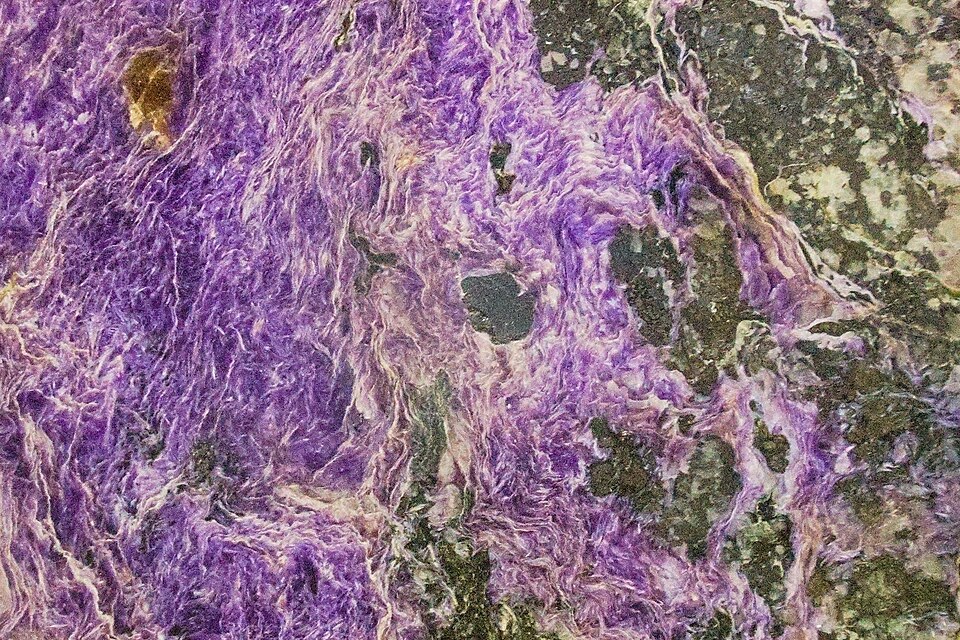
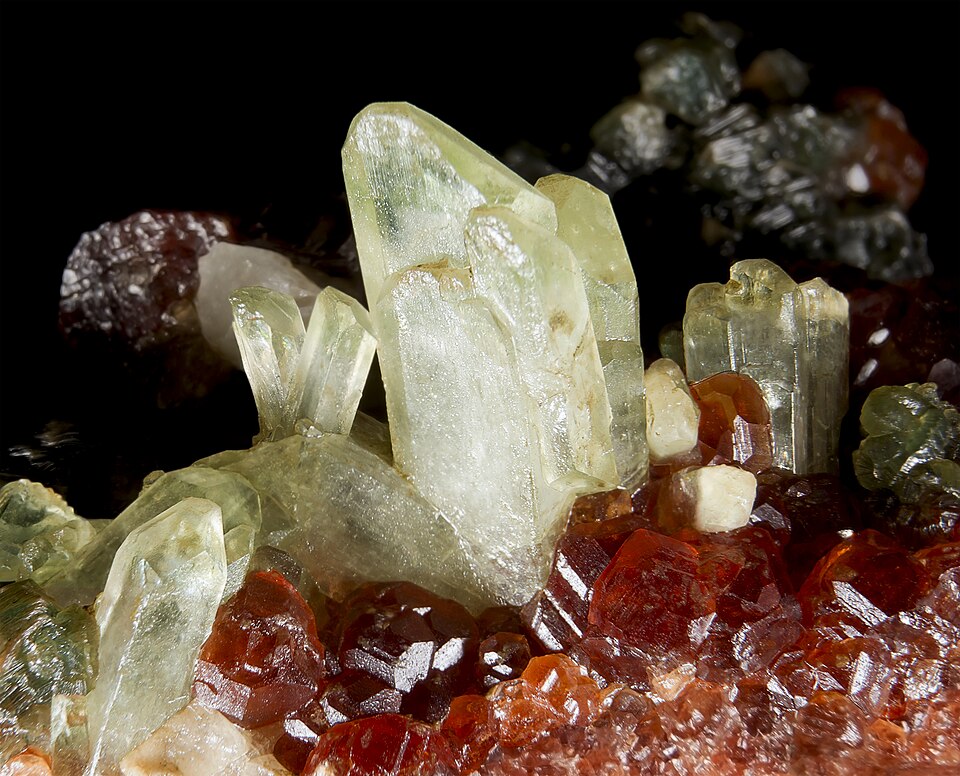
Key differences between Charoite and Diopside
- Both sit near Mohs 5–6, so a scratch test alone will not separate them. Lean on luster, streak and heft instead.
- Diopside feels noticeably heavier for its size (specific gravity 3.2–3.3 versus 2.54–2.68 for Charoite).
- Hold a thin edge to the light: Charoite is Translucent to opaque, Diopside is Transparent to translucent.
- They overlap in purple, black, and white, but Diopside also comes in green, gray, blue, and multicolored.
Charoite vs Diopside properties
| Property | Charoite | Diopside |
|---|---|---|
| Type | Minerals | Minerals |
| Mohs hardness | 5–6 | 5.5–6.5 |
| Luster | Vitreous to pearly/silky | Vitreous |
| Streak | White | White |
| Transparency | Translucent to opaque | Transparent to translucent |
| Specific gravity | 2.54–2.68 | 3.2–3.3 |
| Crystal system | Monoclinic | Monoclinic |
| Common colors | Lilac, Purple, Violet with white/black veining | Light to dark green, White, Gray, Blue-violet (violane), Black (chromian varieties) |
| Rarity | common | common |
| Typical specimen value | $2–$150+ | $2–$150+ |
Which is more valuable?
Typical specimens of Charoite and Diopside trade in a similar range, around $20.
About Charoite
Charoite is a rare silicate mineral known for its swirling lavender to deep purple color and fibrous, interlocking crystal structure that produces a silky, almost pearly chatoyance. Its complex formula involves potassium, sodium, calcium, and silicon, and until recently it was found at only a single locality on Earth. The intricate mottled patterns of purple, white, and black seen in polished charoite come from intergrown veins of the mineral with aegirine and microcline.
About Diopside
Diopside is a calcium magnesium silicate pyroxene mineral, CaMgSi2O6, common in metamorphosed limestones and mafic to ultramafic igneous rocks. It typically forms stubby prismatic crystals with a nearly square cross-section, a hallmark of the pyroxene group's characteristic cleavage angles. Diopside's color ranges from colorless to deep green depending on iron and chromium content, and chromium-rich varieties are prized as gem material.
Charoite vs Diopside FAQ
Is Charoite the same as Diopside?
No. Both are minerals, but they are distinct species with different hardness, streak or luster. Both sit near Mohs 5–6, so a scratch test alone will not separate them. Lean on luster, streak and heft instead.
How can you tell Charoite from Diopside?
Both sit near Mohs 5–6, so a scratch test alone will not separate them. Lean on luster, streak and heft instead. Diopside feels noticeably heavier for its size (specific gravity 3.2–3.3 versus 2.54–2.68 for Charoite). Hold a thin edge to the light: Charoite is Translucent to opaque, Diopside is Transparent to translucent.
Which is harder, Charoite or Diopside?
Diopside is harder: Mohs 5.5–6.5 against Mohs 5–6 for Charoite.
Which is more valuable, Charoite or Diopside?
Typical specimens of Charoite and Diopside trade in a similar range, around $20.

