
Comparison · Minerals vs Silicate Minerals
Beryl vs Spodumene
Beryl and Spodumene are easy to confuse. Beryl is harder (Mohs 7.5–8) than Spodumene (Mohs 6.75), so Beryl will scratch Spodumene and not the other way round. It scratches glass and a steel knife and cannot be scratched by a steel file. Below is a side-by-side comparison of their properties and the quick tests that separate them.
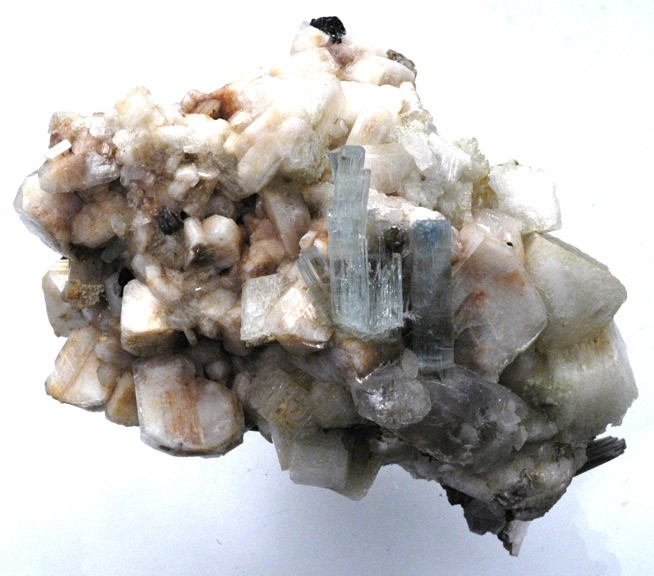
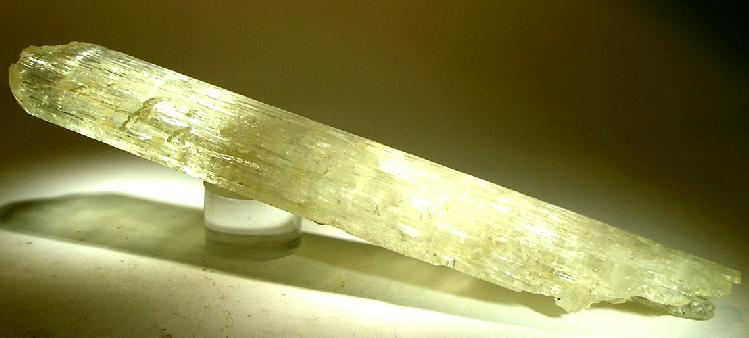
Key differences between Beryl and Spodumene
- Beryl is harder (Mohs 7.5–8) than Spodumene (Mohs 6.75), so Beryl will scratch Spodumene and not the other way round. It scratches glass and a steel knife and cannot be scratched by a steel file.
- Hold a thin edge to the light: Beryl is Transparent to translucent, Spodumene is transparent.
- They overlap in green, pink, yellow, and clear, but Beryl also comes in blue and Spodumene also comes in purple.
- Well-formed crystals give it away: Beryl is Hexagonal, Spodumene is monoclinic.
Beryl vs Spodumene properties
| Property | Beryl | Spodumene |
|---|---|---|
| Type | Minerals | Silicate Minerals |
| Mohs hardness | 7.5–8 | 6.75 |
| Luster | Vitreous | vitreous |
| Streak | White | White |
| Transparency | Transparent to translucent | transparent |
| Specific gravity | 2.63–2.92 | 3.15 |
| Crystal system | Hexagonal | monoclinic |
| Common colors | Green (emerald), Blue (aquamarine), Pink (morganite), Yellow (heliodor), Colorless (goshenite) | Pink, Lilac, Green, Yellow, Colorless |
| Rarity | common | uncommon |
| Typical specimen value | $2–$150+ | $10–$800+ |
Which is more valuable?
Spodumene is usually the more valuable of the two: a typical collector specimen runs about $110 against $20 for Beryl, and premium Spodumene can reach $800 or more.
About Beryl
Beryl is a beryllium aluminum cyclosilicate, Be3Al2Si6O18, that crystallizes in the hexagonal system as six-sided prisms. Pure beryl is colorless, but trace elements produce a family of well-known gem varieties, including green emerald, blue-green aquamarine, and pink morganite. It typically forms in granite pegmatites, where slow cooling allows large, well-formed crystals to develop.
About Spodumene
Spodumene is a lithium aluminum pyroxene found in granite pegmatites. It forms flattened prismatic crystals with perfect prismatic cleavage, and its transparent gem varieties include pink-lilac kunzite and green hiddenite.
Beryl vs Spodumene FAQ
Is Beryl the same as Spodumene?
No. Beryl is a mineral while Spodumene is a silicate mineral. Beryl is harder (Mohs 7.5–8) than Spodumene (Mohs 6.75), so Beryl will scratch Spodumene and not the other way round. It scratches glass and a steel knife and cannot be scratched by a steel file.
How can you tell Beryl from Spodumene?
Beryl is harder (Mohs 7.5–8) than Spodumene (Mohs 6.75), so Beryl will scratch Spodumene and not the other way round. It scratches glass and a steel knife and cannot be scratched by a steel file. Hold a thin edge to the light: Beryl is Transparent to translucent, Spodumene is transparent. They overlap in green, pink, yellow, and clear, but Beryl also comes in blue and Spodumene also comes in purple.
Which is harder, Beryl or Spodumene?
Beryl is harder: Mohs 7.5–8 against Mohs 6.75 for Spodumene.
Which is more valuable, Beryl or Spodumene?
Spodumene is usually the more valuable of the two: a typical collector specimen runs about $110 against $20 for Beryl, and premium Spodumene can reach $800 or more.

