
Identification guide · Sedimentary Rocks
How to Identify Coquina
Coquina is easily recognized by its loose, granular texture made up of visible, often broken shell and coral fragments held together by a chalky calcium carbonate cement. It has a dull, earthy luster, a hardness of around 3, close to that of calcite, and reacts readily with dilute acid, fizzing due to its carbonate content. The rock is porous, crumbly at the edges, and typically pale tan, cream, or gray. It is distinguished from ordinary fossiliferous limestone by its loose, poorly compacted, shell-dominated fabric.
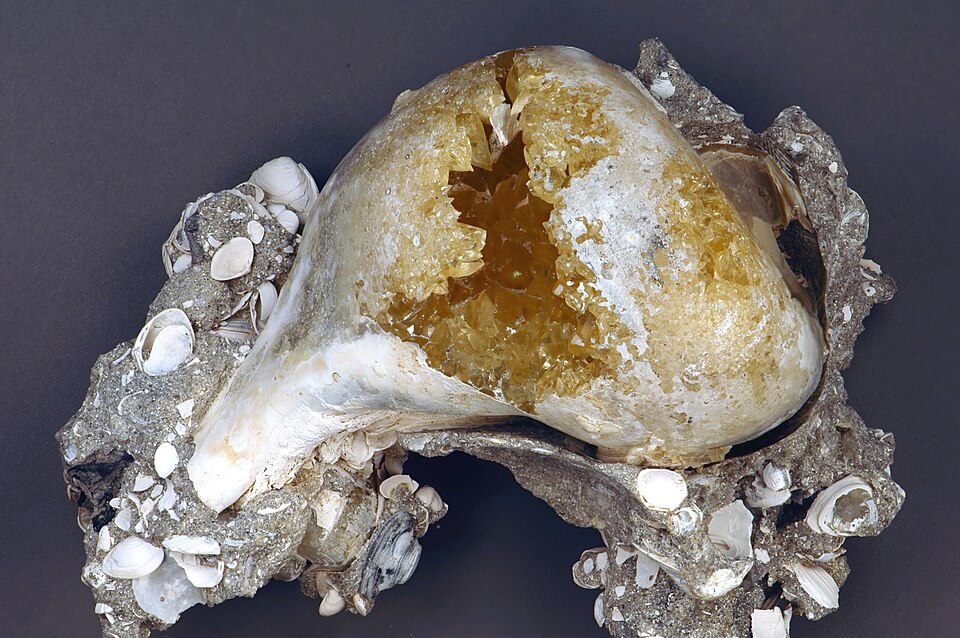
Coquina identification checklist
| Color | White, Tan, Cream, Gray | Look at a clean, dry surface in daylight. Color zoning, banding or spots are as diagnostic as the hue. |
|---|---|---|
| Luster | Dull | Compare a fresh surface with glass and metal; this luster is softer than either. |
| Transparency | Opaque | Hold a thin edge up to a bright light and note whether light passes through. |
| Mohs hardness | 3–4 | A steel knife blade (Mohs 5.5) scratches it; a copper coin does not. |
| Fracture | Irregular, porous/fragmental | |
| Specific gravity | 1.8–2.4 | Noticeably light in the hand for its size (specific gravity about 2.1). |
Extra tests for Coquina
Acid test. Fizzes in vinegar or dilute hydrochloric acid because of its carbonate content.
Coquina look-alikes and how to tell them apart
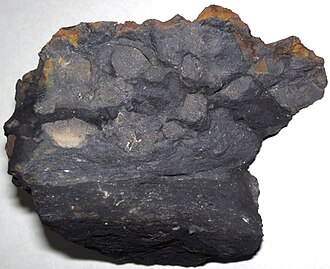
Both sit near Mohs 3–4, so a scratch test alone will not separate them. Lean on luster, streak and heft instead. Coquina vs Limestone →
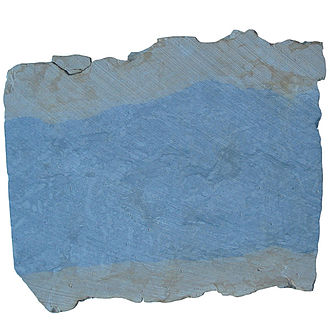
Both sit near Mohs 3–4, so a scratch test alone will not separate them. Lean on luster, streak and heft instead. Coquina vs Dolostone →
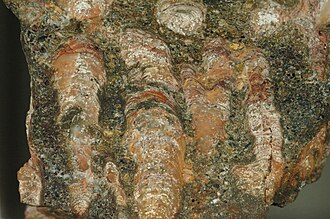
Both sit near Mohs 3–4, so a scratch test alone will not separate them. Lean on luster, streak and heft instead. Coquina vs Oolite →
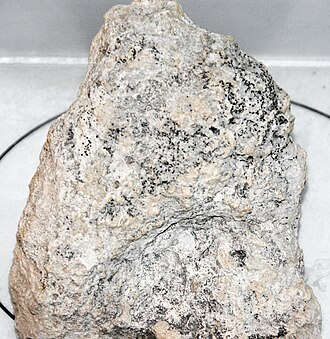
Both sit near Mohs 3–4, so a scratch test alone will not separate them. Lean on luster, streak and heft instead.
Coquina identification FAQ
How can you tell if a rock is Coquina?
Check the color (white, tan, cream, and gray), the dull luster, a Mohs hardness of 3–4. Photographing it with the StoneSnap app gives a match in seconds.
What is the hardness of Coquina?
Coquina has a Mohs hardness of 3–4. A steel knife blade (Mohs 5.5) scratches it; a copper coin does not.
What is the difference between Coquina and Limestone?
Coquina (Mohs 3–4, dull luster) and Limestone (Mohs 3, dull luster) look alike, but hardness, streak and heft usually separate them. See the full Coquina vs Limestone comparison for a side-by-side table.
Is Coquina worth anything?
Entry-level Coquina specimens sell for around $1, typical collector pieces about $10, and premium examples $75 or more depending on size, quality and locality.
What color is Coquina?
Coquina is most often white, tan, cream, and gray. Color varies with impurities and locality, so confirm with hardness and luster rather than color alone.

