
Comparison · Metamorphic Rocks
Phyllite vs Schist
Phyllite and Schist are easy to confuse because both are metamorphic rocks. Schist is harder (Mohs 2.5–7) than Phyllite (Mohs 2.5–4), so Schist will scratch Phyllite and not the other way round. A copper coin (Mohs 3.5) scratches it, but a fingernail does not. Below is a side-by-side comparison of their properties and the quick tests that separate them.
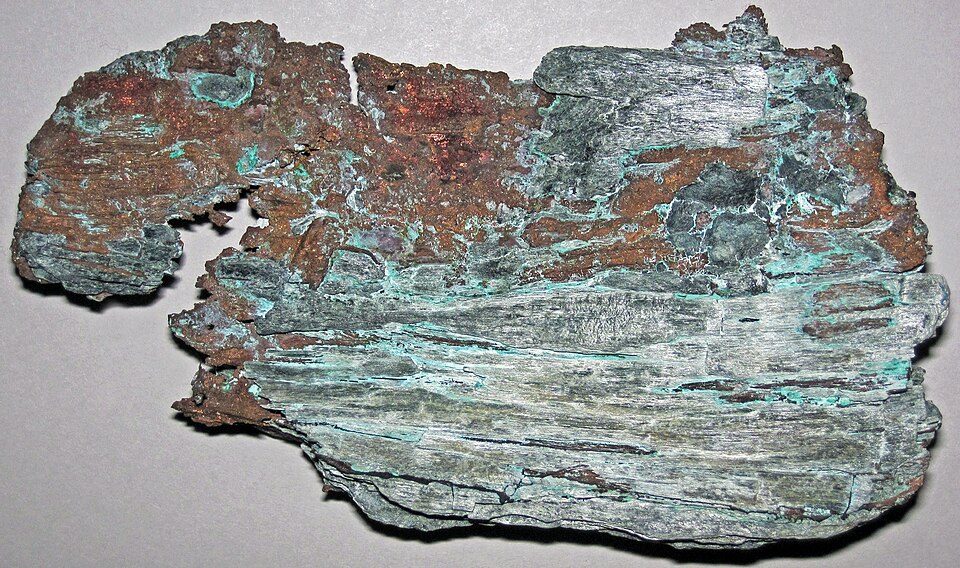
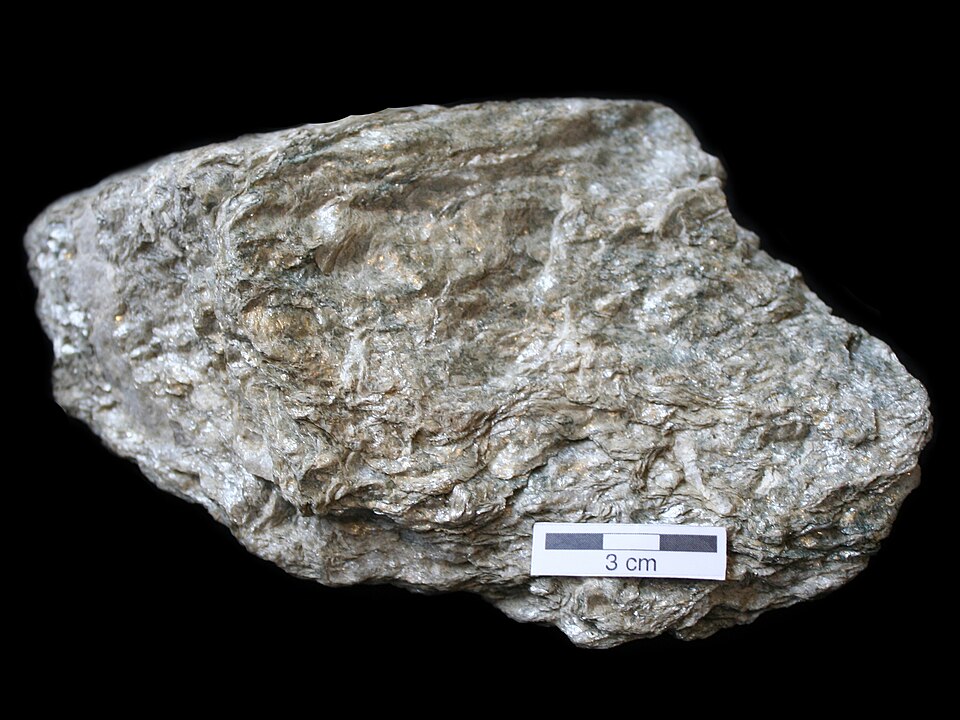
Key differences between Phyllite and Schist
- Schist is harder (Mohs 2.5–7) than Phyllite (Mohs 2.5–4), so Schist will scratch Phyllite and not the other way round. A copper coin (Mohs 3.5) scratches it, but a fingernail does not.
- Luster is different: Phyllite is silky to satiny (sericite/chlorite sheen) while Schist is vitreous to silky/glittery (mica-rich).
- They overlap in gray, green, and black, but Schist also comes in yellow.
Phyllite vs Schist properties
| Property | Phyllite | Schist |
|---|---|---|
| Type | Metamorphic Rocks | Metamorphic Rocks |
| Mohs hardness | 2.5–4 | 2.5–7 |
| Luster | Silky to satiny (sericite/chlorite sheen) | Vitreous to silky/glittery (mica-rich) |
| Transparency | Opaque | Opaque |
| Specific gravity | 2.7–2.9 | 2.7–3.0 |
| Common colors | Silvery gray, Greenish gray, Black | Silver-gray, Golden (mica-rich), Green (chlorite/talc schist), Black |
| Rarity | common | common |
| Typical specimen value | $1–$75+ | $1–$75+ |
Which is more valuable?
Typical specimens of Phyllite and Schist trade in a similar range, around $10.
About Phyllite
Phyllite is a fine-grained metamorphic rock that represents an intermediate grade between low-grade slate and higher-grade schist, formed by the continued metamorphism of shale or slate under increasing heat and pressure. Its surfaces show a distinctive silky, satiny sheen produced by microscopic mica and chlorite crystals just large enough to reflect light but too small to see individually. Phyllite typically splits along wavy, crenulated foliation surfaces rather than the perfectly flat planes of slate.
About Schist
Schist is a medium- to high-grade metamorphic rock defined by strong foliation from visible, aligned flakes of platy minerals like mica, giving it a pronounced sheen and a tendency to split along wavy surfaces. It forms through the continued metamorphism of shale, phyllite, or similar fine-grained rock under sustained heat and pressure, deep within mountain belts. Schist is typically named for its dominant mineral, such as mica schist, garnet schist, or chlorite schist.
Phyllite vs Schist FAQ
Is Phyllite the same as Schist?
No. Both are metamorphic rocks, but they are distinct rock types with different hardness, streak or luster. Schist is harder (Mohs 2.5–7) than Phyllite (Mohs 2.5–4), so Schist will scratch Phyllite and not the other way round. A copper coin (Mohs 3.5) scratches it, but a fingernail does not.
How can you tell Phyllite from Schist?
Schist is harder (Mohs 2.5–7) than Phyllite (Mohs 2.5–4), so Schist will scratch Phyllite and not the other way round. A copper coin (Mohs 3.5) scratches it, but a fingernail does not. Luster is different: Phyllite is silky to satiny (sericite/chlorite sheen) while Schist is vitreous to silky/glittery (mica-rich). They overlap in gray, green, and black, but Schist also comes in yellow.
Which is harder, Phyllite or Schist?
Schist is harder: Mohs 2.5–7 against Mohs 2.5–4 for Phyllite.
Which is more valuable, Phyllite or Schist?
Typical specimens of Phyllite and Schist trade in a similar range, around $10.

