
Comparison · Silicate Minerals vs Minerals
Kaolinite vs Talc
Kaolinite and Talc are easy to confuse. Kaolinite is harder (Mohs 2) than Talc (Mohs 1), so Kaolinite will scratch Talc and not the other way round. A fingernail (Mohs 2.5) scratches it easily. Below is a side-by-side comparison of their properties and the quick tests that separate them.
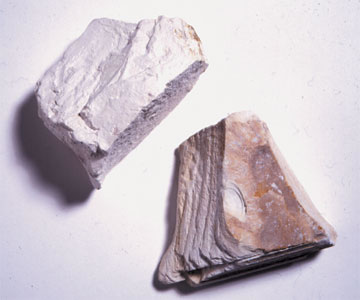
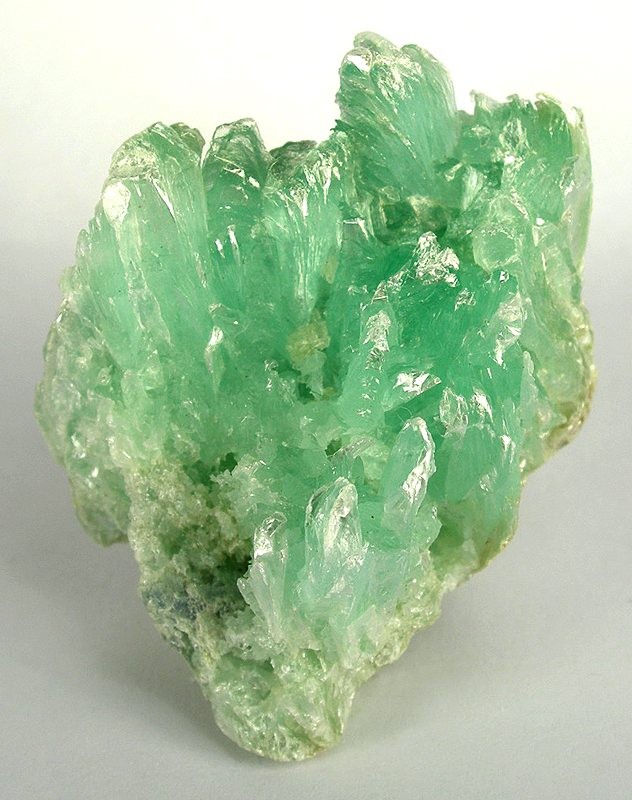
Key differences between Kaolinite and Talc
- Kaolinite is harder (Mohs 2) than Talc (Mohs 1), so Kaolinite will scratch Talc and not the other way round. A fingernail (Mohs 2.5) scratches it easily.
- Luster is different: Kaolinite is earthy while Talc is pearly to greasy/waxy.
- Hold a thin edge to the light: Kaolinite is opaque, Talc is Translucent to opaque.
- They overlap in white and gray, but Kaolinite also comes in yellow and Talc also comes in green and brown.
- Well-formed crystals give it away: Kaolinite is triclinic, Talc is Monoclinic.
Kaolinite vs Talc properties
| Property | Kaolinite | Talc |
|---|---|---|
| Type | Silicate Minerals | Minerals |
| Mohs hardness | 2 | 1 |
| Luster | earthy | Pearly to greasy/waxy |
| Streak | White | White |
| Transparency | opaque | Translucent to opaque |
| Specific gravity | 2.6 | 2.5–2.8 |
| Crystal system | triclinic | Monoclinic |
| Common colors | White, Cream, Pale yellow, Light gray | White, Pale green, Gray, Brown |
| Rarity | common | common |
| Typical specimen value | $2–$80+ | $2–$150+ |
Which is more valuable?
Talc is usually the more valuable of the two: a typical collector specimen runs about $20 against $15 for Kaolinite, and premium Talc can reach $150 or more.
About Kaolinite
Kaolinite is a soft white clay mineral and the main component of the rock kaolin, or china clay. It forms fine-grained earthy masses produced by the weathering of feldspar-rich rocks and is a key industrial raw material.
About Talc
Talc is a hydrous magnesium silicate, Mg3Si4O10(OH)2, and the softest mineral known, defining hardness 1 on the Mohs scale, easily scratched by a fingernail. It forms through the hydrothermal alteration of magnesium-rich rocks like dolomite, serpentine, or ultramafic igneous rock, and has a distinctively greasy, soapy feel. Massive, compact talc is known as soapstone and has been carved for cookware, sculpture, and ornamental objects for thousands of years.
Kaolinite vs Talc FAQ
Is Kaolinite the same as Talc?
No. Kaolinite is a silicate mineral while Talc is a mineral. Kaolinite is harder (Mohs 2) than Talc (Mohs 1), so Kaolinite will scratch Talc and not the other way round. A fingernail (Mohs 2.5) scratches it easily.
How can you tell Kaolinite from Talc?
Kaolinite is harder (Mohs 2) than Talc (Mohs 1), so Kaolinite will scratch Talc and not the other way round. A fingernail (Mohs 2.5) scratches it easily. Luster is different: Kaolinite is earthy while Talc is pearly to greasy/waxy. Hold a thin edge to the light: Kaolinite is opaque, Talc is Translucent to opaque.
Which is harder, Kaolinite or Talc?
Kaolinite is harder: Mohs 2 against Mohs 1 for Talc.
Which is more valuable, Kaolinite or Talc?
Talc is usually the more valuable of the two: a typical collector specimen runs about $20 against $15 for Kaolinite, and premium Talc can reach $150 or more.

