
Comparison · Minerals
Grossular vs Hessonite
Grossular and Hessonite are easy to confuse because both are minerals. Both sit near Mohs 6.5–7.5, so a scratch test alone will not separate them. Lean on luster, streak and heft instead. Below is a side-by-side comparison of their properties and the quick tests that separate them.
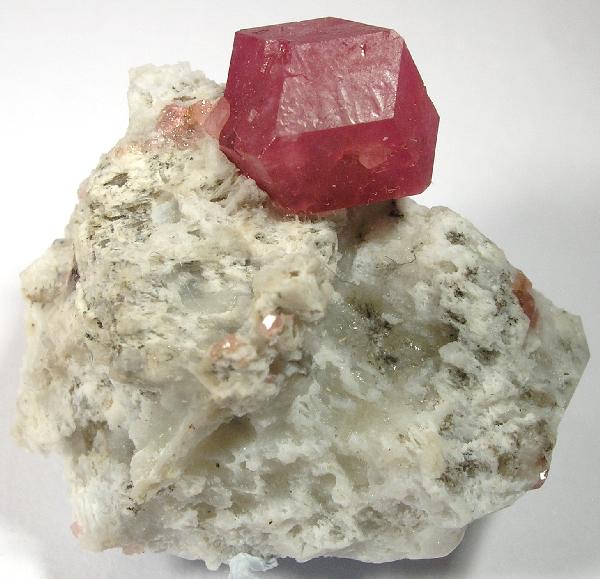
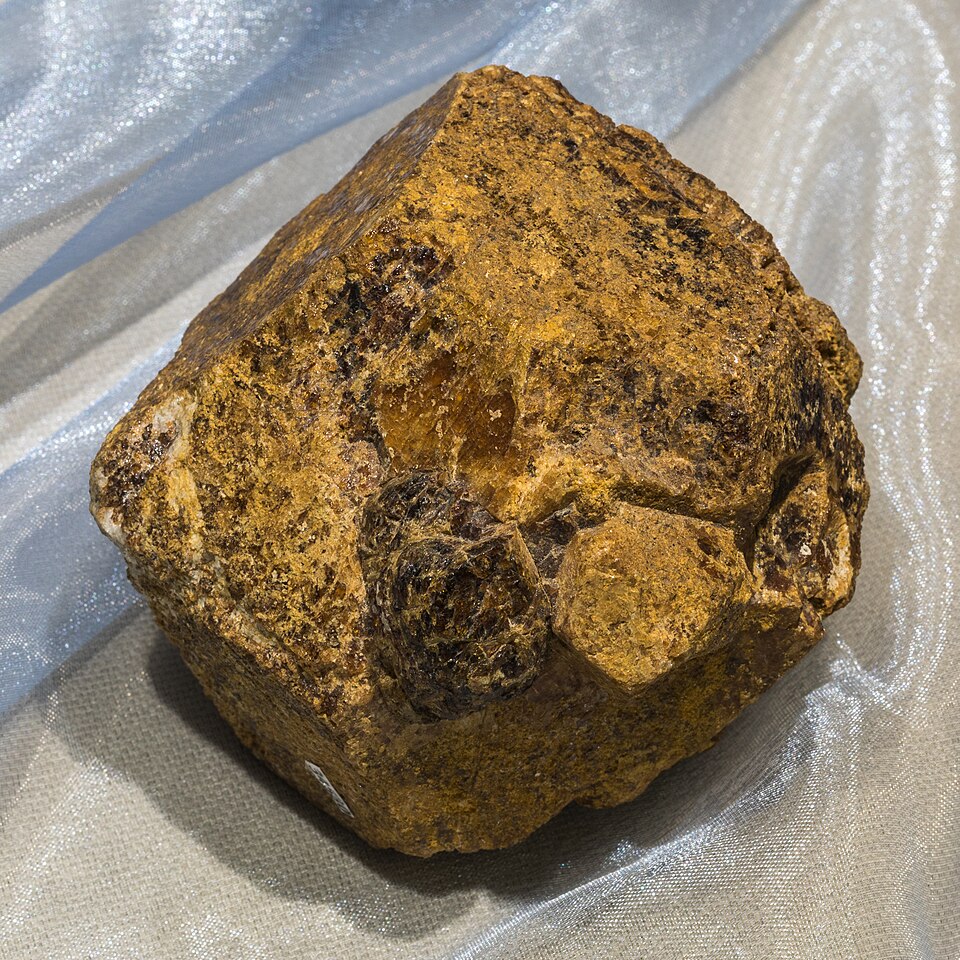
Key differences between Grossular and Hessonite
- Both sit near Mohs 6.5–7.5, so a scratch test alone will not separate them. Lean on luster, streak and heft instead.
- They overlap in yellow, orange, and brown, but Grossular also comes in clear, green, and pink and Hessonite also comes in red.
Grossular vs Hessonite properties
| Property | Grossular | Hessonite |
|---|---|---|
| Type | Minerals | Minerals |
| Mohs hardness | 6.5–7.5 | 6.5–7 |
| Luster | Vitreous to resinous | Vitreous to resinous |
| Streak | White | White |
| Transparency | Transparent to translucent | Transparent to translucent |
| Specific gravity | 3.4–3.8 | 3.5–3.65 |
| Crystal system | Cubic | Cubic |
| Common colors | Colorless, Green, Yellow, Orange (hessonite), Brown, Pink | Orange-brown, Cinnamon, Yellow-orange, Reddish brown |
| Rarity | common | common |
| Typical specimen value | $2–$150+ | $2–$150+ |
Which is more valuable?
Typical specimens of Grossular and Hessonite trade in a similar range, around $20.
About Grossular
Grossular is the calcium aluminum member of the garnet group, Ca3Al2(SiO4)3, notable for its unusually broad color range that spans colorless, green, yellow, orange, red, and brown depending on trace element substitutions. It forms characteristically in calcium-rich metamorphic rocks such as skarns and impure marbles, where it crystallizes during contact or regional metamorphism. Its name derives from the botanical genus for gooseberries, referencing the pale green color of the type specimens from Siberia.
About Hessonite
Hessonite is a warm orange-brown to reddish-brown variety of grossular garnet, Ca3Al2(SiO4)3, colored by trace iron and manganese, and long prized in South Asian gem traditions under the Sanskrit name gomedh. Its slightly greasy internal luster and swirling, treacle-like inclusions, often described as a scotch-in-water effect, set it apart from other orange garnets and gemstones. It belongs to the calcium-aluminum garnet subgroup rather than the calcium-iron subgroup that includes andradite.
Grossular vs Hessonite FAQ
Is Grossular the same as Hessonite?
No. Both are minerals, but they are distinct species with different hardness, streak or luster. Both sit near Mohs 6.5–7.5, so a scratch test alone will not separate them. Lean on luster, streak and heft instead.
How can you tell Grossular from Hessonite?
Both sit near Mohs 6.5–7.5, so a scratch test alone will not separate them. Lean on luster, streak and heft instead. They overlap in yellow, orange, and brown, but Grossular also comes in clear, green, and pink and Hessonite also comes in red.
Which is harder, Grossular or Hessonite?
They are about equally hard, both near Mohs 6.5–7.5.
Which is more valuable, Grossular or Hessonite?
Typical specimens of Grossular and Hessonite trade in a similar range, around $20.

