
Comparison · Minerals
Goethite vs Hessonite
Goethite and Hessonite are easy to confuse because both are minerals. Hessonite is harder (Mohs 6.5–7) than Goethite (Mohs 5–5.5), so Hessonite will scratch Goethite and not the other way round. A steel knife blade (Mohs 5.5) scratches it; a copper coin does not. Below is a side-by-side comparison of their properties and the quick tests that separate them.
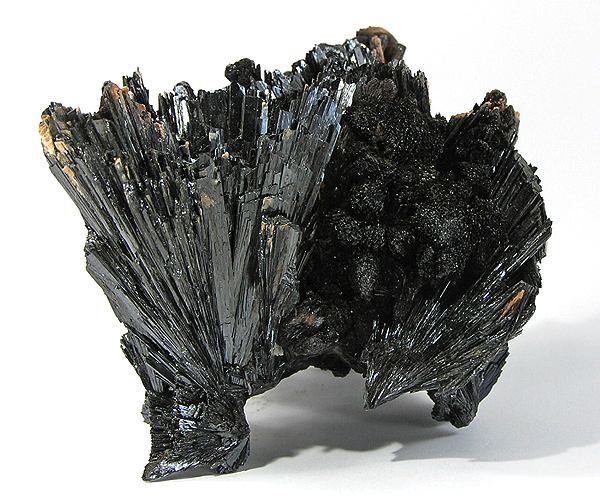
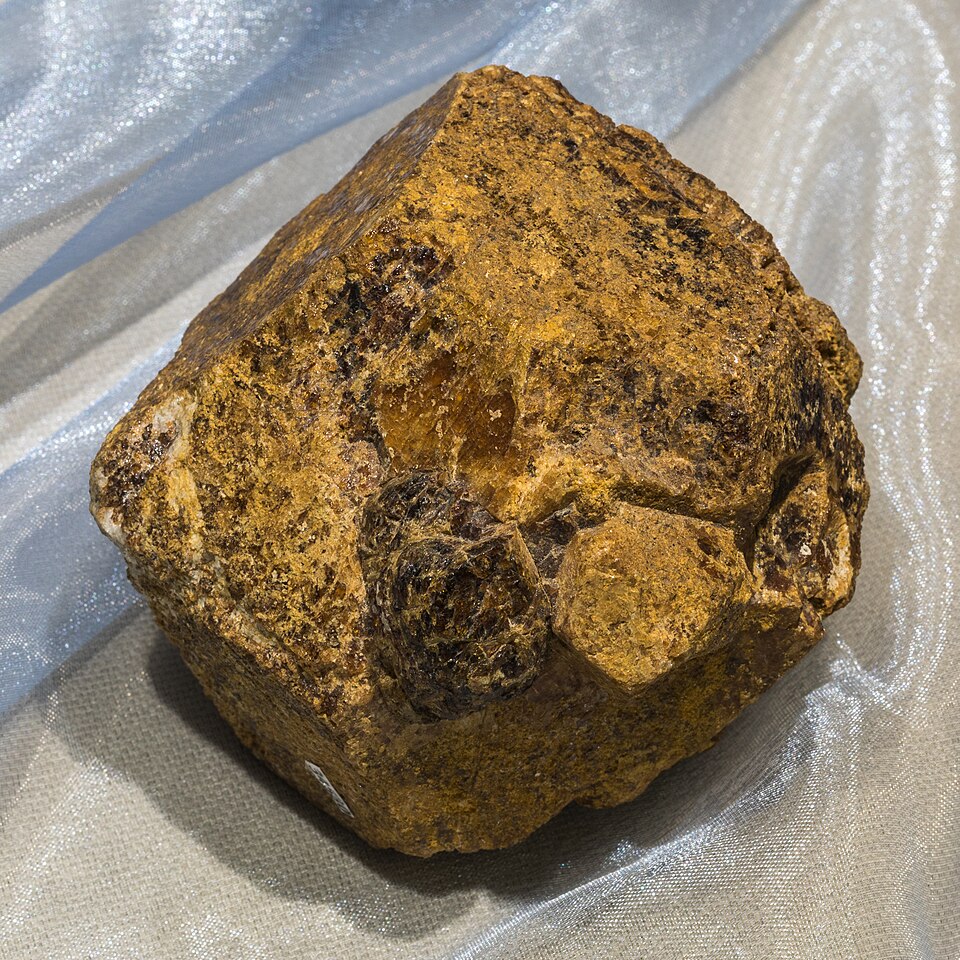
Key differences between Goethite and Hessonite
- Hessonite is harder (Mohs 6.5–7) than Goethite (Mohs 5–5.5), so Hessonite will scratch Goethite and not the other way round. A steel knife blade (Mohs 5.5) scratches it; a copper coin does not.
- Streak color differs: Goethite leaves a yellowish brown streak on unglazed porcelain, Hessonite leaves white.
- Hold a thin edge to the light: Goethite is Opaque, translucent in thin splinters, Hessonite is Transparent to translucent.
- They overlap in brown, yellow, and red, but Goethite also comes in black and Hessonite also comes in orange.
- Well-formed crystals give it away: Goethite is Orthorhombic, Hessonite is Cubic.
Goethite vs Hessonite properties
| Property | Goethite | Hessonite |
|---|---|---|
| Type | Minerals | Minerals |
| Mohs hardness | 5–5.5 | 6.5–7 |
| Luster | Adamantine to dull/earthy, silky | Vitreous to resinous |
| Streak | Yellowish brown | White |
| Transparency | Opaque, translucent in thin splinters | Transparent to translucent |
| Specific gravity | 3.3–4.3 | 3.5–3.65 |
| Crystal system | Orthorhombic | Cubic |
| Common colors | Brown, Yellowish brown, Reddish brown, Black | Orange-brown, Cinnamon, Yellow-orange, Reddish brown |
| Rarity | common | common |
| Typical specimen value | $2–$150+ | $2–$150+ |
Which is more valuable?
Typical specimens of Goethite and Hessonite trade in a similar range, around $20.
About Goethite
Goethite is an iron oxide-hydroxide, FeO(OH), and one of the most common iron-bearing minerals, formed by the weathering of other iron minerals such as pyrite, magnetite, and siderite. It crystallizes in the orthorhombic system but rarely shows well-formed crystals, instead forming botryoidal, stalactitic, or earthy masses. Named for the German writer and naturalist Johann Wolfgang von Goethe, it is a major constituent of the mineral mixture commonly called limonite.
About Hessonite
Hessonite is a warm orange-brown to reddish-brown variety of grossular garnet, Ca3Al2(SiO4)3, colored by trace iron and manganese, and long prized in South Asian gem traditions under the Sanskrit name gomedh. Its slightly greasy internal luster and swirling, treacle-like inclusions, often described as a scotch-in-water effect, set it apart from other orange garnets and gemstones. It belongs to the calcium-aluminum garnet subgroup rather than the calcium-iron subgroup that includes andradite.
Goethite vs Hessonite FAQ
Is Goethite the same as Hessonite?
No. Both are minerals, but they are distinct species with different hardness, streak or luster. Hessonite is harder (Mohs 6.5–7) than Goethite (Mohs 5–5.5), so Hessonite will scratch Goethite and not the other way round. A steel knife blade (Mohs 5.5) scratches it; a copper coin does not.
How can you tell Goethite from Hessonite?
Hessonite is harder (Mohs 6.5–7) than Goethite (Mohs 5–5.5), so Hessonite will scratch Goethite and not the other way round. A steel knife blade (Mohs 5.5) scratches it; a copper coin does not. Streak color differs: Goethite leaves a yellowish brown streak on unglazed porcelain, Hessonite leaves white. Hold a thin edge to the light: Goethite is Opaque, translucent in thin splinters, Hessonite is Transparent to translucent.
Which is harder, Goethite or Hessonite?
Hessonite is harder: Mohs 6.5–7 against Mohs 5–5.5 for Goethite.
Which is more valuable, Goethite or Hessonite?
Typical specimens of Goethite and Hessonite trade in a similar range, around $20.

