
Comparison · Minerals
Elbaite vs Tourmaline
Elbaite and Tourmaline are easy to confuse because both are minerals. Both sit near Mohs 7–7.5, so a scratch test alone will not separate them. Lean on luster, streak and heft instead. Below is a side-by-side comparison of their properties and the quick tests that separate them.
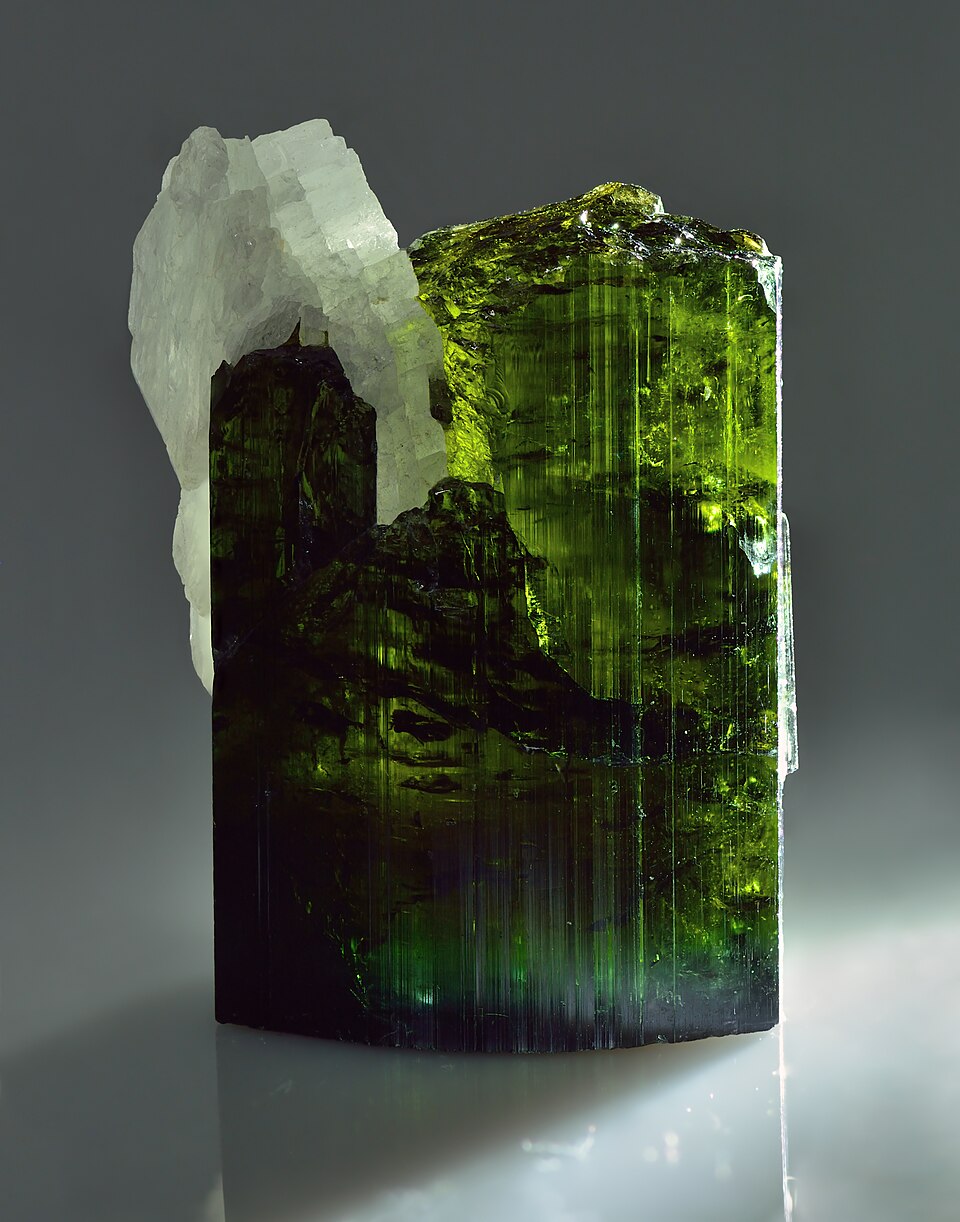
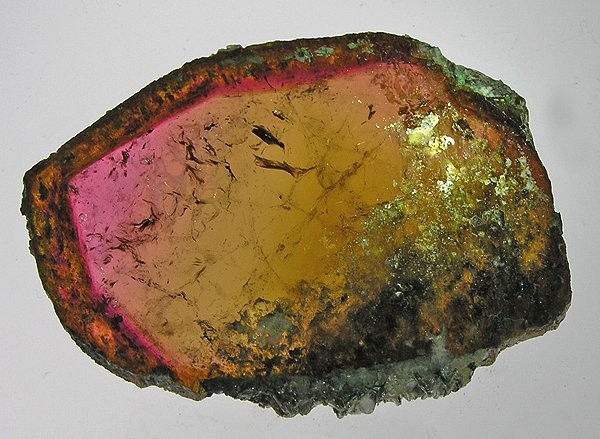
Key differences between Elbaite and Tourmaline
- Both sit near Mohs 7–7.5, so a scratch test alone will not separate them. Lean on luster, streak and heft instead.
- Streak color differs: Elbaite leaves a white streak on unglazed porcelain, Tourmaline leaves white (colorless).
- Hold a thin edge to the light: Elbaite is Transparent to translucent, Tourmaline is Transparent to opaque.
- They overlap in pink, green, blue, and multicolored, but Elbaite also comes in red and clear and Tourmaline also comes in black.
Elbaite vs Tourmaline properties
| Property | Elbaite | Tourmaline |
|---|---|---|
| Type | Minerals | Minerals |
| Mohs hardness | 7–7.5 | 7–7.5 |
| Luster | Vitreous | Vitreous |
| Streak | White | White (colorless) |
| Transparency | Transparent to translucent | Transparent to opaque |
| Specific gravity | 3.0–3.1 | 3.0–3.25 |
| Crystal system | Trigonal | Trigonal |
| Common colors | Pink, Green, Blue, Red, Multicolored (watermelon), Colorless | Black, Green, Pink, Blue, Multicolored (watermelon) |
| Rarity | common | common |
| Typical specimen value | $2–$150+ | $2–$150+ |
Which is more valuable?
Typical specimens of Elbaite and Tourmaline trade in a similar range, around $20.
About Elbaite
Elbaite is the most common gem-quality species within the tourmaline mineral group, a complex borosilicate rich in sodium, lithium, and aluminum with the formula Na(Li,Al)3Al6(BO3)3Si6O18(OH)4. It produces one of the widest color ranges of any gem mineral, including pink, green, blue, and the bicolor watermelon tourmaline prized by collectors. Elbaite takes its name from the island of Elba, where fine crystals were first described.
About Tourmaline
Tourmaline is not a single mineral but a group of complex borosilicates sharing a trigonal crystal structure and the general formula XY3Z6(BO3)3Si6O18(OH)4, with composition varying widely among species such as schorl, elbaite, and dravite. It has the widest color range of any mineral group, from jet-black schorl to multicolored elbaite crystals that can shift from pink to green along a single crystal, called watermelon tourmaline. It is also both piezoelectric and pyroelectric, generating an electric charge under pressure or heat.
Elbaite vs Tourmaline FAQ
Is Elbaite the same as Tourmaline?
No. Both are minerals, but they are distinct species with different hardness, streak or luster. Both sit near Mohs 7–7.5, so a scratch test alone will not separate them. Lean on luster, streak and heft instead.
How can you tell Elbaite from Tourmaline?
Both sit near Mohs 7–7.5, so a scratch test alone will not separate them. Lean on luster, streak and heft instead. Streak color differs: Elbaite leaves a white streak on unglazed porcelain, Tourmaline leaves white (colorless). Hold a thin edge to the light: Elbaite is Transparent to translucent, Tourmaline is Transparent to opaque.
Which is harder, Elbaite or Tourmaline?
They are about equally hard, both near Mohs 7–7.5.
Which is more valuable, Elbaite or Tourmaline?
Typical specimens of Elbaite and Tourmaline trade in a similar range, around $20.

