
Comparison · Minerals
Amazonite vs Tourmaline
Amazonite and Tourmaline are easy to confuse because both are minerals. Tourmaline is harder (Mohs 7–7.5) than Amazonite (Mohs 6), so Tourmaline will scratch Amazonite and not the other way round. It is about as hard as window glass: a knife barely marks it, while a steel file (Mohs 6.5) will. Below is a side-by-side comparison of their properties and the quick tests that separate them.
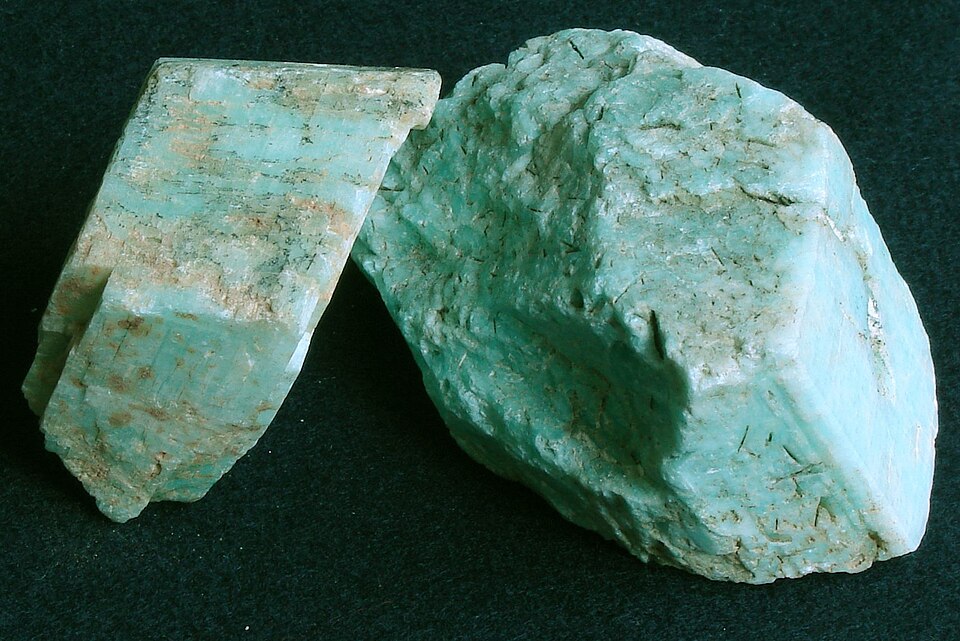
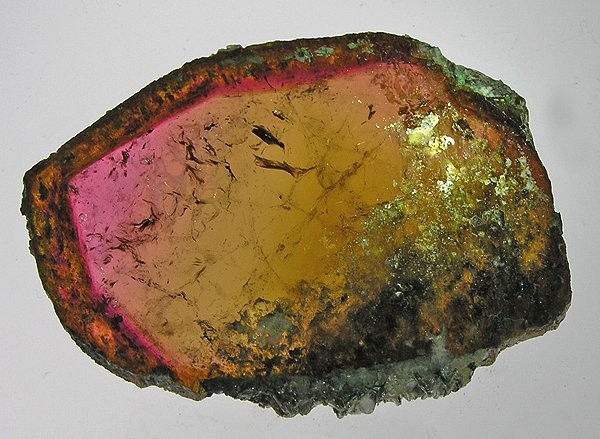
Key differences between Amazonite and Tourmaline
- Tourmaline is harder (Mohs 7–7.5) than Amazonite (Mohs 6), so Tourmaline will scratch Amazonite and not the other way round. It is about as hard as window glass: a knife barely marks it, while a steel file (Mohs 6.5) will.
- Streak color differs: Amazonite leaves a white streak on unglazed porcelain, Tourmaline leaves white (colorless).
- Tourmaline feels noticeably heavier for its size (specific gravity 3.0–3.25 versus 2.56 for Amazonite).
- Hold a thin edge to the light: Amazonite is opaque, Tourmaline is Transparent to opaque.
- They overlap in green and blue, but Tourmaline also comes in black, pink, and multicolored.
- Well-formed crystals give it away: Amazonite is triclinic, Tourmaline is Trigonal.
Amazonite vs Tourmaline properties
| Property | Amazonite | Tourmaline |
|---|---|---|
| Type | Minerals | Minerals |
| Mohs hardness | 6 | 7–7.5 |
| Luster | vitreous | Vitreous |
| Streak | White | White (colorless) |
| Transparency | opaque | Transparent to opaque |
| Specific gravity | 2.56 | 3.0–3.25 |
| Crystal system | triclinic | Trigonal |
| Common colors | Blue-Green, Turquoise, Green | Black, Green, Pink, Blue, Multicolored (watermelon) |
| Rarity | uncommon | common |
| Typical specimen value | $5–$150+ | $2–$150+ |
Which is more valuable?
Amazonite is usually the more valuable of the two: a typical collector specimen runs about $25 against $20 for Tourmaline, and premium Amazonite can reach $150 or more.
About Amazonite
Amazonite is a green to blue-green variety of microcline feldspar. Despite its name, it's not found in the Amazon but was named for its color similarity to the river.
About Tourmaline
Tourmaline is not a single mineral but a group of complex borosilicates sharing a trigonal crystal structure and the general formula XY3Z6(BO3)3Si6O18(OH)4, with composition varying widely among species such as schorl, elbaite, and dravite. It has the widest color range of any mineral group, from jet-black schorl to multicolored elbaite crystals that can shift from pink to green along a single crystal, called watermelon tourmaline. It is also both piezoelectric and pyroelectric, generating an electric charge under pressure or heat.
Amazonite vs Tourmaline FAQ
Is Amazonite the same as Tourmaline?
No. Both are minerals, but they are distinct species with different hardness, streak or luster. Tourmaline is harder (Mohs 7–7.5) than Amazonite (Mohs 6), so Tourmaline will scratch Amazonite and not the other way round. It is about as hard as window glass: a knife barely marks it, while a steel file (Mohs 6.5) will.
How can you tell Amazonite from Tourmaline?
Tourmaline is harder (Mohs 7–7.5) than Amazonite (Mohs 6), so Tourmaline will scratch Amazonite and not the other way round. It is about as hard as window glass: a knife barely marks it, while a steel file (Mohs 6.5) will. Streak color differs: Amazonite leaves a white streak on unglazed porcelain, Tourmaline leaves white (colorless). Tourmaline feels noticeably heavier for its size (specific gravity 3.0–3.25 versus 2.56 for Amazonite).
Which is harder, Amazonite or Tourmaline?
Tourmaline is harder: Mohs 7–7.5 against Mohs 6 for Amazonite.
Which is more valuable, Amazonite or Tourmaline?
Amazonite is usually the more valuable of the two: a typical collector specimen runs about $25 against $20 for Tourmaline, and premium Amazonite can reach $150 or more.

