
Comparison · Minerals vs Borate Minerals
Colemanite vs Ulexite
Colemanite and Ulexite are easy to confuse. Colemanite is harder (Mohs 4–4.5) than Ulexite (Mohs 2.5), so Colemanite will scratch Ulexite and not the other way round. A copper coin (Mohs 3.5) scratches it, but a fingernail does not. Below is a side-by-side comparison of their properties and the quick tests that separate them.
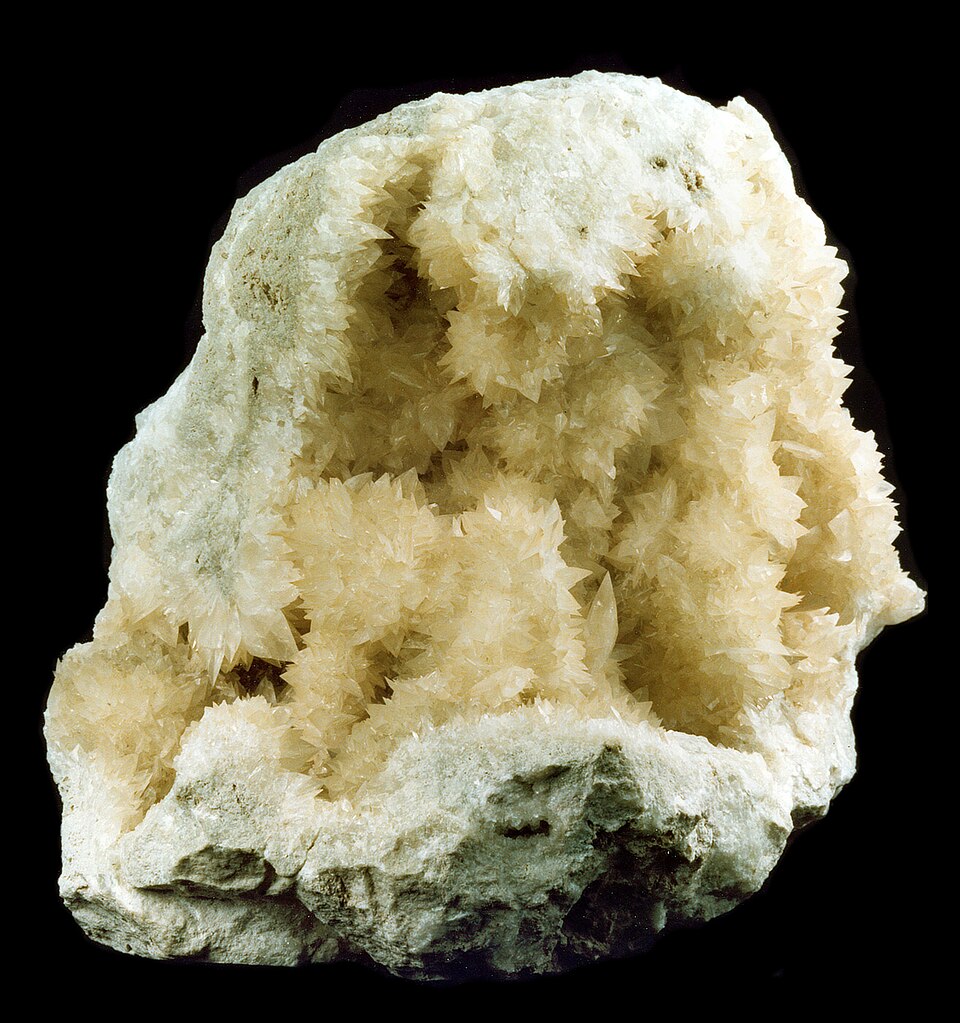
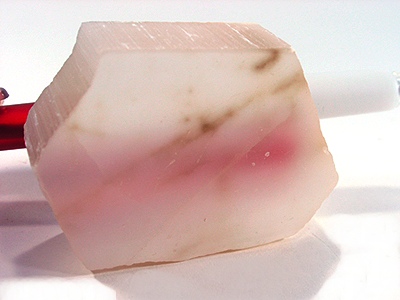
Key differences between Colemanite and Ulexite
- Colemanite is harder (Mohs 4–4.5) than Ulexite (Mohs 2.5), so Colemanite will scratch Ulexite and not the other way round. A copper coin (Mohs 3.5) scratches it, but a fingernail does not.
- Hold a thin edge to the light: Colemanite is Transparent to translucent, Ulexite is translucent.
- They overlap in clear, but Colemanite also comes in gray and yellow.
- Well-formed crystals give it away: Colemanite is Monoclinic, Ulexite is triclinic.
Colemanite vs Ulexite properties
| Property | Colemanite | Ulexite |
|---|---|---|
| Type | Minerals | Borate Minerals |
| Mohs hardness | 4–4.5 | 2.5 |
| Luster | Vitreous, adamantine on cleavage faces | vitreous |
| Streak | White | White |
| Transparency | Transparent to translucent | translucent |
| Specific gravity | 2.42 | 1.95 |
| Crystal system | Monoclinic | triclinic |
| Common colors | Colorless, White, Gray, Yellowish | White, Colorless |
| Rarity | common | uncommon |
| Typical specimen value | $2–$150+ | $5–$120+ |
Which is more valuable?
Ulexite is usually the more valuable of the two: a typical collector specimen runs about $25 against $20 for Colemanite, and premium Ulexite can reach $120 or more.
About Colemanite
Colemanite is a hydrous calcium borate mineral that crystallizes in the monoclinic system and served as one of the earliest commercially important sources of borax before more efficient borate minerals were discovered. It typically occurs as glassy, colorless to white crystals or nodular masses within lakebed evaporite deposits. Its formation is closely tied to arid basin environments where boron-rich waters evaporate and concentrate over long periods.
About Ulexite
Ulexite is a hydrated sodium calcium borate best known for its fibrous variety, which transmits light along its fibers. Sliced and polished plates project an image from the back surface, earning it the nickname television stone.
Colemanite vs Ulexite FAQ
Is Colemanite the same as Ulexite?
No. Colemanite is a mineral while Ulexite is a borate mineral. Colemanite is harder (Mohs 4–4.5) than Ulexite (Mohs 2.5), so Colemanite will scratch Ulexite and not the other way round. A copper coin (Mohs 3.5) scratches it, but a fingernail does not.
How can you tell Colemanite from Ulexite?
Colemanite is harder (Mohs 4–4.5) than Ulexite (Mohs 2.5), so Colemanite will scratch Ulexite and not the other way round. A copper coin (Mohs 3.5) scratches it, but a fingernail does not. Hold a thin edge to the light: Colemanite is Transparent to translucent, Ulexite is translucent. They overlap in clear, but Colemanite also comes in gray and yellow.
Which is harder, Colemanite or Ulexite?
Colemanite is harder: Mohs 4–4.5 against Mohs 2.5 for Ulexite.
Which is more valuable, Colemanite or Ulexite?
Ulexite is usually the more valuable of the two: a typical collector specimen runs about $25 against $20 for Colemanite, and premium Ulexite can reach $120 or more.

