
Comparison · Minerals
Aragonite vs Colemanite
Aragonite and Colemanite are easy to confuse because both are minerals. Both sit near Mohs 3.5–4, so a scratch test alone will not separate them. Lean on luster, streak and heft instead. Below is a side-by-side comparison of their properties and the quick tests that separate them.
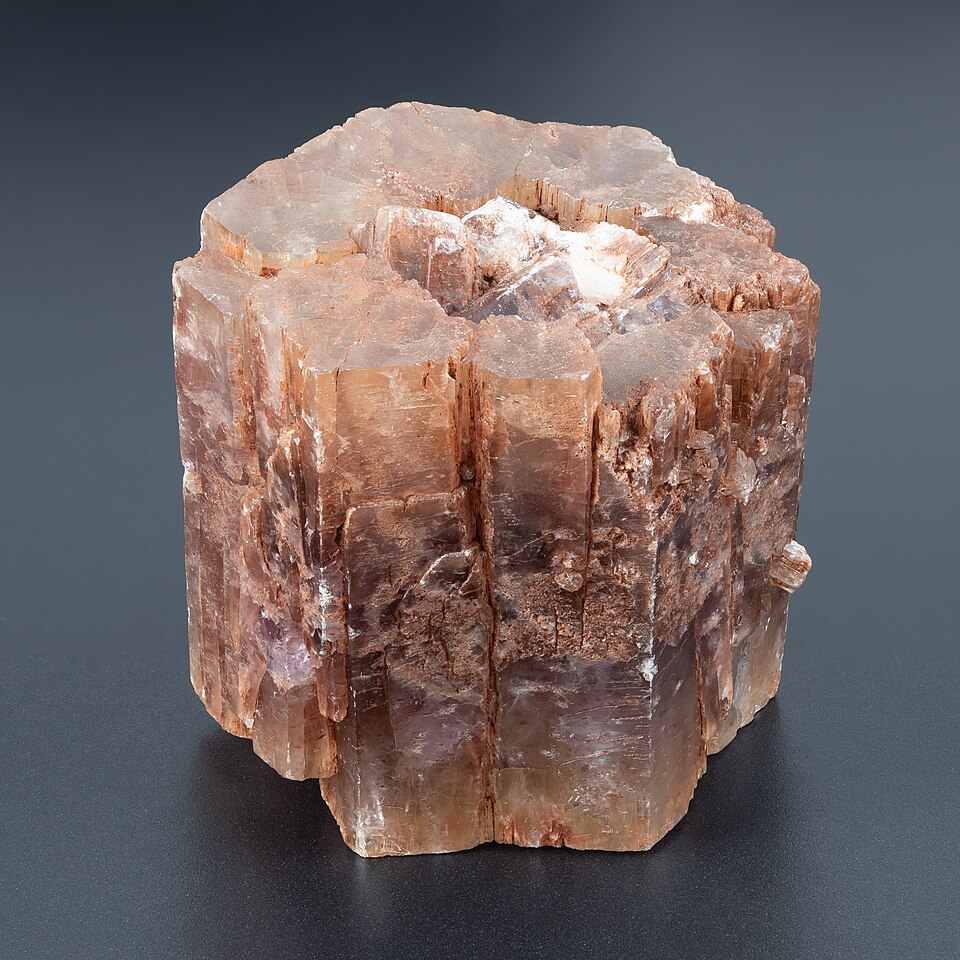
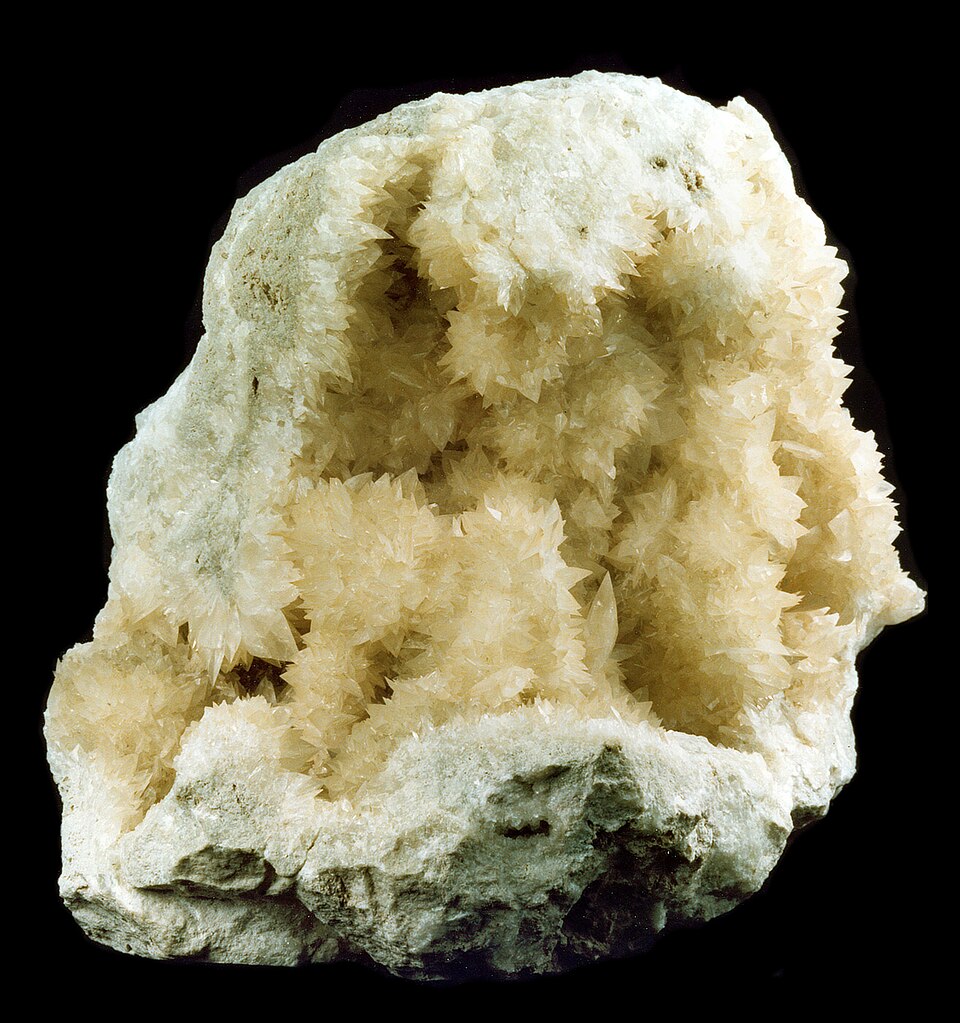
Key differences between Aragonite and Colemanite
- Both sit near Mohs 3.5–4, so a scratch test alone will not separate them. Lean on luster, streak and heft instead.
- Aragonite feels noticeably heavier for its size (specific gravity 2.93–2.95 versus 2.42 for Colemanite).
- They overlap in clear, yellow, and gray, but Aragonite also comes in blue and pink.
- Well-formed crystals give it away: Aragonite is Orthorhombic, Colemanite is Monoclinic.
Aragonite vs Colemanite properties
| Property | Aragonite | Colemanite |
|---|---|---|
| Type | Minerals | Minerals |
| Mohs hardness | 3.5–4 | 4–4.5 |
| Luster | Vitreous to resinous | Vitreous, adamantine on cleavage faces |
| Streak | White | White |
| Transparency | Transparent to translucent | Transparent to translucent |
| Specific gravity | 2.93–2.95 | 2.42 |
| Crystal system | Orthorhombic | Monoclinic |
| Common colors | Colorless, White, Yellow, Gray, Blue, Pink | Colorless, White, Gray, Yellowish |
| Rarity | common | common |
| Typical specimen value | $2–$150+ | $2–$150+ |
Which is more valuable?
Typical specimens of Aragonite and Colemanite trade in a similar range, around $20.
About Aragonite
Aragonite is calcium carbonate, CaCO3, crystallizing in the orthorhombic system as a metastable polymorph of the more common mineral calcite. It readily forms in low-temperature settings such as caves, hot springs, and the shells of many marine organisms, and it slowly converts to calcite over geologic time. Twinned crystal clusters resembling six-rayed stars are among its most recognizable forms.
About Colemanite
Colemanite is a hydrous calcium borate mineral that crystallizes in the monoclinic system and served as one of the earliest commercially important sources of borax before more efficient borate minerals were discovered. It typically occurs as glassy, colorless to white crystals or nodular masses within lakebed evaporite deposits. Its formation is closely tied to arid basin environments where boron-rich waters evaporate and concentrate over long periods.
Aragonite vs Colemanite FAQ
Is Aragonite the same as Colemanite?
No. Both are minerals, but they are distinct species with different hardness, streak or luster. Both sit near Mohs 3.5–4, so a scratch test alone will not separate them. Lean on luster, streak and heft instead.
How can you tell Aragonite from Colemanite?
Both sit near Mohs 3.5–4, so a scratch test alone will not separate them. Lean on luster, streak and heft instead. Aragonite feels noticeably heavier for its size (specific gravity 2.93–2.95 versus 2.42 for Colemanite). They overlap in clear, yellow, and gray, but Aragonite also comes in blue and pink.
Which is harder, Aragonite or Colemanite?
Colemanite is harder: Mohs 4–4.5 against Mohs 3.5–4 for Aragonite.
Which is more valuable, Aragonite or Colemanite?
Typical specimens of Aragonite and Colemanite trade in a similar range, around $20.

