
Comparison · Minerals
Bismuth vs Chalcocite
Bismuth and Chalcocite are easy to confuse because both are minerals. Both sit near Mohs 2–2.5, so a scratch test alone will not separate them. Lean on luster, streak and heft instead. Below is a side-by-side comparison of their properties and the quick tests that separate them.
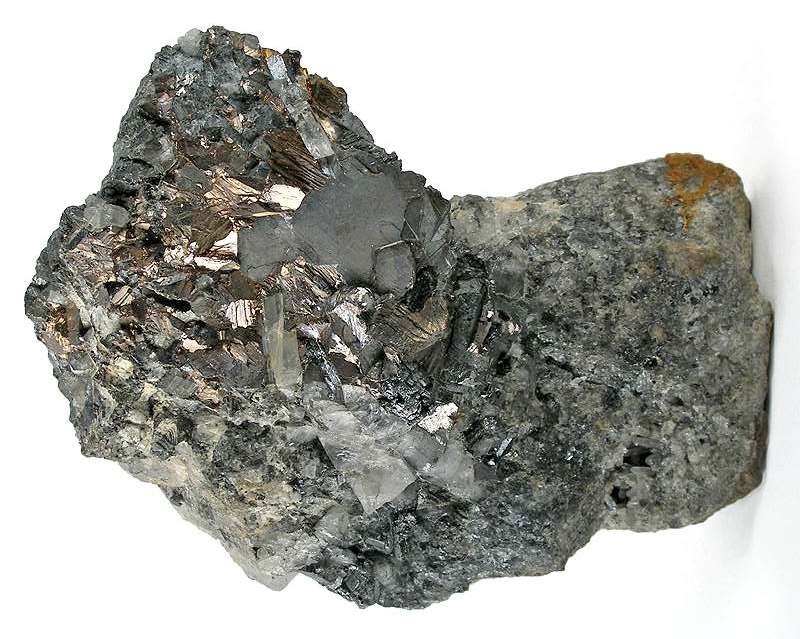
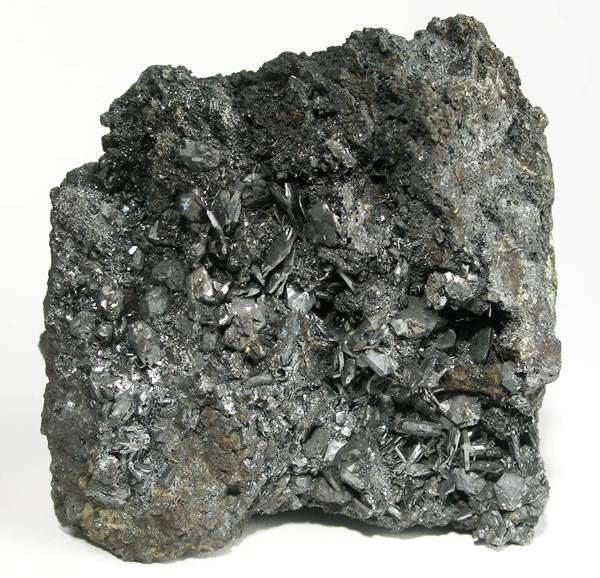
Key differences between Bismuth and Chalcocite
- Both sit near Mohs 2–2.5, so a scratch test alone will not separate them. Lean on luster, streak and heft instead.
- Streak color differs: Bismuth leaves a silvery gray streak on unglazed porcelain, Chalcocite leaves dark gray to black.
- Both look metallic, so compare color, tarnish and weight rather than shine.
- Bismuth feels noticeably heavier for its size (specific gravity 9.7–9.8 versus 5.5–5.8 for Chalcocite).
- They overlap in gray, but Bismuth also comes in white, pink, yellow, red, blue, and multicolored and Chalcocite also comes in black.
- Well-formed crystals give it away: Bismuth is Trigonal, Chalcocite is Monoclinic.
Bismuth vs Chalcocite properties
| Property | Bismuth | Chalcocite |
|---|---|---|
| Type | Minerals | Minerals |
| Mohs hardness | 2–2.5 | 2.5–3 |
| Luster | Metallic | Metallic |
| Streak | Silvery gray | Dark gray to black |
| Transparency | Opaque | Opaque |
| Specific gravity | 9.7–9.8 | 5.5–5.8 |
| Crystal system | Trigonal | Monoclinic |
| Common colors | Silvery white, Pinkish iridescent tarnish (yellow, red, blue hues) | Blackish lead-gray, Black |
| Rarity | common | common |
| Typical specimen value | $2–$150+ | $2–$150+ |
Which is more valuable?
Typical specimens of Bismuth and Chalcocite trade in a similar range, around $20.
About Bismuth
Bismuth is a native element mineral, a brittle, silvery-white metal that develops a strikingly iridescent oxide film in shades of pink, yellow, blue, and green as it tarnishes. It has one of the lowest thermal conductivities of any metal and, unusually for a heavy metal, expands slightly as it solidifies from a melt. Both natural crystals and the far more common laboratory-grown crystals show a distinctive stair-step, hopper-like habit.
About Chalcocite
Chalcocite is copper sulfide, Cu2S, and one of the richest copper ore minerals by weight, containing nearly 80 percent copper. It crystallizes in the orthorhombic system but commonly appears in fine-grained, massive, dark gray to black form rather than as distinct crystals. Unlike most sulfides, it is sectile, meaning a knife blade can shave off a curl rather than shatter it.
Bismuth vs Chalcocite FAQ
Is Bismuth the same as Chalcocite?
No. Both are minerals, but they are distinct species with different hardness, streak or luster. Both sit near Mohs 2–2.5, so a scratch test alone will not separate them. Lean on luster, streak and heft instead.
How can you tell Bismuth from Chalcocite?
Both sit near Mohs 2–2.5, so a scratch test alone will not separate them. Lean on luster, streak and heft instead. Streak color differs: Bismuth leaves a silvery gray streak on unglazed porcelain, Chalcocite leaves dark gray to black. Both look metallic, so compare color, tarnish and weight rather than shine.
Which is harder, Bismuth or Chalcocite?
Chalcocite is harder: Mohs 2.5–3 against Mohs 2–2.5 for Bismuth.
Which is more valuable, Bismuth or Chalcocite?
Typical specimens of Bismuth and Chalcocite trade in a similar range, around $20.

