
Comparison · Minerals
Baryte vs Cerussite
Baryte and Cerussite are easy to confuse because both are minerals. Both sit near Mohs 3–3.5, so a scratch test alone will not separate them. Lean on luster, streak and heft instead. Below is a side-by-side comparison of their properties and the quick tests that separate them.
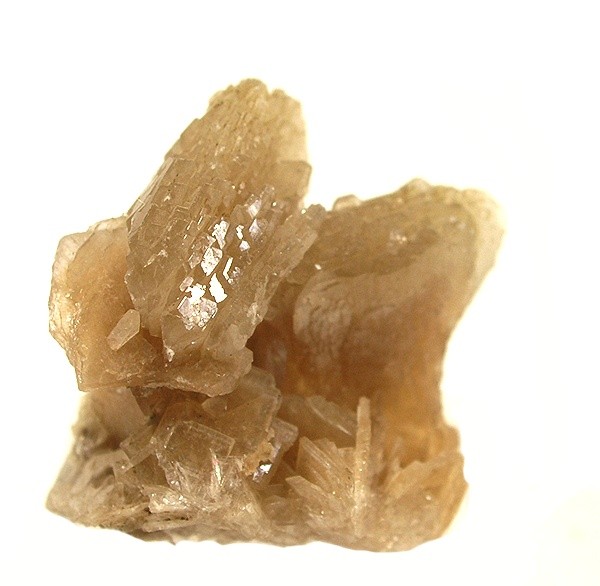
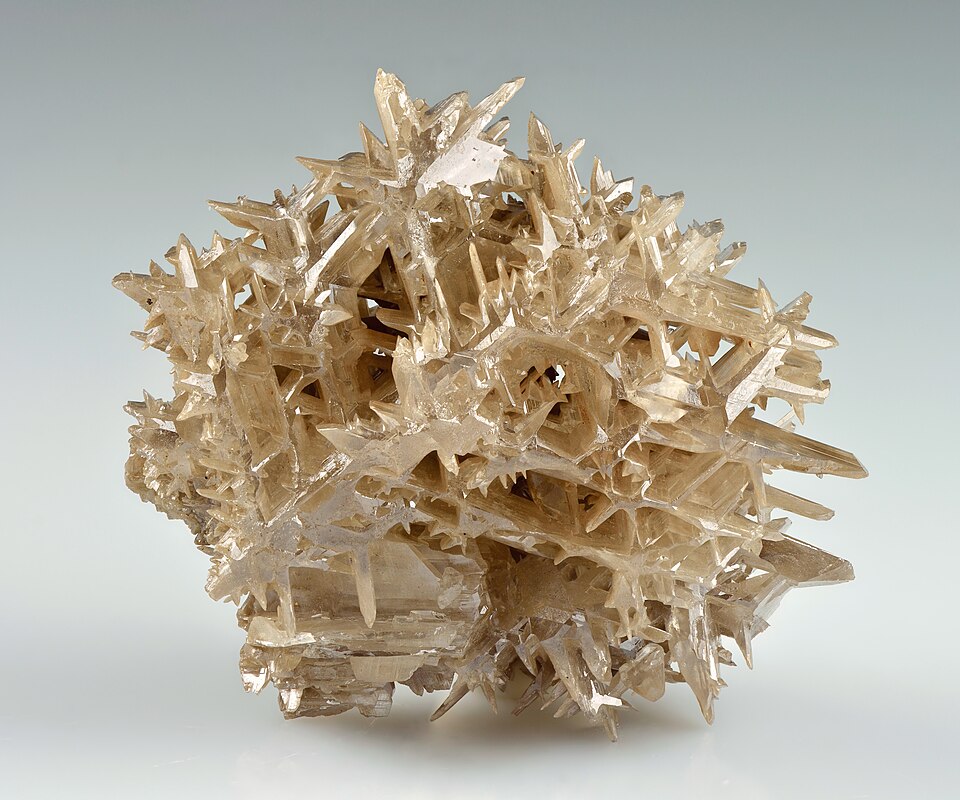
Key differences between Baryte and Cerussite
- Both sit near Mohs 3–3.5, so a scratch test alone will not separate them. Lean on luster, streak and heft instead.
- Cerussite feels noticeably heavier for its size (specific gravity 6.5–6.6 versus 4.3–4.6 for Baryte).
- Hold a thin edge to the light: Baryte is Transparent to opaque, Cerussite is Transparent to translucent.
- They overlap in clear and blue, but Baryte also comes in yellow, brown, and red and Cerussite also comes in gray and green.
Baryte vs Cerussite properties
| Property | Baryte | Cerussite |
|---|---|---|
| Type | Minerals | Minerals |
| Mohs hardness | 3–3.5 | 3–3.5 |
| Luster | Vitreous, pearly on cleavage | Adamantine to vitreous/resinous |
| Streak | White | White |
| Transparency | Transparent to opaque | Transparent to translucent |
| Specific gravity | 4.3–4.6 | 6.5–6.6 |
| Crystal system | Orthorhombic | Orthorhombic |
| Common colors | Colorless, White, Yellow, Blue, Brown, Red | Colorless, White, Gray, Blue (rare), Green (rare) |
| Rarity | common | common |
| Typical specimen value | $2–$150+ | $2–$150+ |
Which is more valuable?
Typical specimens of Baryte and Cerussite trade in a similar range, around $20.
About Baryte
Baryte, also spelled barite, is barium sulfate, BaSO4, best known among minerals for its unusually high density despite being non-metallic in appearance. It commonly forms tabular crystals and rosette clusters in hydrothermal veins and sedimentary rock cavities, and its name comes from the Greek barys, meaning heavy. Baryte serves as the primary industrial ore of barium and is used worldwide as a weighting agent in drilling fluids.
About Cerussite
Cerussite is lead carbonate, PbCO3, a heavy, brittle mineral that forms in the oxidized gossan zones of lead ore deposits. Its very high density and strong adamantine luster make it feel and look far more valuable than its modest hardness would suggest, and colorless crystals can show fire approaching that of diamond. It commonly develops as twinned, reticulated, or star-shaped crystal groups.
Baryte vs Cerussite FAQ
Is Baryte the same as Cerussite?
No. Both are minerals, but they are distinct species with different hardness, streak or luster. Both sit near Mohs 3–3.5, so a scratch test alone will not separate them. Lean on luster, streak and heft instead.
How can you tell Baryte from Cerussite?
Both sit near Mohs 3–3.5, so a scratch test alone will not separate them. Lean on luster, streak and heft instead. Cerussite feels noticeably heavier for its size (specific gravity 6.5–6.6 versus 4.3–4.6 for Baryte). Hold a thin edge to the light: Baryte is Transparent to opaque, Cerussite is Transparent to translucent.
Which is harder, Baryte or Cerussite?
They are about equally hard, both near Mohs 3–3.5.
Which is more valuable, Baryte or Cerussite?
Typical specimens of Baryte and Cerussite trade in a similar range, around $20.

