
Comparison · Silicate Minerals
Scapolite vs Sillimanite
Scapolite and Sillimanite are easy to confuse because both are silicate minerals. Sillimanite is harder (Mohs 7) than Scapolite (Mohs 6), so Sillimanite will scratch Scapolite and not the other way round. It is about as hard as window glass: a knife barely marks it, while a steel file (Mohs 6.5) will. Below is a side-by-side comparison of their properties and the quick tests that separate them.
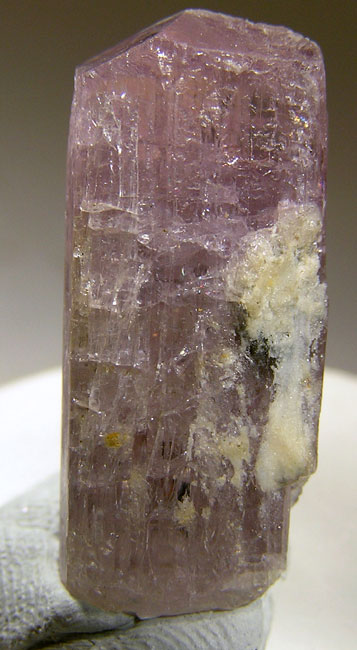
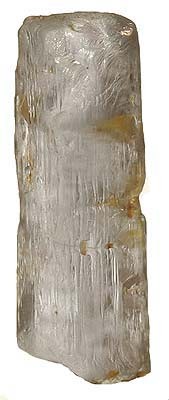
Key differences between Scapolite and Sillimanite
- Sillimanite is harder (Mohs 7) than Scapolite (Mohs 6), so Sillimanite will scratch Scapolite and not the other way round. It is about as hard as window glass: a knife barely marks it, while a steel file (Mohs 6.5) will.
- Sillimanite feels noticeably heavier for its size (specific gravity 3.24 versus 2.65 for Scapolite).
- They overlap in white, yellow, and gray, but Scapolite also comes in pink and purple and Sillimanite also comes in brown and green.
- Well-formed crystals give it away: Scapolite is tetragonal, Sillimanite is orthorhombic.
Scapolite vs Sillimanite properties
| Property | Scapolite | Sillimanite |
|---|---|---|
| Type | Silicate Minerals | Silicate Minerals |
| Mohs hardness | 6 | 7 |
| Luster | vitreous | vitreous |
| Streak | White | White |
| Transparency | transparent | transparent |
| Specific gravity | 2.65 | 3.24 |
| Crystal system | tetragonal | orthorhombic |
| Common colors | White, Pink, Violet, Yellow, Gray | White, Gray, Brown, Pale green, Yellow |
| Rarity | uncommon | uncommon |
| Typical specimen value | $10–$500+ | $10–$450+ |
Which is more valuable?
Typical specimens of Scapolite and Sillimanite trade in a similar range, around $70.
About Scapolite
Scapolite is a group of tectosilicate minerals forming a solid solution between sodium-rich marialite and calcium-rich meionite. It occurs as prismatic crystals or massive material in white, pink, violet, and yellow tones, sometimes showing a cat's-eye effect when cut.
About Sillimanite
Sillimanite is an aluminum silicate mineral that forms slender prismatic crystals or fibrous masses, the fibrous variety being called fibrolite. It is one of three aluminosilicate minerals that share the same composition but differ in structure.
Scapolite vs Sillimanite FAQ
Is Scapolite the same as Sillimanite?
No. Both are silicate minerals, but they are distinct species with different hardness, streak or luster. Sillimanite is harder (Mohs 7) than Scapolite (Mohs 6), so Sillimanite will scratch Scapolite and not the other way round. It is about as hard as window glass: a knife barely marks it, while a steel file (Mohs 6.5) will.
How can you tell Scapolite from Sillimanite?
Sillimanite is harder (Mohs 7) than Scapolite (Mohs 6), so Sillimanite will scratch Scapolite and not the other way round. It is about as hard as window glass: a knife barely marks it, while a steel file (Mohs 6.5) will. Sillimanite feels noticeably heavier for its size (specific gravity 3.24 versus 2.65 for Scapolite). They overlap in white, yellow, and gray, but Scapolite also comes in pink and purple and Sillimanite also comes in brown and green.
Which is harder, Scapolite or Sillimanite?
Sillimanite is harder: Mohs 7 against Mohs 6 for Scapolite.
Which is more valuable, Scapolite or Sillimanite?
Typical specimens of Scapolite and Sillimanite trade in a similar range, around $70.

