
Comparison · Minerals vs Silicate Minerals
Muscovite vs Pyrophyllite
Muscovite and Pyrophyllite are easy to confuse. Muscovite is harder (Mohs 2–4) than Pyrophyllite (Mohs 1.5), so Muscovite will scratch Pyrophyllite and not the other way round. A fingernail (Mohs 2.5) scratches it easily. Below is a side-by-side comparison of their properties and the quick tests that separate them.
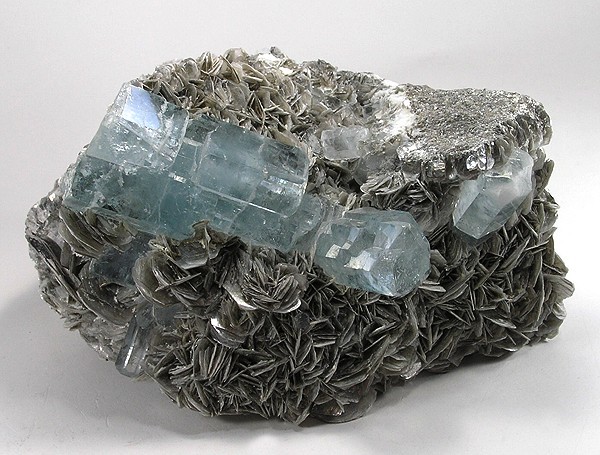
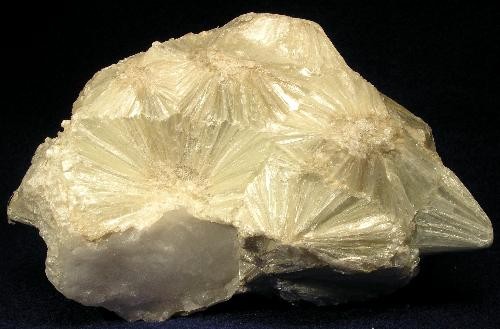
Key differences between Muscovite and Pyrophyllite
- Muscovite is harder (Mohs 2–4) than Pyrophyllite (Mohs 1.5), so Muscovite will scratch Pyrophyllite and not the other way round. A fingernail (Mohs 2.5) scratches it easily.
- Luster is different: Muscovite is vitreous to pearly/silky while Pyrophyllite is pearly.
- Hold a thin edge to the light: Muscovite is Transparent to translucent, Pyrophyllite is translucent.
- They overlap in gray, green, and brown, but Muscovite also comes in clear and Pyrophyllite also comes in white and yellow.
- Well-formed crystals give it away: Muscovite is Monoclinic, Pyrophyllite is monoclinic.
Muscovite vs Pyrophyllite properties
| Property | Muscovite | Pyrophyllite |
|---|---|---|
| Type | Minerals | Silicate Minerals |
| Mohs hardness | 2–4 | 1.5 |
| Luster | Vitreous to pearly/silky | pearly |
| Streak | White | White |
| Transparency | Transparent to translucent | translucent |
| Specific gravity | 2.76–3.0 | 2.8 |
| Crystal system | Monoclinic | monoclinic |
| Common colors | Colorless, Silvery white, Pale gray, Pale green, Pale brown | White, Gray, Pale green, Yellow, Brown |
| Rarity | common | common |
| Typical specimen value | $2–$150+ | $5–$150+ |
Which is more valuable?
Pyrophyllite is usually the more valuable of the two: a typical collector specimen runs about $30 against $20 for Muscovite, and premium Pyrophyllite can reach $150 or more.
About Muscovite
Muscovite is a potassium aluminum silicate mica, KAl2(AlSi3O10)(OH)2, prized for its perfect basal cleavage that splits it into thin, flexible, and elastic sheets. It crystallizes in the monoclinic system and is typically colorless to pale silvery, brownish, or greenish in thin flakes. The name comes from 'Muscovy glass,' a historical term for the large clear sheets once used as window panes in Russia.
About Pyrophyllite
Pyrophyllite is a very soft aluminum silicate that closely resembles talc, with a pearly luster and a greasy feel. It typically forms foliated, fibrous, or radiating aggregates in metamorphic and hydrothermally altered rocks.
Muscovite vs Pyrophyllite FAQ
Is Muscovite the same as Pyrophyllite?
No. Muscovite is a mineral while Pyrophyllite is a silicate mineral. Muscovite is harder (Mohs 2–4) than Pyrophyllite (Mohs 1.5), so Muscovite will scratch Pyrophyllite and not the other way round. A fingernail (Mohs 2.5) scratches it easily.
How can you tell Muscovite from Pyrophyllite?
Muscovite is harder (Mohs 2–4) than Pyrophyllite (Mohs 1.5), so Muscovite will scratch Pyrophyllite and not the other way round. A fingernail (Mohs 2.5) scratches it easily. Luster is different: Muscovite is vitreous to pearly/silky while Pyrophyllite is pearly. Hold a thin edge to the light: Muscovite is Transparent to translucent, Pyrophyllite is translucent.
Which is harder, Muscovite or Pyrophyllite?
Muscovite is harder: Mohs 2–4 against Mohs 1.5 for Pyrophyllite.
Which is more valuable, Muscovite or Pyrophyllite?
Pyrophyllite is usually the more valuable of the two: a typical collector specimen runs about $30 against $20 for Muscovite, and premium Pyrophyllite can reach $150 or more.

