
Comparison · Oxide Minerals
Ilmenite vs Rutile
Ilmenite and Rutile are easy to confuse because both are oxide minerals. Rutile is harder (Mohs 6.5) than Ilmenite (Mohs 5.5), so Rutile will scratch Ilmenite and not the other way round. It is about as hard as window glass: a knife barely marks it, while a steel file (Mohs 6.5) will. Below is a side-by-side comparison of their properties and the quick tests that separate them.
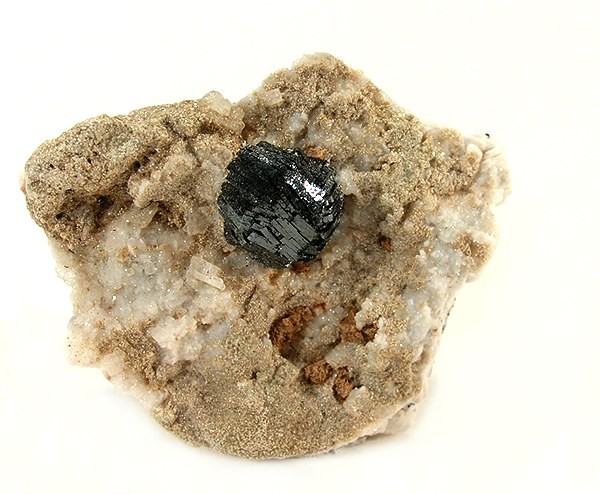
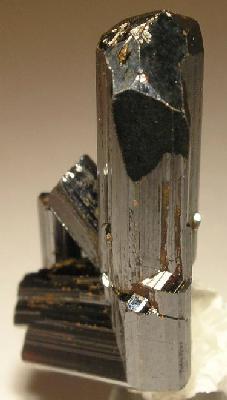
Key differences between Ilmenite and Rutile
- Rutile is harder (Mohs 6.5) than Ilmenite (Mohs 5.5), so Rutile will scratch Ilmenite and not the other way round. It is about as hard as window glass: a knife barely marks it, while a steel file (Mohs 6.5) will.
- Streak color differs: Ilmenite leaves a black to brownish red streak on unglazed porcelain, Rutile leaves pale brown to yellowish.
- Luster is different: Ilmenite is metallic while Rutile is adamantine.
- Hold a thin edge to the light: Ilmenite is opaque, Rutile is translucent.
- They overlap in black and brown, but Rutile also comes in red and yellow.
- Well-formed crystals give it away: Ilmenite is trigonal, Rutile is tetragonal.
Ilmenite vs Rutile properties
| Property | Ilmenite | Rutile |
|---|---|---|
| Type | Oxide Minerals | Oxide Minerals |
| Mohs hardness | 5.5 | 6.5 |
| Luster | metallic | adamantine |
| Streak | Black to brownish red | Pale brown to yellowish |
| Transparency | opaque | translucent |
| Specific gravity | 4.7 | 4.25 |
| Crystal system | trigonal | tetragonal |
| Common colors | Black, Iron-black, Brownish black | Reddish brown, Black, Golden yellow, Red |
| Rarity | common | common |
| Typical specimen value | $5–$200+ | $10–$600+ |
Which is more valuable?
Rutile is usually the more valuable of the two: a typical collector specimen runs about $80 against $35 for Ilmenite, and premium Rutile can reach $600 or more.
About Ilmenite
Ilmenite is an iron titanium oxide and the most important ore of titanium. It typically forms black, weakly magnetic, metallic to submetallic grains and tabular crystals in igneous rocks and heavy mineral sands.
About Rutile
Rutile is a titanium dioxide mineral known for its high luster, deep reddish-brown to black color, and slender prismatic or needle-like crystals. It frequently occurs as golden or coppery needle inclusions within quartz, producing the popular rutilated quartz.
Ilmenite vs Rutile FAQ
Is Ilmenite the same as Rutile?
No. Both are oxide minerals, but they are distinct species with different hardness, streak or luster. Rutile is harder (Mohs 6.5) than Ilmenite (Mohs 5.5), so Rutile will scratch Ilmenite and not the other way round. It is about as hard as window glass: a knife barely marks it, while a steel file (Mohs 6.5) will.
How can you tell Ilmenite from Rutile?
Rutile is harder (Mohs 6.5) than Ilmenite (Mohs 5.5), so Rutile will scratch Ilmenite and not the other way round. It is about as hard as window glass: a knife barely marks it, while a steel file (Mohs 6.5) will. Streak color differs: Ilmenite leaves a black to brownish red streak on unglazed porcelain, Rutile leaves pale brown to yellowish. Luster is different: Ilmenite is metallic while Rutile is adamantine.
Which is harder, Ilmenite or Rutile?
Rutile is harder: Mohs 6.5 against Mohs 5.5 for Ilmenite.
Which is more valuable, Ilmenite or Rutile?
Rutile is usually the more valuable of the two: a typical collector specimen runs about $80 against $35 for Ilmenite, and premium Rutile can reach $600 or more.

