
Comparison · Igneous Rocks
Granodiorite vs Syenite
Granodiorite and Syenite are easy to confuse because both are igneous rocks. Both sit near Mohs 6–7, so a scratch test alone will not separate them. Lean on luster, streak and heft instead. Below is a side-by-side comparison of their properties and the quick tests that separate them.
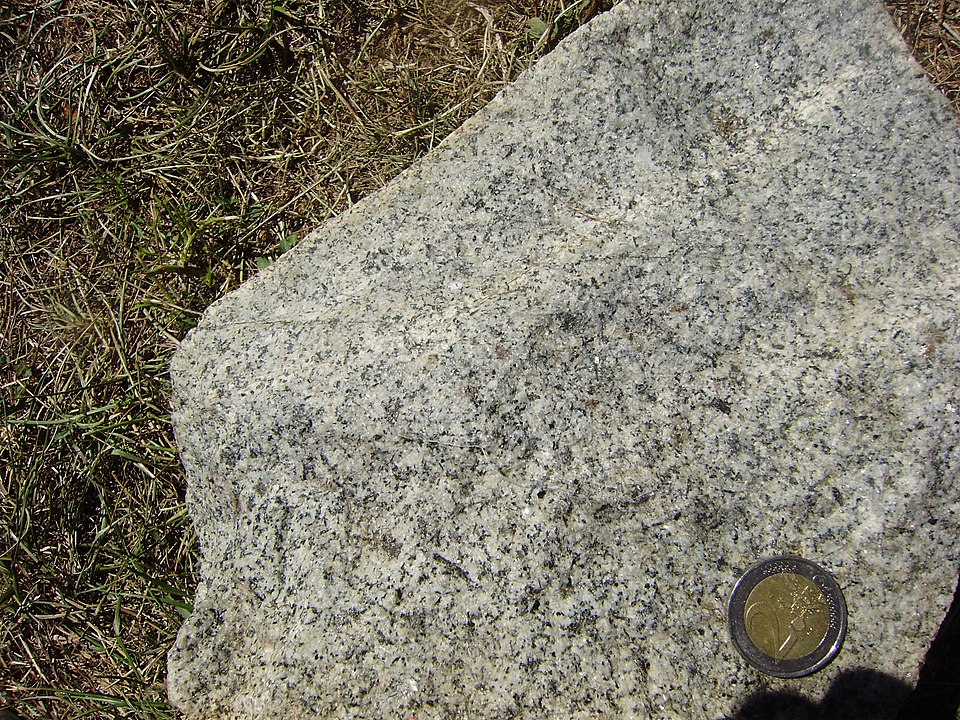
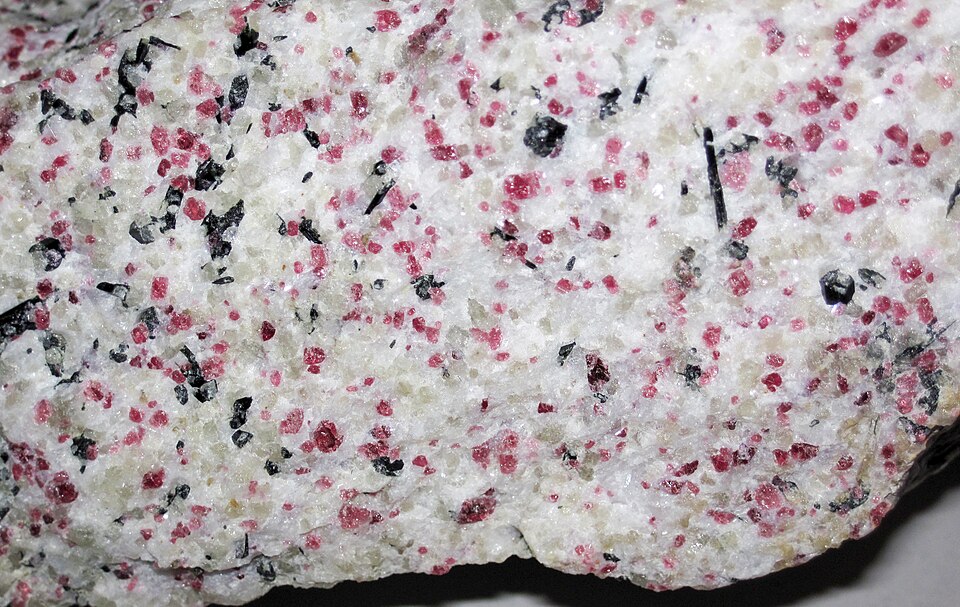
Key differences between Granodiorite and Syenite
- Both sit near Mohs 6–7, so a scratch test alone will not separate them. Lean on luster, streak and heft instead.
- They overlap in gray, pink, and white, but Syenite also comes in green.
Granodiorite vs Syenite properties
| Property | Granodiorite | Syenite |
|---|---|---|
| Type | Igneous Rocks | Igneous Rocks |
| Mohs hardness | 6–7 | 5.5–6.5 |
| Luster | Vitreous to dull (mixed mineral grains) | Vitreous (feldspar crystals) |
| Transparency | Opaque | Opaque |
| Specific gravity | 2.65–2.73 | 2.6–2.8 |
| Common colors | Light gray, Gray, Pinkish gray, White with dark specks | Gray, Pink, White, Light green |
| Rarity | common | common |
| Typical specimen value | $1–$75+ | $1–$75+ |
Which is more valuable?
Typical specimens of Granodiorite and Syenite trade in a similar range, around $10.
About Granodiorite
Granodiorite is a coarse-grained intrusive igneous rock compositionally between granite and diorite, containing more plagioclase feldspar than orthoclase feldspar along with quartz, biotite, and hornblende. It crystallizes slowly deep underground, allowing individual mineral grains to grow large enough to see without magnification. Granodiorite makes up a substantial portion of the continental crust and forms the core of many mountain ranges worldwide, including much of the Sierra Nevada batholith.
About Syenite
Syenite is a coarse-grained intrusive igneous rock composed mainly of alkali feldspar with minor amounts of dark minerals like hornblende or biotite, and it is distinguished from granite chiefly by containing little to no quartz. It forms from the slow cooling of silica-undersaturated to silica-saturated magmas at depth, allowing large, visible crystals to develop. Syenite's name derives from Syene, the ancient name for Aswan, Egypt, though the rock originally described there under that name is now known to actually be granite.
Granodiorite vs Syenite FAQ
Is Granodiorite the same as Syenite?
No. Both are igneous rocks, but they are distinct rock types with different hardness, streak or luster. Both sit near Mohs 6–7, so a scratch test alone will not separate them. Lean on luster, streak and heft instead.
How can you tell Granodiorite from Syenite?
Both sit near Mohs 6–7, so a scratch test alone will not separate them. Lean on luster, streak and heft instead. They overlap in gray, pink, and white, but Syenite also comes in green.
Which is harder, Granodiorite or Syenite?
Granodiorite is harder: Mohs 6–7 against Mohs 5.5–6.5 for Syenite.
Which is more valuable, Granodiorite or Syenite?
Typical specimens of Granodiorite and Syenite trade in a similar range, around $10.

