
Comparison · Minerals vs Metamorphic Rocks
Epidote vs Unakite
Epidote and Unakite are easy to confuse. Both sit near Mohs 6–7, so a scratch test alone will not separate them. Lean on luster, streak and heft instead. Below is a side-by-side comparison of their properties and the quick tests that separate them.
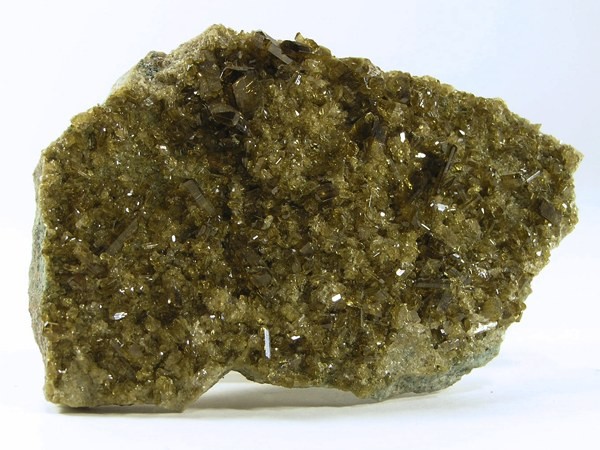
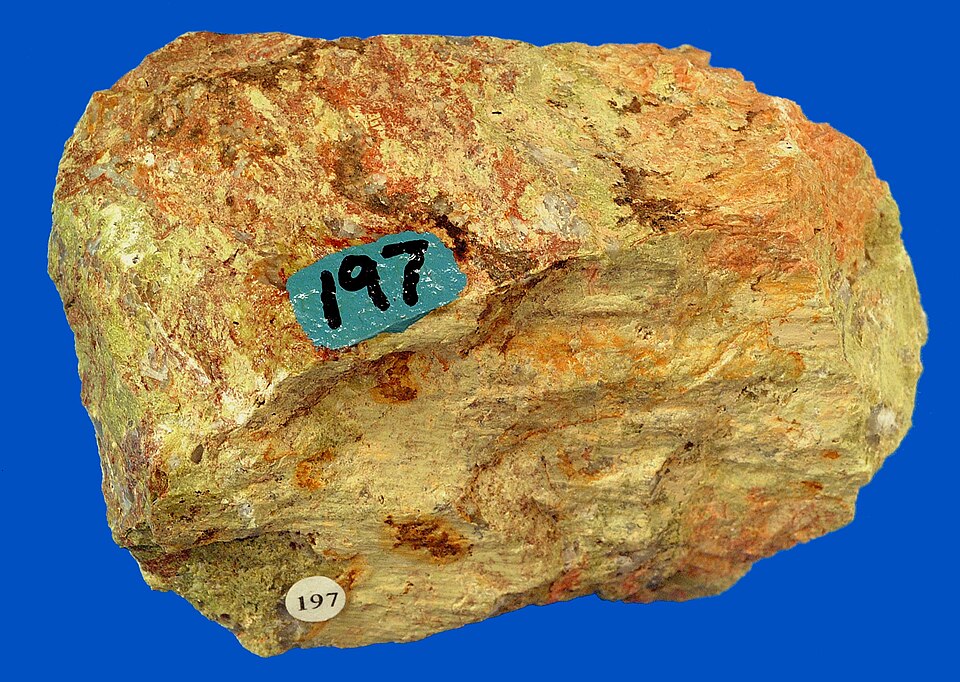
Key differences between Epidote and Unakite
- Both sit near Mohs 6–7, so a scratch test alone will not separate them. Lean on luster, streak and heft instead.
- Streak color differs: Epidote leaves a white to grayish streak on unglazed porcelain, Unakite leaves variable; test individual minerals.
- Epidote feels noticeably heavier for its size (specific gravity 3.3–3.5 versus 2.9 for Unakite).
- Hold a thin edge to the light: Epidote is Transparent to opaque, Unakite is opaque.
- They overlap in green, but Epidote also comes in yellow and black and Unakite also comes in pink and multicolored.
Epidote vs Unakite properties
| Property | Epidote | Unakite |
|---|---|---|
| Type | Minerals | Metamorphic Rocks |
| Mohs hardness | 6–7 | 6.5 |
| Luster | Vitreous | vitreous |
| Streak | White to grayish | Variable; test individual minerals |
| Transparency | Transparent to opaque | opaque |
| Specific gravity | 3.3–3.5 | 2.9 |
| Crystal system | Monoclinic | varies |
| Common colors | Pistachio green, Yellowish green, Dark green, Black | Pink and Green mottled, Salmon, Olive Green |
| Rarity | common | common |
| Typical specimen value | $2–$150+ | $2–$50+ |
Which is more valuable?
Epidote is usually the more valuable of the two: a typical collector specimen runs about $20 against $10 for Unakite, and premium Epidote can reach $150 or more.
About Epidote
Epidote is a calcium aluminum iron sorosilicate with the approximate formula Ca2Al2(Fe3+,Al)(SiO4)(Si2O7)O(OH), instantly recognizable to many collectors by its distinctive pistachio-green color. It crystallizes in the monoclinic system, typically as elongated, striated prismatic crystals. The color and composition vary with the ratio of iron to aluminum, grading toward the related mineral clinozoisite as iron decreases.
About Unakite
Unakite is a metamorphosed granite composed of pink orthoclase feldspar, green epidote, and quartz. Named after the Unaka Mountains of Tennessee.
Epidote vs Unakite FAQ
Is Epidote the same as Unakite?
No. Epidote is a mineral while Unakite is a metamorphic rock. Both sit near Mohs 6–7, so a scratch test alone will not separate them. Lean on luster, streak and heft instead.
How can you tell Epidote from Unakite?
Both sit near Mohs 6–7, so a scratch test alone will not separate them. Lean on luster, streak and heft instead. Streak color differs: Epidote leaves a white to grayish streak on unglazed porcelain, Unakite leaves variable; test individual minerals. Epidote feels noticeably heavier for its size (specific gravity 3.3–3.5 versus 2.9 for Unakite).
Which is harder, Epidote or Unakite?
They are about equally hard, both near Mohs 6–7.
Which is more valuable, Epidote or Unakite?
Epidote is usually the more valuable of the two: a typical collector specimen runs about $20 against $10 for Unakite, and premium Epidote can reach $150 or more.

