
Comparison · Minerals
Dumortierite vs Kyanite
Dumortierite and Kyanite are easy to confuse because both are minerals. Dumortierite is harder (Mohs 7–8.5) than Kyanite (Mohs 5), so Dumortierite will scratch Kyanite and not the other way round. A steel knife blade (Mohs 5.5) scratches it; a copper coin does not. Below is a side-by-side comparison of their properties and the quick tests that separate them.
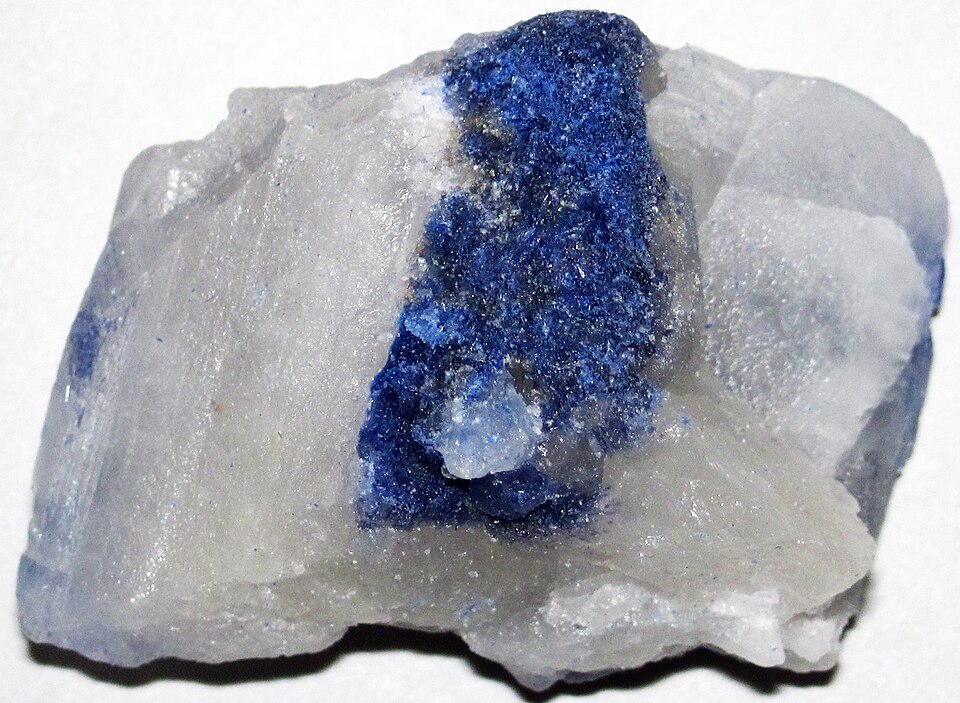
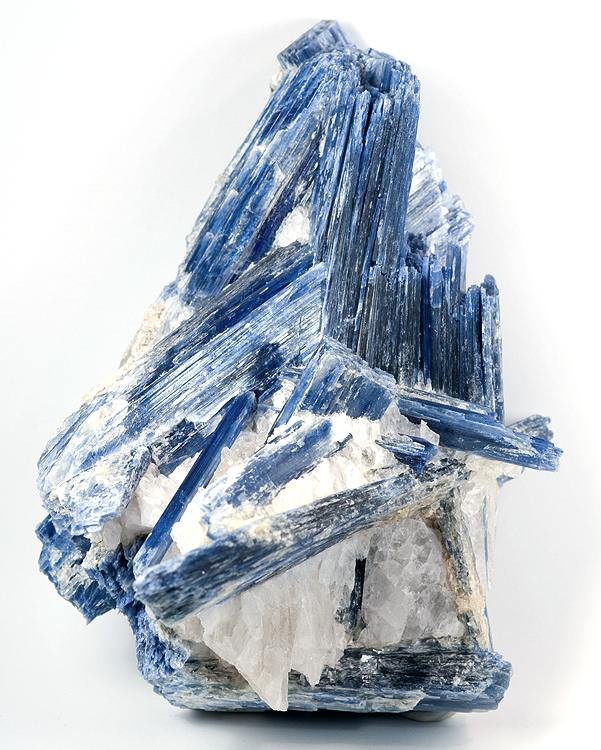
Key differences between Dumortierite and Kyanite
- Dumortierite is harder (Mohs 7–8.5) than Kyanite (Mohs 5), so Dumortierite will scratch Kyanite and not the other way round. A steel knife blade (Mohs 5.5) scratches it; a copper coin does not.
- Hold a thin edge to the light: Dumortierite is Translucent to opaque, Kyanite is translucent.
- They overlap in blue, but Dumortierite also comes in purple, brown, and pink and Kyanite also comes in green, orange, and black.
- Well-formed crystals give it away: Dumortierite is Orthorhombic, Kyanite is triclinic.
Dumortierite vs Kyanite properties
| Property | Dumortierite | Kyanite |
|---|---|---|
| Type | Minerals | Minerals |
| Mohs hardness | 7–8.5 | 5 |
| Luster | Vitreous, silky when fibrous | vitreous |
| Streak | White | White |
| Transparency | Translucent to opaque | translucent |
| Specific gravity | 3.3–3.4 | 3.6 |
| Crystal system | Orthorhombic | triclinic |
| Common colors | Blue, Violet-blue, Brownish, Pink (rare) | Blue, Green, Orange, Black |
| Rarity | common | uncommon |
| Typical specimen value | $2–$150+ | $10–$300+ |
Which is more valuable?
Kyanite is usually the more valuable of the two: a typical collector specimen runs about $50 against $20 for Dumortierite, and premium Kyanite can reach $300 or more.
About Dumortierite
Dumortierite is an aluminum borosilicate mineral crystallizing in the orthorhombic system, best known for its intense blue to violet-blue color caused by trace iron and titanium substitutions. It typically forms fibrous, needle-like crystal aggregates within metamorphic rocks rich in aluminum, such as schists and gneisses subjected to high temperature and pressure. Its deep, saturated blue color has made it a popular but often misidentified substitute for lapis lazuli and sodalite in ornamental carvings.
About Kyanite
Kyanite is a blue silicate mineral unique for having different hardness values depending on the direction of scratch (4-5 lengthwise, 6-7 crosswise).
Dumortierite vs Kyanite FAQ
Is Dumortierite the same as Kyanite?
No. Both are minerals, but they are distinct species with different hardness, streak or luster. Dumortierite is harder (Mohs 7–8.5) than Kyanite (Mohs 5), so Dumortierite will scratch Kyanite and not the other way round. A steel knife blade (Mohs 5.5) scratches it; a copper coin does not.
How can you tell Dumortierite from Kyanite?
Dumortierite is harder (Mohs 7–8.5) than Kyanite (Mohs 5), so Dumortierite will scratch Kyanite and not the other way round. A steel knife blade (Mohs 5.5) scratches it; a copper coin does not. Hold a thin edge to the light: Dumortierite is Translucent to opaque, Kyanite is translucent. They overlap in blue, but Dumortierite also comes in purple, brown, and pink and Kyanite also comes in green, orange, and black.
Which is harder, Dumortierite or Kyanite?
Dumortierite is harder: Mohs 7–8.5 against Mohs 5 for Kyanite.
Which is more valuable, Dumortierite or Kyanite?
Kyanite is usually the more valuable of the two: a typical collector specimen runs about $50 against $20 for Dumortierite, and premium Kyanite can reach $300 or more.

