
Comparison · Minerals
Diaspore vs Eudialyte
Diaspore and Eudialyte are easy to confuse because both are minerals. Diaspore is harder (Mohs 6.5–7) than Eudialyte (Mohs 5–5.5), so Diaspore will scratch Eudialyte and not the other way round. A steel knife blade (Mohs 5.5) scratches it; a copper coin does not. Below is a side-by-side comparison of their properties and the quick tests that separate them.
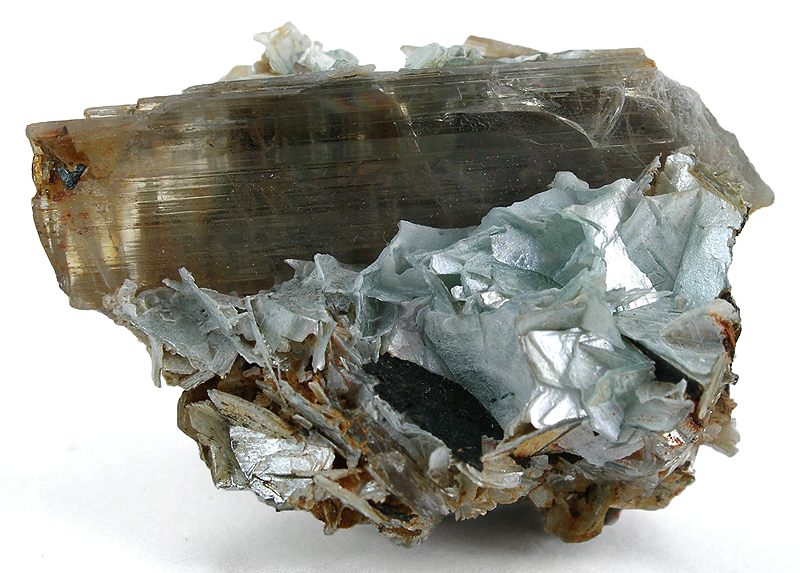
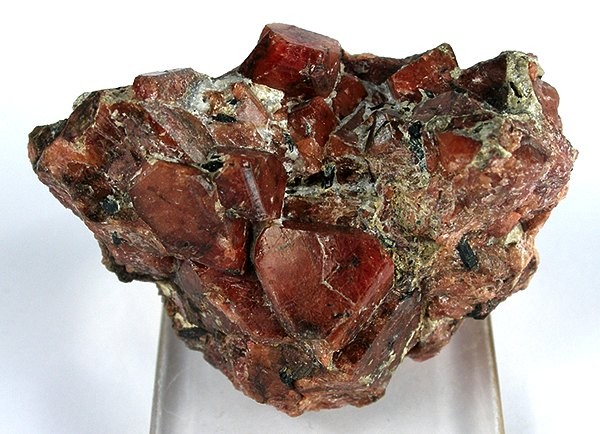
Key differences between Diaspore and Eudialyte
- Diaspore is harder (Mohs 6.5–7) than Eudialyte (Mohs 5–5.5), so Diaspore will scratch Eudialyte and not the other way round. A steel knife blade (Mohs 5.5) scratches it; a copper coin does not.
- They overlap in yellow, brown, and pink, but Diaspore also comes in clear, gray, green, and purple and Eudialyte also comes in red.
- Well-formed crystals give it away: Diaspore is Orthorhombic, Eudialyte is Trigonal.
Diaspore vs Eudialyte properties
| Property | Diaspore | Eudialyte |
|---|---|---|
| Type | Minerals | Minerals |
| Mohs hardness | 6.5–7 | 5–5.5 |
| Luster | Vitreous to pearly on cleavage | Vitreous to greasy |
| Streak | White | White |
| Transparency | Transparent to translucent | Transparent to translucent |
| Specific gravity | 3.3–3.5 | 2.74–3.1 |
| Crystal system | Orthorhombic | Trigonal |
| Common colors | Colorless, White, Gray, Yellowish, Brown, Green, Violet-pink (color-change) | Red, Pink, Brownish-red, Yellow, Brown |
| Rarity | common | common |
| Typical specimen value | $2–$150+ | $2–$150+ |
Which is more valuable?
Typical specimens of Diaspore and Eudialyte trade in a similar range, around $20.
About Diaspore
Diaspore is aluminum oxide hydroxide, AlO(OH), a hard, dense mineral that forms in aluminum-rich metamorphic and hydrothermal environments and ranks among the principal minerals in bauxite ore. It is dimorphous with boehmite, sharing an identical chemical formula but a different crystal structure, and it characteristically splits apart with a sudden crackling sound when heated, a property that inspired its name. Transparent gem-quality crystals, sold as zultanite or csarite, display a striking color change from green to pink or champagne under different lighting.
About Eudialyte
Eudialyte is a complex, often pink to red zirconium silicate mineral crystallizing in the trigonal system, associated almost exclusively with unusual alkaline igneous rocks called nepheline syenites. Its name derives from Greek words meaning well decomposable, a reference to how readily it dissolves in acid compared to most silicate minerals. Nicknamed Saami blood stone in parts of Scandinavia, eudialyte's vivid coloring and rarity make it a favorite among collectors of unusual silicate minerals.
Diaspore vs Eudialyte FAQ
Is Diaspore the same as Eudialyte?
No. Both are minerals, but they are distinct species with different hardness, streak or luster. Diaspore is harder (Mohs 6.5–7) than Eudialyte (Mohs 5–5.5), so Diaspore will scratch Eudialyte and not the other way round. A steel knife blade (Mohs 5.5) scratches it; a copper coin does not.
How can you tell Diaspore from Eudialyte?
Diaspore is harder (Mohs 6.5–7) than Eudialyte (Mohs 5–5.5), so Diaspore will scratch Eudialyte and not the other way round. A steel knife blade (Mohs 5.5) scratches it; a copper coin does not. They overlap in yellow, brown, and pink, but Diaspore also comes in clear, gray, green, and purple and Eudialyte also comes in red. Well-formed crystals give it away: Diaspore is Orthorhombic, Eudialyte is Trigonal.
Which is harder, Diaspore or Eudialyte?
Diaspore is harder: Mohs 6.5–7 against Mohs 5–5.5 for Eudialyte.
Which is more valuable, Diaspore or Eudialyte?
Typical specimens of Diaspore and Eudialyte trade in a similar range, around $20.

