
Comparison · Minerals
Copper vs Malachite
Copper and Malachite are easy to confuse because both are minerals. Malachite is harder (Mohs 4) than Copper (Mohs 2.5–3), so Malachite will scratch Copper and not the other way round. A copper coin (Mohs 3.5) scratches it, but a fingernail does not. Below is a side-by-side comparison of their properties and the quick tests that separate them.
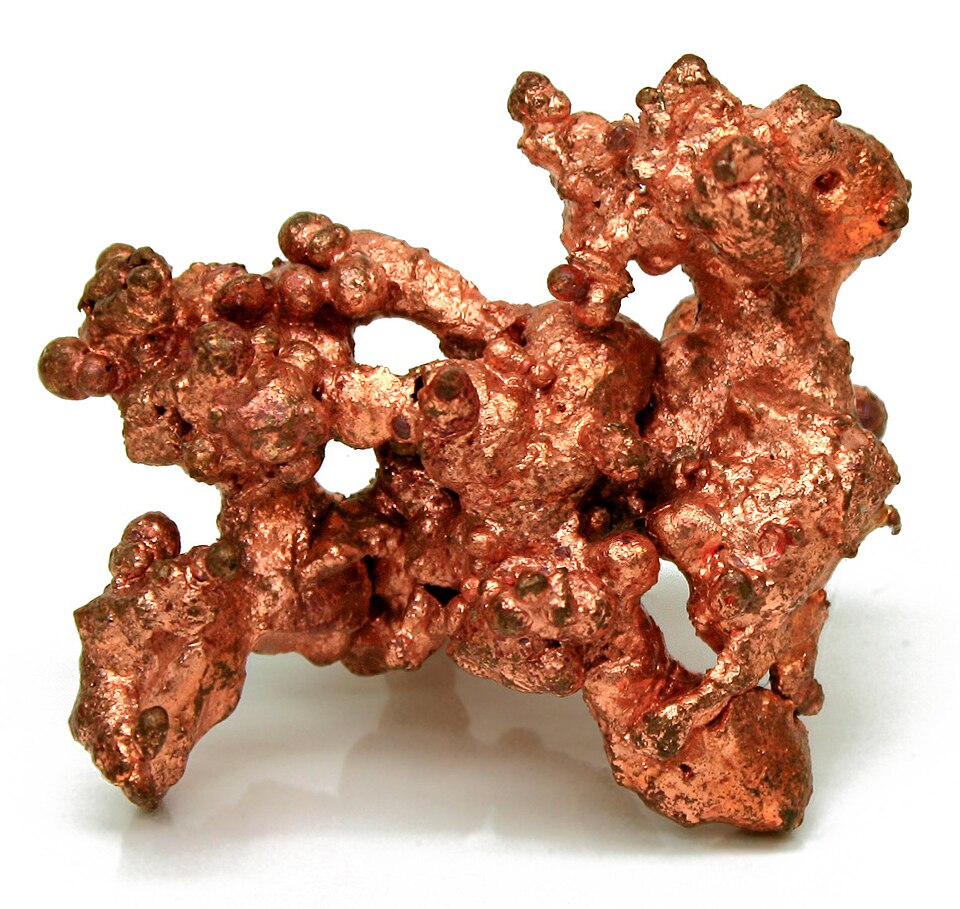
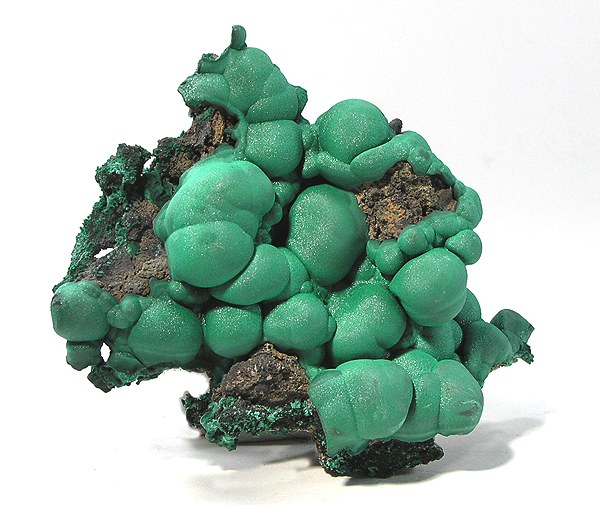
Key differences between Copper and Malachite
- Malachite is harder (Mohs 4) than Copper (Mohs 2.5–3), so Malachite will scratch Copper and not the other way round. A copper coin (Mohs 3.5) scratches it, but a fingernail does not.
- Streak color differs: Copper leaves a copper red, shiny streak on unglazed porcelain, Malachite leaves pale green.
- Luster is different: Copper is metallic while Malachite is silky.
- Copper feels noticeably heavier for its size (specific gravity 8.9–8.95 versus 4 for Malachite).
- Hold a thin edge to the light: Copper is Opaque, Malachite is opaque.
- They overlap in green, but Copper also comes in red, orange, black, and brown and Malachite also comes in multicolored.
- Well-formed crystals give it away: Copper is Cubic, Malachite is monoclinic.
Copper vs Malachite properties
| Property | Copper | Malachite |
|---|---|---|
| Type | Minerals | Minerals |
| Mohs hardness | 2.5–3 | 4 |
| Luster | Metallic | silky |
| Streak | Copper red, shiny | Pale green |
| Transparency | Opaque | opaque |
| Specific gravity | 8.9–8.95 | 4 |
| Crystal system | Cubic | monoclinic |
| Common colors | Copper red (fresh), Brown to green-black (tarnished) | Green, Dark Green, Banded Green |
| Rarity | common | common |
| Typical specimen value | $2–$150+ | $5–$200+ |
Which is more valuable?
Malachite is usually the more valuable of the two: a typical collector specimen runs about $30 against $20 for Copper, and premium Malachite can reach $200 or more.
About Copper
Native copper is elemental copper, Cu, found uncombined in nature rather than bound up in an ore mineral, making it one of the relatively few metals that occurs in a directly usable metallic form at Earth's surface. It typically forms through the reduction of copper-bearing solutions in basaltic lava flows or in the oxidized zones above sulfide ore deposits. Native copper holds particular historical importance because ancient peoples were able to cold-hammer and later smelt it directly, marking one of humanity's earliest uses of metal.
About Malachite
Malachite is a vibrant green copper carbonate mineral known for its distinctive banded patterns. It has been used as a gemstone and pigment for thousands of years.
Copper vs Malachite FAQ
Is Copper the same as Malachite?
No. Both are minerals, but they are distinct species with different hardness, streak or luster. Malachite is harder (Mohs 4) than Copper (Mohs 2.5–3), so Malachite will scratch Copper and not the other way round. A copper coin (Mohs 3.5) scratches it, but a fingernail does not.
How can you tell Copper from Malachite?
Malachite is harder (Mohs 4) than Copper (Mohs 2.5–3), so Malachite will scratch Copper and not the other way round. A copper coin (Mohs 3.5) scratches it, but a fingernail does not. Streak color differs: Copper leaves a copper red, shiny streak on unglazed porcelain, Malachite leaves pale green. Luster is different: Copper is metallic while Malachite is silky.
Which is harder, Copper or Malachite?
Malachite is harder: Mohs 4 against Mohs 2.5–3 for Copper.
Which is more valuable, Copper or Malachite?
Malachite is usually the more valuable of the two: a typical collector specimen runs about $30 against $20 for Copper, and premium Malachite can reach $200 or more.

