
Comparison · Sedimentary Rocks vs Metamorphic Rocks
Conglomerate vs Metaconglomerate
Conglomerate and Metaconglomerate are easy to confuse. Metaconglomerate is harder (Mohs 6.5) than Conglomerate (Mohs 3–7), so Metaconglomerate will scratch Conglomerate and not the other way round. A steel knife blade (Mohs 5.5) scratches it; a copper coin does not. Below is a side-by-side comparison of their properties and the quick tests that separate them.
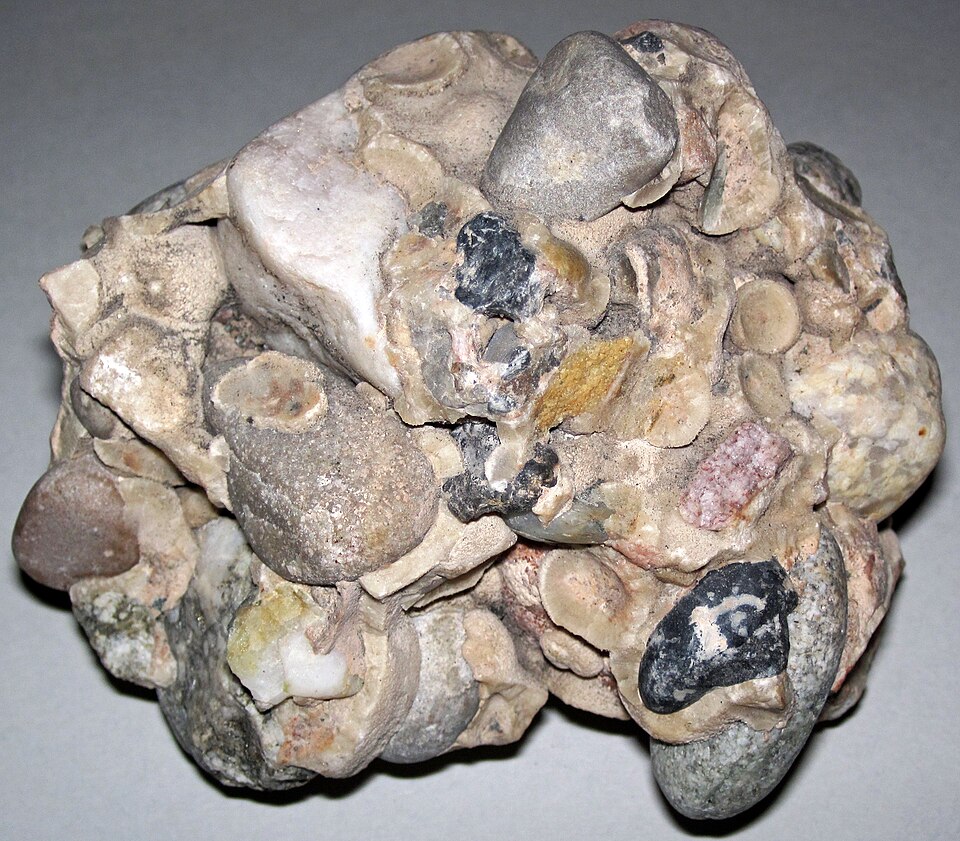
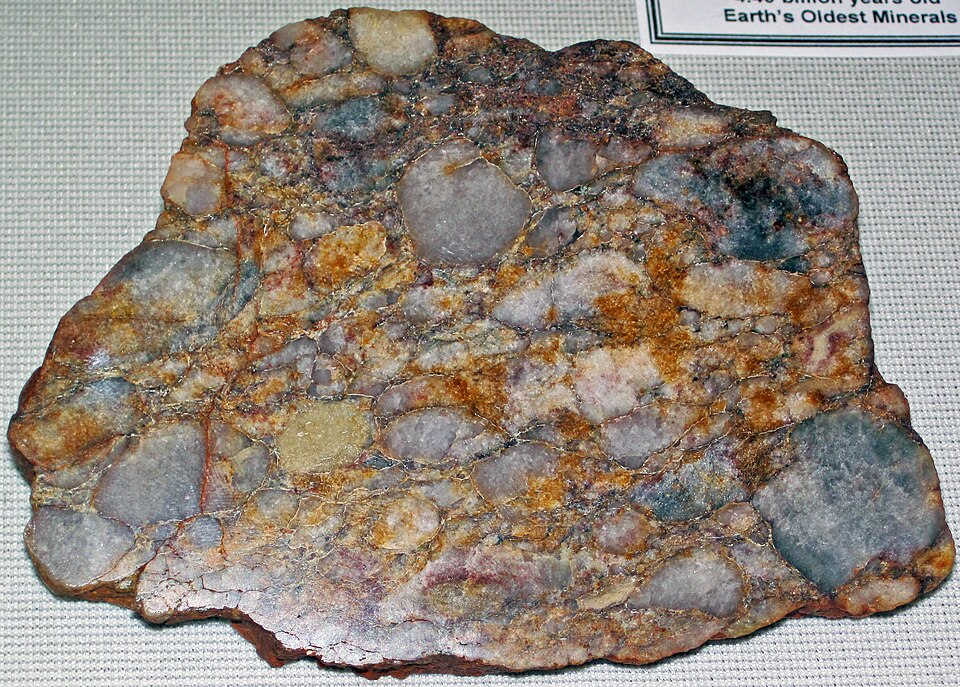
Key differences between Conglomerate and Metaconglomerate
- Metaconglomerate is harder (Mohs 6.5) than Conglomerate (Mohs 3–7), so Metaconglomerate will scratch Conglomerate and not the other way round. A steel knife blade (Mohs 5.5) scratches it; a copper coin does not.
- Luster is different: Conglomerate is variable; dull matrix to vitreous clasts while Metaconglomerate is dull.
- Hold a thin edge to the light: Conglomerate is Opaque, Metaconglomerate is opaque.
- They overlap in gray, brown, and red, but Conglomerate also comes in multicolored and Metaconglomerate also comes in white and black.
Conglomerate vs Metaconglomerate properties
| Property | Conglomerate | Metaconglomerate |
|---|---|---|
| Type | Sedimentary Rocks | Metamorphic Rocks |
| Mohs hardness | 3–7 | 6.5 |
| Luster | Variable; dull matrix to vitreous clasts | dull |
| Streak | — | Variable by pebbles and matrix |
| Transparency | Opaque | opaque |
| Specific gravity | 2.4–2.7 | 2.65 |
| Crystal system | — | varies |
| Common colors | Variegated, Gray, Brown, Red, Tan | Gray, White, Tan, Red, Brown, Black |
| Rarity | common | uncommon |
| Typical specimen value | $1–$75+ | $1–$75+ |
Which is more valuable?
Typical specimens of Conglomerate and Metaconglomerate trade in a similar range, around $10.
About Conglomerate
Conglomerate is a coarse-grained clastic sedimentary rock made of rounded pebble-, cobble-, or boulder-sized clasts cemented together by a finer matrix of sand, silt, or mineral cement such as calcite or silica. The rounding of its clasts sets it apart from breccia, which contains angular fragments, and signals significant transport by water before deposition. It typically forms in high-energy settings like river channels, alluvial fans, and beach or nearshore environments.
About Metaconglomerate
Metaconglomerate is a metamorphosed conglomerate with rounded pebbles or cobbles in a recrystallized matrix. Pebbles may appear stretched, flattened, or locked into a hard metamorphic rock.
Conglomerate vs Metaconglomerate FAQ
Is Conglomerate the same as Metaconglomerate?
No. Conglomerate is a sedimentary rock while Metaconglomerate is a metamorphic rock. Metaconglomerate is harder (Mohs 6.5) than Conglomerate (Mohs 3–7), so Metaconglomerate will scratch Conglomerate and not the other way round. A steel knife blade (Mohs 5.5) scratches it; a copper coin does not.
How can you tell Conglomerate from Metaconglomerate?
Metaconglomerate is harder (Mohs 6.5) than Conglomerate (Mohs 3–7), so Metaconglomerate will scratch Conglomerate and not the other way round. A steel knife blade (Mohs 5.5) scratches it; a copper coin does not. Luster is different: Conglomerate is variable; dull matrix to vitreous clasts while Metaconglomerate is dull. Hold a thin edge to the light: Conglomerate is Opaque, Metaconglomerate is opaque.
Which is harder, Conglomerate or Metaconglomerate?
Metaconglomerate is harder: Mohs 6.5 against Mohs 3–7 for Conglomerate.
Which is more valuable, Conglomerate or Metaconglomerate?
Typical specimens of Conglomerate and Metaconglomerate trade in a similar range, around $10.

