
Comparison · Minerals vs Materials
Chabazite vs Cherry Quartz
Chabazite and Cherry Quartz are easy to confuse. Cherry Quartz is harder (Mohs 5.5) than Chabazite (Mohs 4–5), so Cherry Quartz will scratch Chabazite and not the other way round. A steel knife blade (Mohs 5.5) scratches it; a copper coin does not. Below is a side-by-side comparison of their properties and the quick tests that separate them.
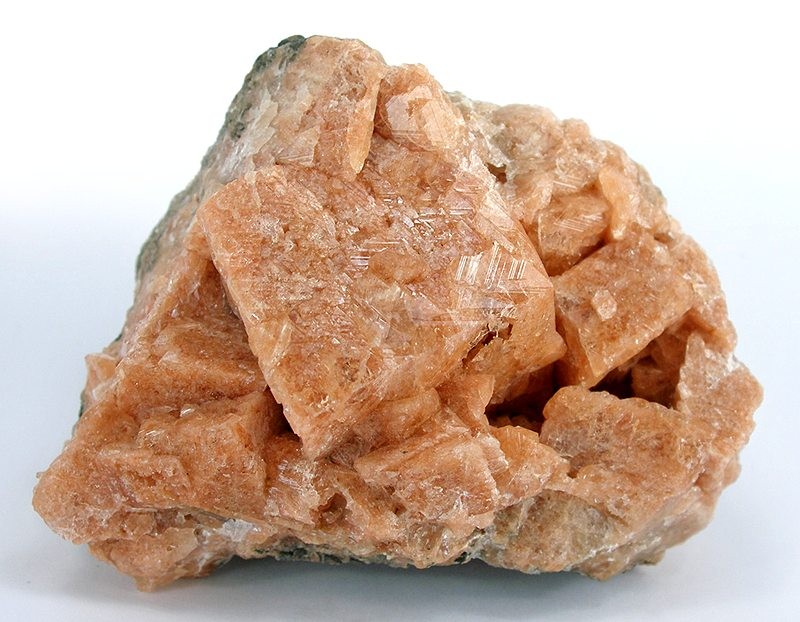
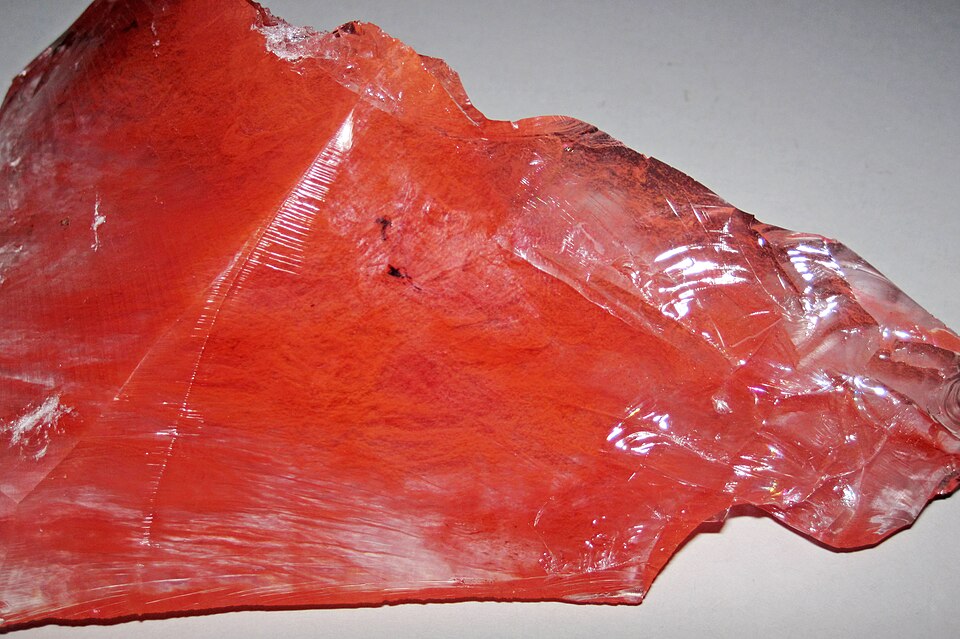
Key differences between Chabazite and Cherry Quartz
- Cherry Quartz is harder (Mohs 5.5) than Chabazite (Mohs 4–5), so Cherry Quartz will scratch Chabazite and not the other way round. A steel knife blade (Mohs 5.5) scratches it; a copper coin does not.
- Streak color differs: Chabazite leaves a white streak on unglazed porcelain, Cherry Quartz leaves white to colorless.
- Hold a thin edge to the light: Chabazite is Transparent to translucent, Cherry Quartz is translucent.
- They overlap in clear, pink, and red, but Chabazite also comes in yellow.
- Well-formed crystals give it away: Chabazite is Trigonal, Cherry Quartz is amorphous.
Chabazite vs Cherry Quartz properties
| Property | Chabazite | Cherry Quartz |
|---|---|---|
| Type | Minerals | Materials |
| Mohs hardness | 4–5 | 5.5 |
| Luster | Vitreous | vitreous |
| Streak | White | White to colorless |
| Transparency | Transparent to translucent | translucent |
| Specific gravity | 2.05–2.15 | 2.5 |
| Crystal system | Trigonal | amorphous |
| Common colors | White, Colorless, Pink, Red, Yellow | Pink, Red, Cherry, Colorless |
| Rarity | common | common |
| Typical specimen value | $2–$150+ | $3–$70+ |
Which is more valuable?
Chabazite is usually the more valuable of the two: a typical collector specimen runs about $20 against $15 for Cherry Quartz, and premium Chabazite can reach $150 or more.
About Chabazite
Chabazite is a calcium-bearing zeolite mineral with the general formula (Ca,Na2,K2)Al2Si4O12·6H2O, known for its distinctive pseudo-cubic rhombohedral crystals that superficially resemble cubes. It forms in cavities within basaltic and volcanic rocks where hot, mineral-rich fluids circulate after the host lava cools, placing it among the classic zeolite minerals collected from vesicles in ancient lava flows. Its open, cage-like aluminosilicate framework allows it to absorb and exchange ions, a property shared with other zeolites and exploited in some industrial applications.
About Cherry Quartz
Cherry Quartz is a trade label for pink to red manufactured glass, often sold as beads, cabochons, or decorative stones.
Chabazite vs Cherry Quartz FAQ
Is Chabazite the same as Cherry Quartz?
No. Chabazite is a mineral while Cherry Quartz is a material. Cherry Quartz is harder (Mohs 5.5) than Chabazite (Mohs 4–5), so Cherry Quartz will scratch Chabazite and not the other way round. A steel knife blade (Mohs 5.5) scratches it; a copper coin does not.
How can you tell Chabazite from Cherry Quartz?
Cherry Quartz is harder (Mohs 5.5) than Chabazite (Mohs 4–5), so Cherry Quartz will scratch Chabazite and not the other way round. A steel knife blade (Mohs 5.5) scratches it; a copper coin does not. Streak color differs: Chabazite leaves a white streak on unglazed porcelain, Cherry Quartz leaves white to colorless. Hold a thin edge to the light: Chabazite is Transparent to translucent, Cherry Quartz is translucent.
Which is harder, Chabazite or Cherry Quartz?
Cherry Quartz is harder: Mohs 5.5 against Mohs 4–5 for Chabazite.
Which is more valuable, Chabazite or Cherry Quartz?
Chabazite is usually the more valuable of the two: a typical collector specimen runs about $20 against $15 for Cherry Quartz, and premium Chabazite can reach $150 or more.

