
Comparison · Minerals
Cassiterite vs Franklinite
Cassiterite and Franklinite are easy to confuse because both are minerals. Both sit near Mohs 6–7, so a scratch test alone will not separate them. Lean on luster, streak and heft instead. Below is a side-by-side comparison of their properties and the quick tests that separate them.
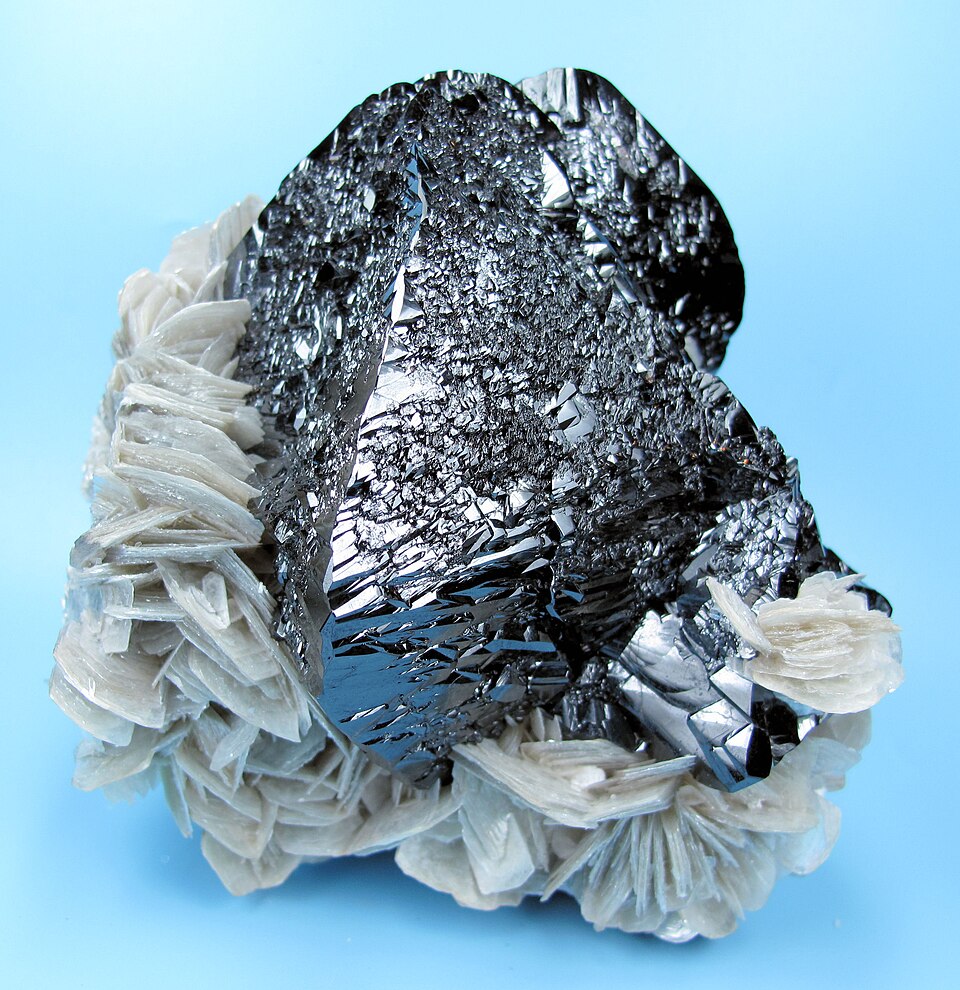
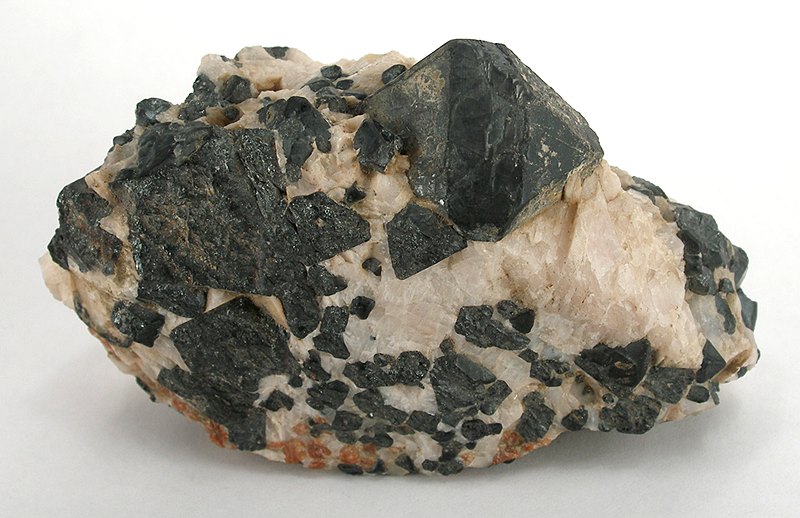
Key differences between Cassiterite and Franklinite
- Both sit near Mohs 6–7, so a scratch test alone will not separate them. Lean on luster, streak and heft instead.
- Streak color differs: Cassiterite leaves a white to grayish brown streak on unglazed porcelain, Franklinite leaves reddish brown to black.
- Both look metallic, so compare color, tarnish and weight rather than shine.
- Cassiterite feels noticeably heavier for its size (specific gravity 6.8–7.1 versus 5.1–5.2 for Franklinite).
- Hold a thin edge to the light: Cassiterite is Translucent to opaque, Franklinite is Opaque.
- They overlap in brown and black, but Cassiterite also comes in red, yellow, and gray.
- Well-formed crystals give it away: Cassiterite is Tetragonal, Franklinite is Isometric.
Cassiterite vs Franklinite properties
| Property | Cassiterite | Franklinite |
|---|---|---|
| Type | Minerals | Minerals |
| Mohs hardness | 6–7 | 5.5–6.5 |
| Luster | Adamantine to submetallic | Metallic to submetallic |
| Streak | White to grayish brown | Reddish brown to black |
| Transparency | Translucent to opaque | Opaque |
| Specific gravity | 6.8–7.1 | 5.1–5.2 |
| Crystal system | Tetragonal | Isometric |
| Common colors | Brown, Black, Reddish brown, Yellow, Gray | Black, Brownish black |
| Rarity | common | common |
| Typical specimen value | $2–$150+ | $2–$150+ |
Which is more valuable?
Typical specimens of Cassiterite and Franklinite trade in a similar range, around $20.
About Cassiterite
Cassiterite is tin oxide, SnO2, and has been the principal ore of tin since the Bronze Age. It crystallizes in the tetragonal system, typically as reddish-brown to black prismatic or pyramidal crystals with an adamantine luster and exceptionally high density for a nonmetallic-looking mineral. Its resistance to weathering means it survives erosion intact and concentrates in stream gravels as placer tin.
About Franklinite
Franklinite is a zinc iron manganese oxide, (Zn,Mn,Fe)(Fe,Mn)2O4, belonging to the spinel group and crystallizing in the isometric system, usually as black octahedral crystals or granular masses. It is virtually unique to the zinc deposits of Franklin and Sterling Hill, New Jersey, where it occurs in an assemblage found almost nowhere else on Earth. Though weakly magnetic, it is chemically distinct from true magnetite.
Cassiterite vs Franklinite FAQ
Is Cassiterite the same as Franklinite?
No. Both are minerals, but they are distinct species with different hardness, streak or luster. Both sit near Mohs 6–7, so a scratch test alone will not separate them. Lean on luster, streak and heft instead.
How can you tell Cassiterite from Franklinite?
Both sit near Mohs 6–7, so a scratch test alone will not separate them. Lean on luster, streak and heft instead. Streak color differs: Cassiterite leaves a white to grayish brown streak on unglazed porcelain, Franklinite leaves reddish brown to black. Both look metallic, so compare color, tarnish and weight rather than shine.
Which is harder, Cassiterite or Franklinite?
Cassiterite is harder: Mohs 6–7 against Mohs 5.5–6.5 for Franklinite.
Which is more valuable, Cassiterite or Franklinite?
Typical specimens of Cassiterite and Franklinite trade in a similar range, around $20.

