
Comparison · Minerals
Astrophyllite vs Calcite
Astrophyllite and Calcite are easy to confuse because both are minerals. Both sit near Mohs 3–3.5, so a scratch test alone will not separate them. Lean on luster, streak and heft instead. Below is a side-by-side comparison of their properties and the quick tests that separate them.
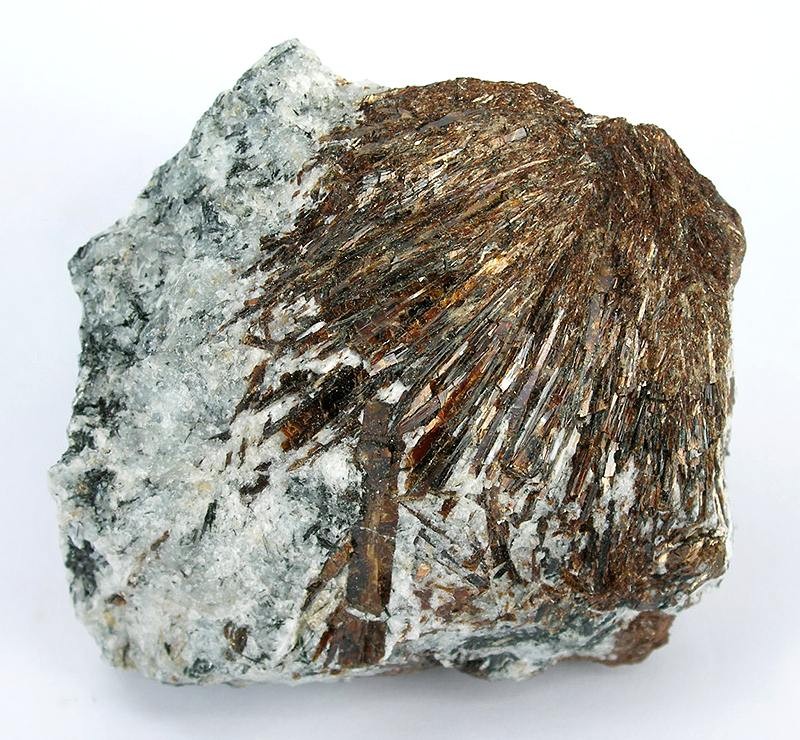
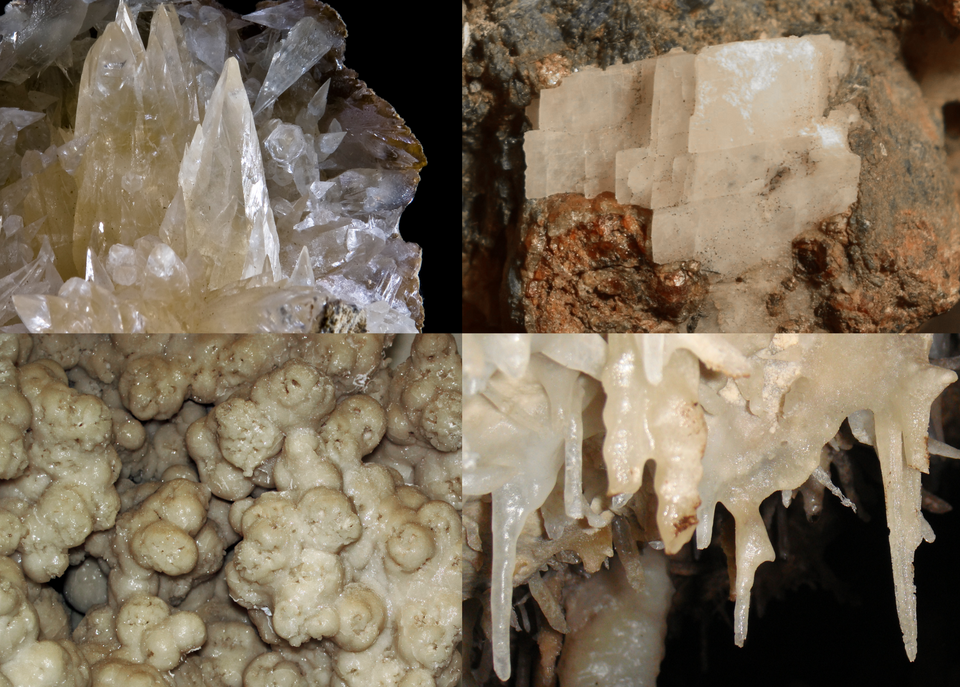
Key differences between Astrophyllite and Calcite
- Both sit near Mohs 3–3.5, so a scratch test alone will not separate them. Lean on luster, streak and heft instead.
- Streak color differs: Astrophyllite leaves a brownish yellow streak on unglazed porcelain, Calcite leaves white.
- Luster is different: Astrophyllite is vitreous to pearly/submetallic sheen while Calcite is vitreous.
- Astrophyllite feels noticeably heavier for its size (specific gravity 3.3–3.4 versus 2.7 for Calcite).
- Hold a thin edge to the light: Astrophyllite is Translucent, Calcite is transparent.
- They overlap in yellow and orange, but Astrophyllite also comes in brown and red and Calcite also comes in clear, blue, green, and pink.
- Well-formed crystals give it away: Astrophyllite is Triclinic, Calcite is trigonal.
Astrophyllite vs Calcite properties
| Property | Astrophyllite | Calcite |
|---|---|---|
| Type | Minerals | Minerals |
| Mohs hardness | 3–3.5 | 3 |
| Luster | Vitreous to pearly/submetallic sheen | vitreous |
| Streak | Brownish yellow | White |
| Transparency | Translucent | transparent |
| Specific gravity | 3.3–3.4 | 2.7 |
| Crystal system | Triclinic | trigonal |
| Common colors | Golden-yellow, Bronze, Copper-red, Brown | Colorless, White, Yellow, Orange, Blue, Green, Pink |
| Rarity | common | common |
| Typical specimen value | $2–$150+ | $2–$100+ |
Which is more valuable?
Astrophyllite is usually the more valuable of the two: a typical collector specimen runs about $20 against $15 for Calcite, and premium Astrophyllite can reach $150 or more.
About Astrophyllite
Astrophyllite is a rare, structurally complex silicate of potassium, sodium, iron, titanium, and manganese that forms bronze to golden-brown bladed or feathery crystal sprays. Its name, from the Greek for star leaf, describes the radiating star-like clusters it builds within alkaline igneous rocks. The mineral is prized more for its striking metallic sheen and habit than for gem use, since it never occurs transparent.
About Calcite
Calcite is one of the most common minerals on Earth, found in sedimentary, metamorphic, and igneous rocks. It's the primary component of limestone and marble.
Astrophyllite vs Calcite FAQ
Is Astrophyllite the same as Calcite?
No. Both are minerals, but they are distinct species with different hardness, streak or luster. Both sit near Mohs 3–3.5, so a scratch test alone will not separate them. Lean on luster, streak and heft instead.
How can you tell Astrophyllite from Calcite?
Both sit near Mohs 3–3.5, so a scratch test alone will not separate them. Lean on luster, streak and heft instead. Streak color differs: Astrophyllite leaves a brownish yellow streak on unglazed porcelain, Calcite leaves white. Luster is different: Astrophyllite is vitreous to pearly/submetallic sheen while Calcite is vitreous.
Which is harder, Astrophyllite or Calcite?
They are about equally hard, both near Mohs 3–3.5.
Which is more valuable, Astrophyllite or Calcite?
Astrophyllite is usually the more valuable of the two: a typical collector specimen runs about $20 against $15 for Calcite, and premium Astrophyllite can reach $150 or more.

