
Comparison · Minerals
Apatite vs Heulandite
Apatite and Heulandite are easy to confuse because both are minerals. Apatite is harder (Mohs 5) than Heulandite (Mohs 3.5–4), so Apatite will scratch Heulandite and not the other way round. A steel knife blade (Mohs 5.5) scratches it; a copper coin does not. Below is a side-by-side comparison of their properties and the quick tests that separate them.
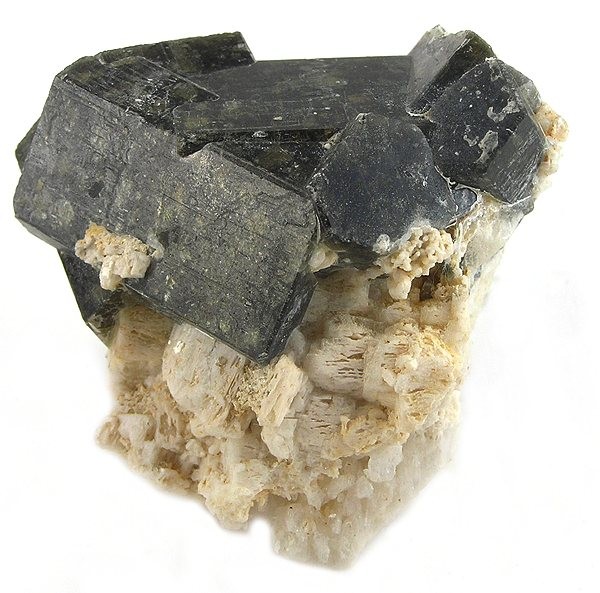
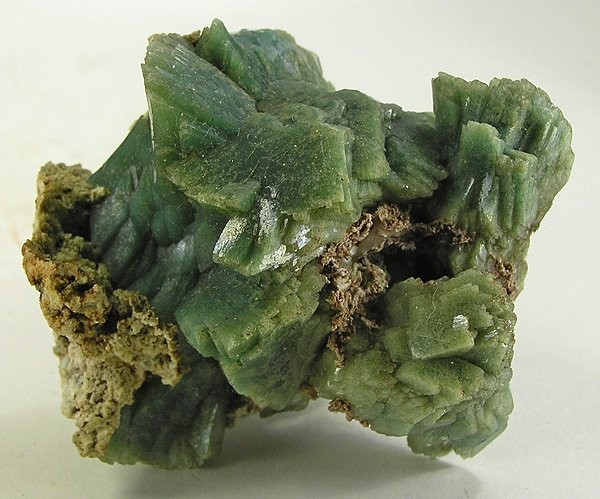
Key differences between Apatite and Heulandite
- Apatite is harder (Mohs 5) than Heulandite (Mohs 3.5–4), so Apatite will scratch Heulandite and not the other way round. A steel knife blade (Mohs 5.5) scratches it; a copper coin does not.
- Apatite feels noticeably heavier for its size (specific gravity 3.1–3.2 versus 2.1–2.2 for Heulandite).
- They overlap in yellow, clear, and brown, but Apatite also comes in green, blue, and purple and Heulandite also comes in pink and red.
- Well-formed crystals give it away: Apatite is Hexagonal, Heulandite is Monoclinic.
Apatite vs Heulandite properties
| Property | Apatite | Heulandite |
|---|---|---|
| Type | Minerals | Minerals |
| Mohs hardness | 5 | 3.5–4 |
| Luster | Vitreous to subresinous | Vitreous, pearly on cleavage |
| Streak | White | White |
| Transparency | Transparent to translucent | Transparent to translucent |
| Specific gravity | 3.1–3.2 | 2.1–2.2 |
| Crystal system | Hexagonal | Monoclinic |
| Common colors | Green, Blue, Yellow, Violet, Colorless, Brown | White, Colorless, Pink, Red, Brown, Yellow |
| Rarity | common | common |
| Typical specimen value | $2–$150+ | $2–$150+ |
Which is more valuable?
Typical specimens of Apatite and Heulandite trade in a similar range, around $20.
About Apatite
Apatite is the collective name for a group of calcium phosphate minerals, chiefly hydroxylapatite, fluorapatite, and chlorapatite, sharing the general formula Ca5(PO4)3(F,Cl,OH). It is the mineral that defines hardness 5 on the Mohs scale and forms the mineral component of bones and teeth in vertebrates. Gem-quality crystals range from pale green and blue to vivid neon blue-green varieties prized by collectors.
About Heulandite
Heulandite is a calcium- and sodium-bearing zeolite mineral, part of a group known for its coffin-shaped monoclinic crystals with a distinctive pearly luster on one prominent cleavage face. It typically forms as a secondary mineral filling vesicles and fractures in basaltic and volcanic rocks, alongside other zeolites deposited by cooling hydrothermal fluids. Heulandite is named after English mineral collector Henry Heuland, whose collection contributed significantly to early zeolite mineralogy.
Apatite vs Heulandite FAQ
Is Apatite the same as Heulandite?
No. Both are minerals, but they are distinct species with different hardness, streak or luster. Apatite is harder (Mohs 5) than Heulandite (Mohs 3.5–4), so Apatite will scratch Heulandite and not the other way round. A steel knife blade (Mohs 5.5) scratches it; a copper coin does not.
How can you tell Apatite from Heulandite?
Apatite is harder (Mohs 5) than Heulandite (Mohs 3.5–4), so Apatite will scratch Heulandite and not the other way round. A steel knife blade (Mohs 5.5) scratches it; a copper coin does not. Apatite feels noticeably heavier for its size (specific gravity 3.1–3.2 versus 2.1–2.2 for Heulandite). They overlap in yellow, clear, and brown, but Apatite also comes in green, blue, and purple and Heulandite also comes in pink and red.
Which is harder, Apatite or Heulandite?
Apatite is harder: Mohs 5 against Mohs 3.5–4 for Heulandite.
Which is more valuable, Apatite or Heulandite?
Typical specimens of Apatite and Heulandite trade in a similar range, around $20.

