
Comparison · Minerals vs Sedimentary Rocks
Anhydrite vs Evaporite
Anhydrite and Evaporite are easy to confuse. Both sit near Mohs 3–3.5, so a scratch test alone will not separate them. Lean on luster, streak and heft instead. Below is a side-by-side comparison of their properties and the quick tests that separate them.
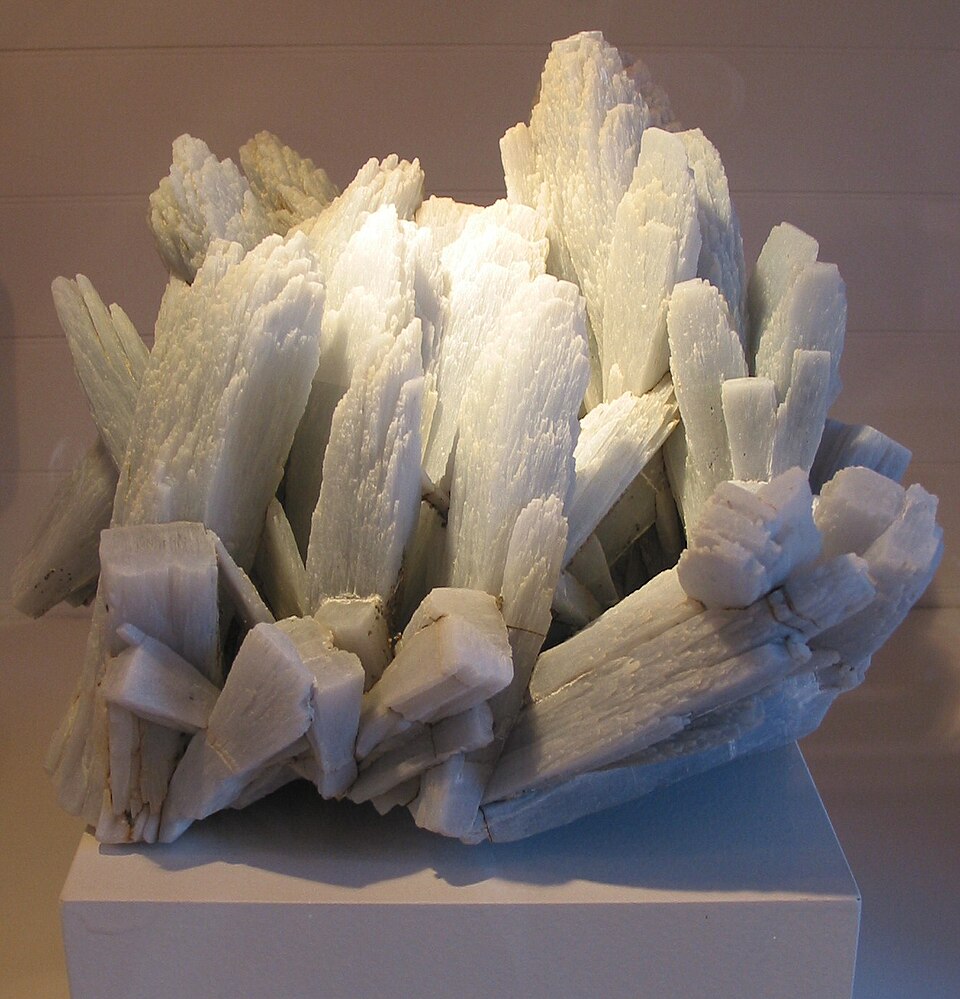
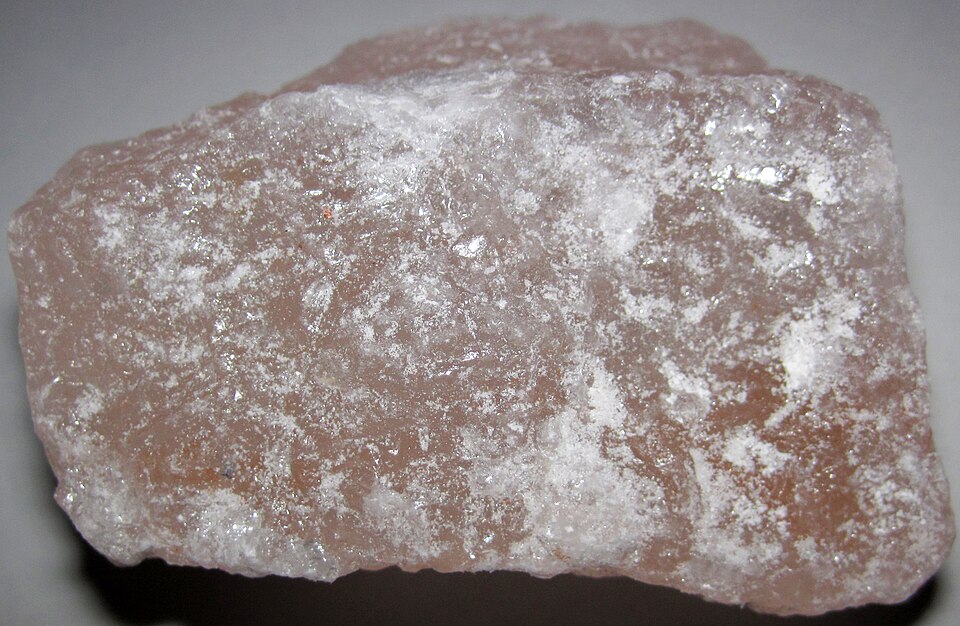
Key differences between Anhydrite and Evaporite
- Both sit near Mohs 3–3.5, so a scratch test alone will not separate them. Lean on luster, streak and heft instead.
- Luster is different: Anhydrite is vitreous, pearly on cleavage surfaces while Evaporite is dull.
- Anhydrite feels noticeably heavier for its size (specific gravity 2.9–3.0 versus 2.2 for Evaporite).
- Hold a thin edge to the light: Anhydrite is Transparent to translucent, Evaporite is opaque.
- They overlap in clear, gray, and pink, but Anhydrite also comes in blue and Evaporite also comes in brown.
Anhydrite vs Evaporite properties
| Property | Anhydrite | Evaporite |
|---|---|---|
| Type | Minerals | Sedimentary Rocks |
| Mohs hardness | 3–3.5 | 2.5 |
| Luster | Vitreous, pearly on cleavage surfaces | dull |
| Streak | White | White |
| Transparency | Transparent to translucent | opaque |
| Specific gravity | 2.9–3.0 | 2.2 |
| Crystal system | Orthorhombic | varies |
| Common colors | Colorless, White, Gray, Blue, Pink | White, Clear, Pink, Gray, Tan |
| Rarity | common | common |
| Typical specimen value | $2–$150+ | $1–$75+ |
Which is more valuable?
Anhydrite is usually the more valuable of the two: a typical collector specimen runs about $20 against $10 for Evaporite, and premium Anhydrite can reach $150 or more.
About Anhydrite
Anhydrite is calcium sulfate, CaSO4, chemically identical to gypsum but lacking the water molecules bound into gypsum's crystal structure. It forms in evaporite basins where seawater or saline lake water concentrates through evaporation, and it readily absorbs water to convert into gypsum, which is why anhydrite outcrops are less common at the surface than at depth. Its name, from the Greek for "without water," directly references this dehydrated composition.
About Evaporite
Evaporite is a sedimentary rock or deposit formed by evaporation of mineral-rich water, commonly containing rock salt, gypsum, or anhydrite.
Anhydrite vs Evaporite FAQ
Is Anhydrite the same as Evaporite?
No. Anhydrite is a mineral while Evaporite is a sedimentary rock. Both sit near Mohs 3–3.5, so a scratch test alone will not separate them. Lean on luster, streak and heft instead.
How can you tell Anhydrite from Evaporite?
Both sit near Mohs 3–3.5, so a scratch test alone will not separate them. Lean on luster, streak and heft instead. Luster is different: Anhydrite is vitreous, pearly on cleavage surfaces while Evaporite is dull. Anhydrite feels noticeably heavier for its size (specific gravity 2.9–3.0 versus 2.2 for Evaporite).
Which is harder, Anhydrite or Evaporite?
Anhydrite is harder: Mohs 3–3.5 against Mohs 2.5 for Evaporite.
Which is more valuable, Anhydrite or Evaporite?
Anhydrite is usually the more valuable of the two: a typical collector specimen runs about $20 against $10 for Evaporite, and premium Anhydrite can reach $150 or more.

