
Comparison · Minerals
Ametrine vs Axinite
Ametrine and Axinite are easy to confuse because both are minerals. Both sit near Mohs 7, so a scratch test alone will not separate them. Lean on luster, streak and heft instead. Below is a side-by-side comparison of their properties and the quick tests that separate them.
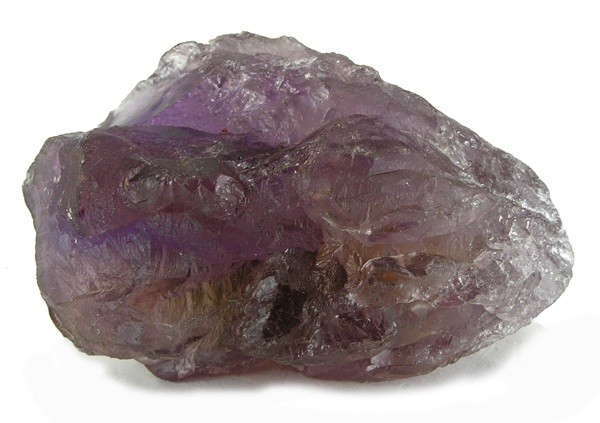
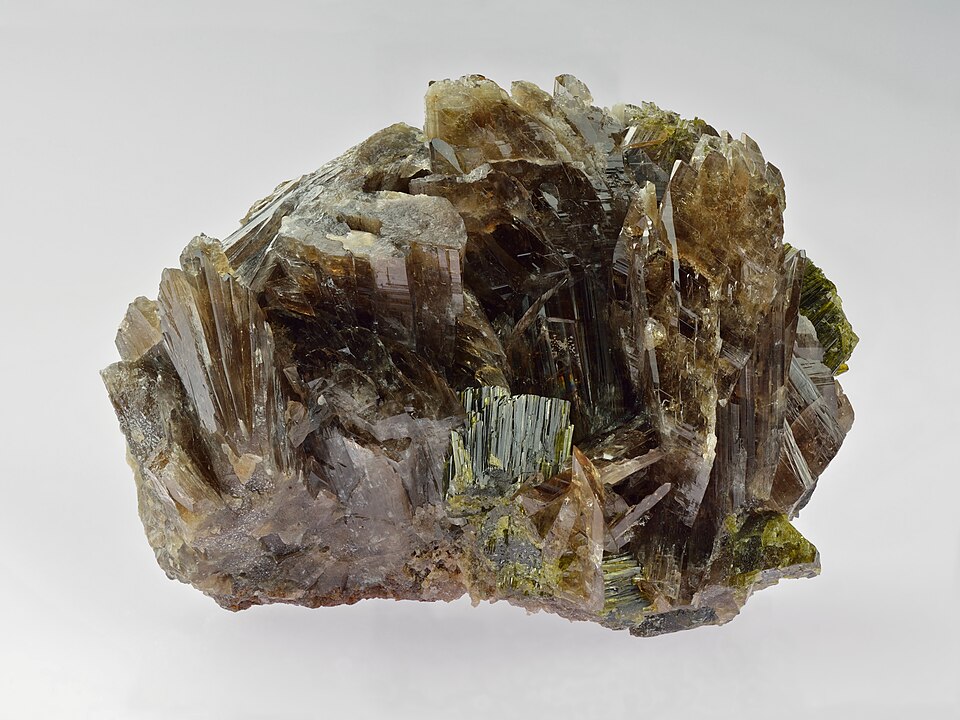
Key differences between Ametrine and Axinite
- Both sit near Mohs 7, so a scratch test alone will not separate them. Lean on luster, streak and heft instead.
- Axinite feels noticeably heavier for its size (specific gravity 3.27–3.35 versus 2.65 for Ametrine).
- Hold a thin edge to the light: Ametrine is Transparent, Axinite is Transparent to translucent.
- They overlap in yellow and purple, but Axinite also comes in brown, gray, blue, and green.
- Well-formed crystals give it away: Ametrine is Trigonal, Axinite is Triclinic.
Ametrine vs Axinite properties
| Property | Ametrine | Axinite |
|---|---|---|
| Type | Minerals | Minerals |
| Mohs hardness | 7 | 6.5–7 |
| Luster | Vitreous | Vitreous |
| Streak | White | White |
| Transparency | Transparent | Transparent to translucent |
| Specific gravity | 2.65 | 3.27–3.35 |
| Crystal system | Trigonal | Triclinic |
| Common colors | Purple and yellow bicolor zoning | Clove-brown, Violet-brown, Honey-yellow, Gray, Blue (rare), Green (rare) |
| Rarity | common | common |
| Typical specimen value | $2–$150+ | $2–$150+ |
Which is more valuable?
Typical specimens of Ametrine and Axinite trade in a similar range, around $20.
About Ametrine
Ametrine is a naturally occurring bicolor variety of quartz that combines the violet tones of amethyst with the golden hues of citrine within a single crystal. The color zoning arises from differing oxidation states of trace iron impurities distributed unevenly across growth sectors of the same silicon dioxide crystal. Most commercial ametrine traces back to a single deposit in Bolivia, though heat-treated material is also common in the gem trade.
About Axinite
Axinite is a group name for a series of calcium aluminum borosilicate minerals that crystallize in the triclinic system, producing distinctively thin, wedge-shaped crystals resembling an axe blade, which inspired its name. It typically forms in contact metamorphic zones where granitic intrusions meet boron-rich sedimentary or volcanic rocks. Its sharp-edged crystal habit and clove-brown to violet color make it one of the more visually distinctive borosilicate minerals collectors encounter.
Ametrine vs Axinite FAQ
Is Ametrine the same as Axinite?
No. Both are minerals, but they are distinct species with different hardness, streak or luster. Both sit near Mohs 7, so a scratch test alone will not separate them. Lean on luster, streak and heft instead.
How can you tell Ametrine from Axinite?
Both sit near Mohs 7, so a scratch test alone will not separate them. Lean on luster, streak and heft instead. Axinite feels noticeably heavier for its size (specific gravity 3.27–3.35 versus 2.65 for Ametrine). Hold a thin edge to the light: Ametrine is Transparent, Axinite is Transparent to translucent.
Which is harder, Ametrine or Axinite?
They are about equally hard, both near Mohs 7.
Which is more valuable, Ametrine or Axinite?
Typical specimens of Ametrine and Axinite trade in a similar range, around $20.

